-

- Over deze pagina
- Talen
- Feedback van gebruikers
- Citatie
- Uploads
-
Verwante soorten
- Soort(en) in
Urophycis - Soort(en) in
Phycidae - - Classificatie -
- Phycidae
- Gadiformes
- Teleostei
- Chordata
- Animalia
- Soort(en) in
-



Waarneming toevoegen in Fish Watcher
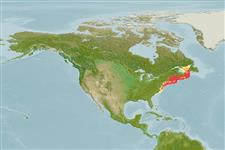
| Native range | All suitable habitat | Point map | Year 2050 |
|
| This map was computer-generated and has not yet been reviewed. |
| Urophycis chuss AquaMaps Data sources: GBIF OBIS |
Uploaden van uw Foto's en video's
Afbeeldingen | Geluiden | Google afbeelding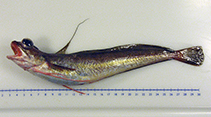 Urophycis chuss
Afbeelding van Mac Eachern, W.J.
Afbeeldingen | Geluiden | Google afbeelding
Afbeelding van Mac Eachern, W.J.
Classificatie / Namen Lokale namen | Synoniemen | Catalog of Fishes(Genus, Soort(en)) | ITIS | CoL | WoRMS | Cloffa
> Gadiformes (Cods) > Phycidae (Phycid hakes)
Etymology: Urophycis: Greek, oura = tail + Greek, phyke, pykis, -idos = the female of a fish that lives among algae (Greek = phykon), related with the gudgeon (Ref. 45335).
More on author: Walbaum.
Etymology: Urophycis: Greek, oura = tail + Greek, phyke, pykis, -idos = the female of a fish that lives among algae (Greek = phykon), related with the gudgeon (Ref. 45335).
More on author: Walbaum.
Milieu: milieu / Klimaatzone / Diepte / verspreidingsgebied Ecologie
marien demersaal; oceanodroom (Ref. 51243); diepte 35 - 1152 m (Ref. 57178), usually 110 - 130 m. Temperate; 51°N - 33°N, 79°W - 58°W
Verspreiding Gebieden | FAO regio's | Ecosystemen | Voorkomen | Verspreidingskaart | Introducties | Faunafri
Northwest Atlantic: North Carolina to southern Nova Scotia, straying to the Gulf of St. Lawrence. Rare European records are probably misidentifications of Urophycis tenuis.
Lengte bij maturiteit / Grootte / Gewicht / Leeftijd
Maturiteit: Lm 26.0 range ? - ? cm
Max length : 66.0 cm TL mannelijk / geslacht onbekend; (Ref. 40637); max. gepubliceerd gewicht: 3.6 kg (Ref. 40637)
Max length : 66.0 cm TL mannelijk / geslacht onbekend; (Ref. 40637); max. gepubliceerd gewicht: 3.6 kg (Ref. 40637)
Korte beschrijving Determinatiesleutels | Morfologie | Morfometrie
Dorsale stekels (totaal) : 0; Anale stekels: 0. First dorsal fin ray elongated. Pelvic fins also reaching about the anal fin origin. Body color variable, reddish to olive brown dorsally, sometimes very dark or mottled; lower sides paler, sometimes with dusky dots; belly and underside of the head pale. A dusky blotch present on the opercle. The fins are generally dark, except for the pelvic fins, which are pale.
Body shape (shape guide): elongated; Cross section: circular.
Body shape (shape guide): elongated; Cross section: circular.
Found on soft muddy and sandy bottoms, but never on rocks, gravel or shells. Juveniles live along the coasts at shallow depths (4-6 m); adults migrate to deeper waters, generally to between 110 and 130 m, and in some instances, to over 550 m. Juveniles live in scallops (Placopecten magellanicus) and remain close to scallop beds until they mature (Ref. 9988). They prefer temperatures of 8-10°C (Ref. 5951). Feed on shrimps, amphipods and other crustaceans, also on squid and herring, flatfish, mackerel and others. Utilized fresh, dried or salted and frozen; also small fish are used for fishmeal ; eaten steamed, microwaved and baked (Ref. 9988). Maximum depth reported from Ref. 57178.
Levenscyclus en paargedrag Maturiteit | Voortplanting | Paaien | Eieren | Fecunditeit | Larven
Hoofdreferentie
Upload uw referenties | Referenties | Coördinator | Medewerkers
Cohen, D.M., T. Inada, T. Iwamoto and N. Scialabba, 1990. FAO species catalogue. Vol. 10. Gadiform fishes of the world (Order Gadiformes). An annotated and illustrated catalogue of cods, hakes, grenadiers and other gadiform fishes known to date. FAO Fish. Synop. 125(10). Rome: FAO. 442 p. (Ref. 1371)
CITES
Not Evaluated
Gevaar voor de mens
Harmless
Gebruik door de mens
Visserij: commercieel; sportvis: ja
FAO - visserij: aanvoer; Publication: search | FishSource | Sea Around Us
Meer informatie
Trofische ecologie
Voedsel (prooien)
Dieetsamenstelling
Voedselconsumptie
Voedselrantsoenen
Predatoren
Voedsel (prooien)
Dieetsamenstelling
Voedselconsumptie
Voedselrantsoenen
Predatoren
Populatiedynamica
Groeiparameters
Max. leeftijden / maten
Lengte-gewicht rel.
Lengte-lengte rel.
Lengtefrequenties
Massaconversie
Rekrutering
Abundantie
Groeiparameters
Max. leeftijden / maten
Lengte-gewicht rel.
Lengte-lengte rel.
Lengtefrequenties
Massaconversie
Rekrutering
Abundantie
Levenscyclus
Voortplanting
Maturiteit
Rijpheid/kieuwen rel.
Fecunditeit
Paaien
Paaibestanden
Eieren
Ontwikkeling van de eieren
Larven
Larvale populatiedynamiek
Voortplanting
Maturiteit
Rijpheid/kieuwen rel.
Fecunditeit
Paaien
Paaibestanden
Eieren
Ontwikkeling van de eieren
Larven
Larvale populatiedynamiek
Anatomie
Kieuwoppervlak
Hersenen
Otoliet
Kieuwoppervlak
Hersenen
Otoliet
Fysiologie
Lichaamssamenstelling
Voedingsstoffen
Zuurstofverbruik
Type zwemmen
Zwemsnelheid
Visuele pigmenten
Vis geluid
Ziekten en parasieten
Toxiciteit (LC50)
Lichaamssamenstelling
Voedingsstoffen
Zuurstofverbruik
Type zwemmen
Zwemsnelheid
Visuele pigmenten
Vis geluid
Ziekten en parasieten
Toxiciteit (LC50)
Genetica
genoom
Genetica
Heterozygositeit
Erfelijkheid
Genetische diversiteit
genoom
Genetica
Heterozygositeit
Erfelijkheid
Genetische diversiteit
Menselijk gerelateerd
Aquacultuursystemen
Aquacultuurprofielen
Kweeklijnen
Ciguatera gevallen
Postzegels, munten, diversen.
Aquacultuursystemen
Aquacultuurprofielen
Kweeklijnen
Ciguatera gevallen
Postzegels, munten, diversen.
Tools
E-boek | Veldgids | Determinatiesleutels | Lengtefrequentie Tool | Levenscyclus tool | Verspreidingskaart |
Vangst-MSY |
Speciale rapporten
Bekijk gegevens voor het houden in een aquarium | Bekijk Fact Sheets voor de soort | Bekijk Aquacultuur Fact Sheets
Download XML
Internetbronnen
AFORO (otoliths) | Aquatic Commons | BHL | Cloffa | Websites from users | Bekijk FishWatcher | CISTI | Catalog of Fishes: Genus, Soort(en) | DiscoverLife | ECOTOX | FAO - visserij: aanvoer; Publication: search | Faunafri | Fishipedia | Fishtrace | GloBI | Google Books | Google Scholar | Google | IGFA World Record | OceanAdapt | OneZoom | Open Tree of Life | Otolith Atlas of Taiwan Fishes | Publieke aquaria | PubMed | Reef Life Survey | Socotra Atlas | TreeBase | Tree of Life | Wikipedia: ga naar, zoek | World Records Freshwater Fishing | Zoological Record
Schattingen op basis van modellen
Gewenste temperatuur (Ref. 123201): 1.6 - 11.1, mean 5 °C (based on 23 cells).
Fylogenetische diversiteitsindex (Ref. 82804): PD50 = 0.5044 [Uniqueness, from 0.5 = low to 2.0 = high].
Bayesian length-weight: a=0.00407 (0.00319 - 0.00520), b=3.11 (3.04 - 3.18), in cm total length, based on LWR estimates for this species (Ref. 93245).
Trofisch niveau (Ref. 69278): 3.7 ±0.3 se; based on diet studies.
Generation time: 5.8 ( na - na) years. Estimated as median ln(3)/K based on 1 growth studies.
Weerstandsvermogen (Ref. 120179): Gemiddeld, minimale populatieverdubbelingstijd 1,4-4,4 jaar (K=0.19; tm=2-3).
Prior r = 0.20, 95% CL = 0.13 - 0.30, Based on 3 full stock assessments.
Voedingsstoffen (Ref. 124155): Calcium = 27.7 [17.1, 58.1] mg/100g; Iron = 0.353 [0.196, 0.651] mg/100g; Protein = 17.2 [16.0, 18.5] %; Omega3 = 0.412 [0.217, 0.750] g/100g; Selenium = 25.8 [13.2, 49.7] μg/100g; VitaminA = 16.2 [4.3, 55.6] μg/100g; Zinc = 0.435 [0.306, 0.627] mg/100g (wet weight);