-

- เกี่ยวกับหน้านี้
- ภาษา
- ความคิดเห็นจากผู้ใช้
- การอ้างอิง
- อัพโหลด
-
สายพันธุ์ที่เกี่ยวข้อง
- สายพันธุ์ใน
Alosa - สายพันธุ์ใน
Alosidae - - การจำแนกประเภท -
- Alosidae
- Clupeiformes
- Teleostei
- Chordata
- Animalia
- สายพันธุ์ใน
-



อัพโหลดของคุณ ภาพถ่าย และ วิดีโอ
รูปภาพหลายรูป | Google image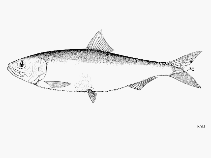 Alosa maeotica
ภาพโดย FAO
รูปภาพหลายรูป | Google image
ภาพโดย FAO
การจำแนกประเภท / ชื่อ ชื่อสามัญ | ชื่อพ้อง | Catalog of Fishes(สกุล, ชนิด) | ITIS | CoL | WoRMS | Cloffa
> Clupeiformes (Herrings) > Alosidae (Shads and Sardines)
Etymology: Alosa: Latin, alausa = a fish cited by Ausonius and Latin, halec = pickle, dealing with the Greek word hals = salt; it is also the old Saxon name for shad = "alli" ; 1591 (Ref. 45335).
Eponymy: This is a toponym referring to Maeotis, the ancient name for the Sea of Azov, where these species occur. (Ref. 128868), visit book page.
Etymology: Alosa: Latin, alausa = a fish cited by Ausonius and Latin, halec = pickle, dealing with the Greek word hals = salt; it is also the old Saxon name for shad = "alli" ; 1591 (Ref. 45335).
Eponymy: This is a toponym referring to Maeotis, the ancient name for the Sea of Azov, where these species occur. (Ref. 128868), visit book page.
สิ่งแวดล้อม : สิ่งแวดล้อม / เขตภูมิอากาศ / ระดับความลึก / ระยะการกระจายสินค้า นิเวศวิทยา
เกี่ยวกับทะเล,น้ำเค็ม; น้ำจืด; กร่อย pelagic-neritic. Temperate; 48°N - 40°N, 27°E - 43°E (Ref. 188)
การแพร่กระจาย อาณาเขต | พื้นที่จำแนกตาม FAO | ระบบนิเวศหลายระบบ | การปรากฏขึ้น,การเกิดขึ้น,พบ | ตำแหน่งบนแผนที่ | การแนะนำ | Faunafri
Eurasia: Black Sea and Sea of Azov.
ความยาวเมื่อครบกำหนดครั้งแรก / ขนาด / น้ำหนัก / อายุ
วัยเจริญพันธุ์: Lm 14.0, range 13 - 15 cm
Max length : 33.2 cm TL เพศผู้/กระเทย; (Ref. 96734); 33.8 cm TL (female); common length : 18.0 cm SL เพศผู้/กระเทย; (Ref. 188); น้ำหนักสูงสุดที่มีการรายงาน: 331.70 g (Ref. 96734); น้ำหนักสูงสุดที่มีการรายงาน: 331.70 g; อายุสูงสุดที่ได้รายงาน: 6 ปี (Ref. 10547)
Max length : 33.2 cm TL เพศผู้/กระเทย; (Ref. 96734); 33.8 cm TL (female); common length : 18.0 cm SL เพศผู้/กระเทย; (Ref. 188); น้ำหนักสูงสุดที่มีการรายงาน: 331.70 g (Ref. 96734); น้ำหนักสูงสุดที่มีการรายงาน: 331.70 g; อายุสูงสุดที่ได้รายงาน: 6 ปี (Ref. 10547)
คำอธิบายสั้นๆ เครื่องมือที่ใช้ในการแยกชนิดสัตว์,สิ่งมีชีวิตออกจากกัน | สัณฐานวิทยา | ความยาวต่างๆ
เงี่ยงครีบหลัง (รวม) : 0; เงี่ยงครีบก้น: 0. Body fairly elongate, more `herring-like' than `shad-like'. Gill rakers thin and straight, often closely packed and pointed, usually shorter than gill filaments. Teeth well developed in both jaws. Other Black Sea Alosa have more gill rakers (A. caspia 50 to 80 and A. pontica 47 to 66). Sardinella aurita is more slender, has many more gill rakers and i 8 pelvic fin rays.
Body shape (shape guide): fusiform / normal; Cross section: compressed.
Body shape (shape guide): fusiform / normal; Cross section: compressed.
Non-anadromous, entering limans and lower parts of river deltas, but only occasionally in freshwater. They are more or less abundant in lower reaches of rivers and coastal lagoons. A cold-loving species, tolerating 3 or 4°C.(Ref. 188). At sea, pelagic in deep water and enters brackish lagoons to spawn. Mature adults spawn first at 2 years and many individuals spawn for 2-4 seasons. Eggs sink to bottom. Spent individuals return to the sea to feed. In autumn, they migrate to southern Black Sea to overwinter. Juveniles migrate to the sea or estuaries during the first summer (Ref. 59043). Adults feed mainly on small fishes (mainly sprats and anchovies) also on shrimps, gammarids and other large crustaceans (Ref. 188). In northern Black Sea, the decline in habitat quality in suitable estuarine ecosystems is expected to have an impact in the immediate future (Ref. 59043).
วงจรชีวิตและพฤติกรรมการผสมพันธุ์ วัยเจริญพันธุ์ | การสืบพันธุ์ | การวางไข่ | เซลสืบพันธ์ของเพศเมีย(ไข่) | ความดกของไข่ | ตัวอ่อน
Juveniles migrate to sea or remain in estuaries during their first summer (Ref. 59043). In autumn, they migrate to southern Black Sea to overwinter. As spring approaches, they start to move into brackish lagoons to spawn until early summer. After spawning, spent fish return to sea to feed. Many individuals spawn for 2-4 seasons (Ref. 59043).
อ้างอิงหลัก
อัพโหลดข้อมูลอ้างอิงของคุณ | อ้างอิง | ผู้ประสานงาน | ผู้ร่วมมือ
Whitehead, P.J.P., 1985. FAO Species Catalogue. Vol. 7. Clupeoid fishes of the world (suborder Clupeoidei). An annotated and illustrated catalogue of the herrings, sardines, pilchards, sprats, shads, anchovies and wolf-herrings. FAO Fish. Synop. 125(7/1):1-303. Rome: FAO. (Ref. 188)
สถานะบัญชีแดงของ IUCN (Ref. 130435: Version 2025-2)
Least Concern (LC) ; Date assessed: 26 June 2022
CITES
Not Evaluated
ภัยคุกคามต่อมนุษย์
Harmless
การใช้ของมนุษย์
การประมง: มีการค้าเพียงเล็กน้อย
FAO - Publication: search | FishSource |
ข้อมูลเพิ่มเติม
พลวัตของประชากร
พารามิเตอร์การเจริญเติบโต
อายุสูงสุด / ขนาด
ความยาว-น้ำหนักสัมพันธ์
ความยาว-ความยาวสัมพันธ์
ความยาว-ความถี่
การแปลงมวล
การทดแทนที่
อุดมสมบรูณ์
พารามิเตอร์การเจริญเติบโต
อายุสูงสุด / ขนาด
ความยาว-น้ำหนักสัมพันธ์
ความยาว-ความยาวสัมพันธ์
ความยาว-ความถี่
การแปลงมวล
การทดแทนที่
อุดมสมบรูณ์
วงจรชีวิต
การสืบพันธุ์
วัยเจริญพันธุ์
ความสมบูรณ์พันธุ์/เหงือกที่เกี่ยวข้อง
ความดกของไข่
การวางไข่
การรวมตัวของสปอน
เซลสืบพันธ์ของเพศเมีย(ไข่)
การพัฒนาไข่
ตัวอ่อน
พลวัตของสัตว์น้ำวัยอ่อน
การสืบพันธุ์
วัยเจริญพันธุ์
ความสมบูรณ์พันธุ์/เหงือกที่เกี่ยวข้อง
ความดกของไข่
การวางไข่
การรวมตัวของสปอน
เซลสืบพันธ์ของเพศเมีย(ไข่)
การพัฒนาไข่
ตัวอ่อน
พลวัตของสัตว์น้ำวัยอ่อน
การแพร่กระจาย
อาณาเขต
พื้นที่จำแนกตาม FAO
ระบบนิเวศหลายระบบ
การปรากฏขึ้น,การเกิดขึ้น,พบ
การแนะนำ
BRUVS - วิดีโอ
อาณาเขต
พื้นที่จำแนกตาม FAO
ระบบนิเวศหลายระบบ
การปรากฏขึ้น,การเกิดขึ้น,พบ
การแนะนำ
BRUVS - วิดีโอ
กายวิภาคศาสตร์
พื้นที่เหงือก
สมอง
หินโสต
พื้นที่เหงือก
สมอง
หินโสต
สรีรวิทยา
องค์ประกอบของร่างกาย
สารอาหาร
การใช้ออกซิเจน
ประเภทการว่ายน้ำ
ระดับความเร็วในการว่ายน้ำ
เม็ดสีที่มองเห็นได้
เสียงปลา
โรคและปรสิต
ความเป็นพิษ (LC50s)
องค์ประกอบของร่างกาย
สารอาหาร
การใช้ออกซิเจน
ประเภทการว่ายน้ำ
ระดับความเร็วในการว่ายน้ำ
เม็ดสีที่มองเห็นได้
เสียงปลา
โรคและปรสิต
ความเป็นพิษ (LC50s)
พันธุศาสตร์
จีโนม
พันธุศาสตร์
ความไม่สมดุลทางเชื้อชาติ
อัตราพันธุกรรม
ความหลากหลายทางพันธุกรรม
จีโนม
พันธุศาสตร์
ความไม่สมดุลทางเชื้อชาติ
อัตราพันธุกรรม
ความหลากหลายทางพันธุกรรม
เกี่ยวข้องกับมนุษย์
ระบบการเพาะเลี้ยงสัตว์น้ำ
ประวัติการเพาะเลี้ยงสัตว์น้ำ
สายพันธุ์
กรณีซิเกวเทอรา
แสตมป์ เหรียญ อื่นๆ
ระบบการเพาะเลี้ยงสัตว์น้ำ
ประวัติการเพาะเลี้ยงสัตว์น้ำ
สายพันธุ์
กรณีซิเกวเทอรา
แสตมป์ เหรียญ อื่นๆ
เครื่องมือ
หนังสืออิเล็กทรอนิกส์ | คู่มือภาคสนาม | ผู้มีความชำนาญในเรื่องความถี่ของความยาว | เครื่องมือในการศึกษาชีวประวัติ | ตำแหน่งบนแผนที่ |
จับ-MSY |
รายงานพิเศษ
ตรวจสอบการบำรุงรักษาตู้ปลา | ตรวจสอบเอกสารข้อเท็จจริงเกี่ยวกับสายพันธุ์ | ตรวจสอบเอกสารข้อเท็จจริงเกี่ยวกับการเพาะเลี้ยงสัตว์น้ำ
ดาวน์โหลด XML
หน้าสรุป | ข้อมูลสำคัญ | ชื่อสามัญ | ภาพถ่าย
แหล่งที่มาจากอินเตอร์เน็ต
AFORO (otoliths) | Aquatic Commons | BHL | Cloffa | Websites from users | Check FishWatcher | CISTI | Catalog of Fishes: สกุล, ชนิด | DiscoverLife | ECOTOX | FAO - Publication: search | Faunafri | Fishipedia | Fishtrace | GloBI | Google Books | Google Scholar | Google | IGFA World Record | ฐานข้อมูลแห่งชาติ | OneZoom | Open Tree of Life | Otolith Atlas of Taiwan Fishes | PubMed | Reef Life Survey | Socotra Atlas | TreeBase | แผนภูมิชีวิตแบบต้นไม้ | Wikipedia: Go, ค้นหา | World Records Freshwater Fishing | บันทึกทางด้านสัตววิทยา
การประมาณค่าตามแบบจำลอง
ดัชนีความหลากหลายทางวิวัฒนาการ (อ้างอิง 82804): PD50 = 0.5000 [Uniqueness, from 0.5 = low to 2.0 = high].
Bayesian length-weight: a=0.00631 (0.00422 - 0.00942), b=3.09 (2.97 - 3.21), in cm total length, based on LWR estimates for this species & Genus-body shape (Ref. 93245).
ระดับชั้นอาหาร (อ้างอิง 69278): 4.4 ±0.8 se; based on diet studies.
ความสามารถในการกลับคืนสู่ปกติ (อ้างอิง 120179): ขนาดกลาง, เวลาต่ำสุดที่จะทำให้ประชากรเพิ่มขึ้นเป็น 2 เท่าใช้เวลา 1.4 - 4.4 ปี (tmax=6).