-

- Об этой странице
- Языки
- Отзывы пользователей
- Цитировать
- Загрузка
-
Близкие виды
- Вид в
Herklotsichthys - Вид в
Dorosomatidae - - Классификация -
- Dorosomatidae
- Clupeiformes
- Teleostei
- Chordata
- Animalia
- Вид в
-



Herklotsichthys quadrimaculatus (Rüppell, 1837)
Bluestripe herring
Добавить Ваши наблюдения в Fish Watcher
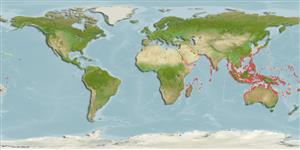
| Native range | All suitable habitat | Point map | Year 2050 |
|
| This map was computer-generated and has not yet been reviewed. |
| Herklotsichthys quadrimaculatus AquaMaps Data sources: GBIF OBIS |
Загрузить свой Фото и Видео
изображения | Видео | Изображение на Google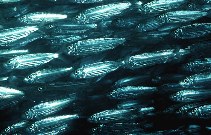 Herklotsichthys quadrimaculatus
Изображение сделано Randall, J.E.
изображения | Видео | Изображение на Google
Изображение сделано Randall, J.E.
Классификация / Имена народные названия | синонимы | Catalog of Fishes(род, виды) | ITIS | CoL | WoRMS | Cloffa
> Clupeiformes (Herrings) > Dorosomatidae (Gizzard shads and sardinellas)
Etymology: Herklotsichthys: After Janus Adrian Herklots, Australian ichthyologist, 1820-1872.
Eponymy: Dr Geoffrey Alton Craig Herklots (1902–1986) was a British biologist, botanist and ornithologist at the University of Hong Kong (1928–1941). [...] (Ref. 128868), visit book page.
More on author: Rüppell.
Etymology: Herklotsichthys: After Janus Adrian Herklots, Australian ichthyologist, 1820-1872.
Eponymy: Dr Geoffrey Alton Craig Herklots (1902–1986) was a British biologist, botanist and ornithologist at the University of Hong Kong (1928–1941). [...] (Ref. 128868), visit book page.
More on author: Rüppell.
Окружающая среда: среда / климатическая зона / пределы глубины / диапазон распространения экология
морской; пресноводный; солоноватоводный ассоциированный с рифами; пределы глубины 0 - 13 m (Ref. 82332). Tropical; 39°N - 33°S, 29°E - 166°W (Ref. 188)
распространение Территории | регионы FAO | Экосистемы | места находок | карта точек | интродукции | Faunafri
Indo-Pacific: widespread in Indian Ocean and western Pacific, including entire eastern coast of Africa, Madagascar, Mauritius eastward to Japan, eastern Australia, and Samoa (Ref. 188). Introduced into Hawaii, apparently by accident, and now abundant (Ref. 188). At least one country reports adverse ecological impact after introduction.
Длина при первой зрелости / Размер / Вес / Возраст
половая зрелость: Lm 12.3, range 7 - 17 cm
Max length : 25.0 cm SL самец/пол неопределен; (Ref. 48635); common length : 10.0 cm SL самец/пол неопределен; (Ref. 188)
Max length : 25.0 cm SL самец/пол неопределен; (Ref. 48635); common length : 10.0 cm SL самец/пол неопределен; (Ref. 188)
Краткое описание определительные ключи | морфология | морфометрия
колючие лучи спинного плавника (общее число) : 0; членистые (мягкие) лучи спинного плавника (общее число) : 16 - 23; колючие лучи анального плавника: 0; членистые (мягкие) лучи анального плавника: 15 - 21. Diagnosis: Body slender, its depth 18 to 30% of standard length; presence of two fleshy outgrowths on the hind margin of the gill opening; sharp belly with keeled scutes, 16-19 pre-pelvic and 12-14 post-pelvic scutes (Ref. 188, 3259). The presence of elongate wing-like scales underneath the normal paired pre-dorsal scales separate it from all other species except the two Australian species with prominent black spots on the flank, Herklotsichthys koningsbergeri and Herklotsichthys Species A, and the unspotted Herklotsichthys Species B, which has dusky tips to dorsal and caudal fins and more lower gill rakers, 36-42 vs. 33-36 in H. quadrimaculatus (Ref. 188). Flank silvery with an electric blue line preceded by two orange spots (Ref. 188).
Body shape (shape guide): fusiform / normal; Cross section: oval.
Body shape (shape guide): fusiform / normal; Cross section: oval.
Adults form schools near mangroves, shallow coastal bays and lagoons during the day and moves further offshore into deeper water by night (Ref. 188, 48635); at depths of 0-13m (Ref. 58302, 82332). Known in mills around in large schools under wharves or along sandy beaches in protected bays (Ref. 26367). Pelagic (Ref. 58302). Feeds on zooplankton, mainly at night, chiefly copepods in juvenile stages, but larger prey as adults (chaetognaths, polychaetes, shrimps and small fishes) (Ref. 188). Breeds during its first year and probably survives only a few months after maturity (Ref. 188). Marketed fresh and dried salted (Ref. 188). Usually parceled in leaves and baked in a motu oven. Do not recover quite as quickly as other species of baitfish after heavy fishing (Ref. 26367).
Жизненный цикл и брачное поведение половая зрелость | размножение | нерест | икра | Плодовитость | личинки
Oviparous (Ref. 205). Breeds during its first year and probably survives only a few months after maturity (Ref. 188).
Основная ссылка
Загрузите свои рекомендации | ссылки | координатор | соавторы
Whitehead, P.J.P., 1985. FAO Species Catalogue. Vol. 7. Clupeoid fishes of the world (suborder Clupeoidei). An annotated and illustrated catalogue of the herrings, sardines, pilchards, sprats, shads, anchovies and wolf-herrings. FAO Fish. Synop. 125(7/1):1-303. Rome: FAO. (Ref. 188)
Статус Красного Списка МСОП (Ref. 130435: Version 2025-2)
Не вызывающий беспокойства (LC) ; Date assessed: 28 February 2017
CITES
Not Evaluated
Угроза для людей
Potential pest (Ref. 6362)
Использование человеком
рыболовство: не имеет хозяйственного значения; наживка: usually
FAO - рыболовство: посадки; Publication: search | FishSource | Море вокруг нас
дополнительная информация
Трофическая экология
Пищевые предметы (добыча)
состав пищи
потребление пищи
Продовольственные пайки
хищники
Пищевые предметы (добыча)
состав пищи
потребление пищи
Продовольственные пайки
хищники
Динамика численности населения
Параметры роста
Макс. возраст / размер
Отношение длины к весу.
Отношение длины к длине.
Размерный состав
Преобразование массы
пополнение
численность
Параметры роста
Макс. возраст / размер
Отношение длины к весу.
Отношение длины к длине.
Размерный состав
Преобразование массы
пополнение
численность
Жизненный цикл
размножение
половая зрелость
Зрелость/Жиры относительно.
Плодовитость
нерест
Нерестовые скопления
икра
Развитие икры
личинки
динамика численности личинок
размножение
половая зрелость
Зрелость/Жиры относительно.
Плодовитость
нерест
Нерестовые скопления
икра
Развитие икры
личинки
динамика численности личинок
Физиология
Состав тела
Питательные вещества
Потребление кислорода
Тип плавания
Скорость плавания
Зрительные пигменты
Звук рыбы
Болезни и паразиты
Токсичность (LC50s)
Состав тела
Питательные вещества
Потребление кислорода
Тип плавания
Скорость плавания
Зрительные пигменты
Звук рыбы
Болезни и паразиты
Токсичность (LC50s)
генетика
Геном
генетика
Гетерозиготность
наследуемость
Генетическое разнообразие
Геном
генетика
Гетерозиготность
наследуемость
Генетическое разнообразие
Связанные с человеком
Системы аквакультуры
особенности рыбоводства
степень растяжения
Случаи заболевания сигуатерой
Марки, монеты и прочее.
Системы аквакультуры
особенности рыбоводства
степень растяжения
Случаи заболевания сигуатерой
Марки, монеты и прочее.
инструменты
Органическая викторина | Электронная книга | полевой определитель | определительные ключи | Длина-Частота | онтогенез | карта точек |
Catch-MSY |
Специальные отчеты
Проверить содержание в аквариумах | Проверить опубликованные видовые данные | Проверить опубликованные данные по аквакультуре
Скачать в формате XML
ресурсы в Интернет
AFORO (otoliths) | Alien/Invasive Species database | Aquatic Commons | BHL | Cloffa | Websites from users | Проверить FishWatcher | CISTI | Catalog of Fishes: род, виды | DiscoverLife | ECOTOX | FAO - рыболовство: посадки; Publication: search | Faunafri | Fishipedia | Fishtrace | GloBI | Google Books | Google Scholar | Google | IGFA World Record | национальные базы данных | OneZoom | Open Tree of Life | Otolith Atlas of Taiwan Fishes | PubMed | Reef Life Survey | Socotra Atlas | TreeBase | Tree of Life | Wikipedia: Вперёд, поиск | World Records Freshwater Fishing | Зоологическая летопись
Оценки, основанные на моделях
Предпочтительная температура (ссылка 123201): 24.9 - 29.3, mean 28.5 °C (based on 3173 cells).
Индекс филогенетического разнообразия (ссылка 82804): PD50 = 0.5002 [Uniqueness, from 0.5 = low to 2.0 = high].
Bayesian length-weight: a=0.00933 (0.00576 - 0.01513), b=3.09 (2.95 - 3.23), in cm total length, based on LWR estimates for this species & (Sub)family-body (Ref. 93245).
Трофический уровень (ссылка 69278): 3.6 ±0.4 se; based on diet studies.
Generation time: 1.1 ( na - na) years. Estimated as median ln(3)/K based on 1 growth studies.
устойчивость к внешним воздействиям (ссылка 120179): высокий, минимальное время удвоения популяции до 15 месяцев (K=2.6).
Питательные вещества (Ref. 124155): Calcium = 121 [63, 259] mg/100g; Iron = 1.42 [0.68, 2.55] mg/100g; Protein = 19.8 [18.5, 21.1] %; Omega3 = 0.215 [0.106, 0.453] g/100g; Selenium = 40.7 [18.6, 93.2] μg/100g; VitaminA = 42.4 [13.2, 139.7] μg/100g; Zinc = 1.82 [1.16, 2.83] mg/100g (wet weight);