-

- حول هذة الصفحة
- اللغات
- تعليقات المستخدمين
- اقتباس
- التحميلات
- انواع ذات صلة
-



Polycentrus jundia Coutinho & Wosiacki, 2014
ارفع صور و مقاطع فيديو
صور قوقل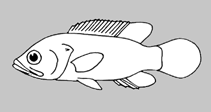 No image available for this species;
drawing shows typical species in Polycentridae.
صور قوقل
drawing shows typical species in Polycentridae.
التصنيف / الأسماء الأسماء الشائعة | مرادفات | Catalog of Fishes(جنس, الانواع) | ITIS | CoL | WoRMS | Cloffa
> Ovalentaria/misc (Various families in series Ovalentaria) > Polycentridae (Leaffishes)
Etymology: Polycentrus: Greek, poly = a lot of + Greek, kentron = sting (Ref. 45335); jundia: The specific name is derived from the Tupi word 'jundiá' meaning 'head with spine', and refers to the large amount of serrations present on the head bones of the new species. A noun in apposition.
Etymology: Polycentrus: Greek, poly = a lot of + Greek, kentron = sting (Ref. 45335); jundia: The specific name is derived from the Tupi word 'jundiá' meaning 'head with spine', and refers to the large amount of serrations present on the head bones of the new species. A noun in apposition.
البيئة: الوسط / المنطقة المناخية / نطاق العمق / نطاق التوزيع البيئة
; المياه العذبة قاعية التغذية و المعيشة. Tropical
التوزيع الأقاليم | مناطق الفاو | النظام البيئي | الظهور | نقطة علي الخريطة | مقدمة | Faunafri
South America: Rio Negro basin in Brazil.
الحجم / وزن / العمر
وصف مختصر مفاتيح التعريف | الوصف الخارجي | قياسات المظهر الخارجي
الأشواك الظهرية (المجموع) : 15 - 16; الأشعة الظهرية الناعمة (المجموع) : 7 - 9; شوكة شرجية: 11 - 12; أشعه شرجية لينه: 5 - 6. Polycentrus jundia can be distinguished from P. schomburgkii by the following characters: diagonal upper postorbital band being shorter than orbital diameter (vs. longer); median postorbital horizontal band present (vs. absent); subocular band being shorter than orbital diameter (vs. length of subocular band equal to or greater than orbital diameter; snout blunt (vs. protruding); mouth isognathous (vs. prognathous); serrations absent on lower edge of lacrimal or two tiny serrations at the posterior
end (vs. 8-14 conspicuous serrations distributed throughout the lower edge); posterior edge of vertical arm of preopercle fully serrated (vs. smooth edge); five pungent opercular spines, the three dorsalmost largest (vs. one or two short spines); subopercle widely serrated along most of the edge (vs. no serrations); cleithrum with serrations on posterior dorsal margin (vs. no serrations); interopercle with widely serrated edge (vs. clusters of three to five serrations along the edge of varying position between individuals); fourth pectoral-fin ray reaching vertical through anal-fin origin (vs. reaching vertical from spine III or IV of anal fin); 19-20 scales on dorsal-fin base (vs. 26-31); 12-14 scales on anal-fin base (vs. 16-20); 19-21 predorsal scales (vs. 28-30); and median opercular blotch absent (vs. present) (Ref. 102655).
دورة الحياة وسلوك التزاوج النضج | التكاثر | وضع البيض | بيض | الخصوبة | اليرقات
المرجع الرئيسي
قم بتحميل مراجعك | مراجع | المنظم | المتعاونين
Coutinho, D.P. and W.B. Wosiacki, 2014. A new species of leaffish Polycentrus Müller & Troschel, 1849 (Percomorpha: Polycentridae) from the rio Negro, Brazil. Neotrop. Ichthyol. 12(4):747-753. (Ref. 102655)
CITES
Not Evaluated
خطر للأنسان
Harmless
استخدامات بشرية
FAO - Publication: search | FishSource |
مزيد من المعلومات
علم البيئة الغذائية
المواد الغذائية (الفرائس)
التركيبة الغذائية
استهلاك الأغذية
الحصص الغذائية
مفتريسات
المواد الغذائية (الفرائس)
التركيبة الغذائية
استهلاك الأغذية
الحصص الغذائية
مفتريسات
الديناميكيات السكانية
معاملات النمو
الحد الأقصى للأعمار/الأحجام
علاقة الطول بالوزن.
علاقة الطول بالطول.
الطول- الترددات
التحويل الجماعي
توظيف
الوفرة
معاملات النمو
الحد الأقصى للأعمار/الأحجام
علاقة الطول بالوزن.
علاقة الطول بالطول.
الطول- الترددات
التحويل الجماعي
توظيف
الوفرة
دورة الحياة
التكاثر
النضج
النضج/الخياشيم المتعلقة.
الخصوبة
وضع البيض
تجمعات التفريخ
بيض
تطور البيضة
اليرقات
حركة انتقال اليرقات
التكاثر
النضج
النضج/الخياشيم المتعلقة.
الخصوبة
وضع البيض
تجمعات التفريخ
بيض
تطور البيضة
اليرقات
حركة انتقال اليرقات
التشريح
منطقة الخياشيم
الدماغ
الأوتوليث
منطقة الخياشيم
الدماغ
الأوتوليث
علم وظائف الأعضاء
تكوين الجسم
المغذيات
استهلاك الأوكسجين
نوع السباحة
سرعة السباحة
الأصباغ البصرية
صوت السمك
الأمراض والطفيليات
السمية (LC50s)
تكوين الجسم
المغذيات
استهلاك الأوكسجين
نوع السباحة
سرعة السباحة
الأصباغ البصرية
صوت السمك
الأمراض والطفيليات
السمية (LC50s)
جيني
الوراثة
جيني
التغاير
التوريث
التنوع الوراثي
الوراثة
جيني
التغاير
التوريث
التنوع الوراثي
ذات الصلة بالبشر
أنظمة الاستزراع المائي
ملامح تربية الأحياء المائية
سلالات
حالات سيغواتيرا
طوابع بريدية وعملات معدنية ومتنوعة
أنظمة الاستزراع المائي
ملامح تربية الأحياء المائية
سلالات
حالات سيغواتيرا
طوابع بريدية وعملات معدنية ومتنوعة
أدوات
كتاب إلكتروني | دليل الميدان | معالج تردد الطول-التردد | أداة تاريخ الحياة | نقطة علي الخريطة |
Catch-MSY |
تقارير خاصة
البحث عن صيانت الأحواض المائيه | التحقق من وجود صفحات حقائق الأنواع | البحث عنا حقائق حول الأحواض المائيه
تنزيل XML
مصادر علي الأنترنت
AFORO (otoliths) | Aquatic Commons | BHL | Cloffa | Websites from users | البحث في مراقبي الأسماك | CISTI | Catalog of Fishes: جنس, الانواع | DiscoverLife | ECOTOX | FAO - Publication: search | Faunafri | Fishipedia | Fishtrace | GloBI | Google Books | Google Scholar | Google | IGFA World Record | OneZoom | Open Tree of Life | Otolith Atlas of Taiwan Fishes | PubMed | Reef Life Survey | Socotra Atlas | TreeBase | شجرة الحياة | Wikipedia: ذهب, بحث | World Records Freshwater Fishing | Zoobank | سجلات علم الحيوانات
تقديرات تستند إلى النماذج
مؤشر التنوع الشُعبي الوراثي (مرجع 82804): PD50 = 0.7812 [Uniqueness, from 0.5 = low to 2.0 = high].
Bayesian length-weight: a=0.01122 (0.00514 - 0.02450), b=3.04 (2.87 - 3.21), in cm total length, based on all LWR estimates for this body shape (Ref. 93245).
مستوى غذائي (مرجع 69278): 3.3 ±0.5 se; based on size and trophs of closest relatives