-

- درباره اين صفحه
- زبان ها
- بازخوردهای کاربران
- نقل قول
- آپلودها
- گونه های وابسته
-



Nothobranchius pienaari Shidlovskiy, Watters & Wildekamp, 2010
را بارگذاری کني تصاوير و فيلم ها
تصوير گوگل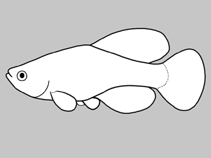 No image available for this species;
drawing shows typical species in Nothobranchiidae.
تصوير گوگل
drawing shows typical species in Nothobranchiidae.
رده بندی / نامها اسامي عام | مترادف | Catalog of Fishes(جنس, گونه ها) | ITIS | CoL | WoRMS | Cloffa
> Cyprinodontiformes (Rivulines, killifishes and live bearers) > Nothobranchiidae (African rivulines)
Etymology: Nothobranchius: Greek, nothos = false + Greek, brangchia = gill (Ref. 45335); pienaari: Named after Dr. U. de V. Pienaar, retired biologist of the Kruger National Park, Republic of South Africa, and discoverer of Nothobranchius species, in honour of his efforts to protect and conserve these populations; the species name is pronounced 'pea-nahri' (Ref. 85866).
Eponymy: Dr Uys de Villiers ‘Tol’ Pienaar (1930–2011) was a South African biologist and game warden, whose doctorate was awarded by Wits Medical School (1953). [...] (Ref. 128868), visit book page.
Etymology: Nothobranchius: Greek, nothos = false + Greek, brangchia = gill (Ref. 45335); pienaari: Named after Dr. U. de V. Pienaar, retired biologist of the Kruger National Park, Republic of South Africa, and discoverer of Nothobranchius species, in honour of his efforts to protect and conserve these populations; the species name is pronounced 'pea-nahri' (Ref. 85866).
Eponymy: Dr Uys de Villiers ‘Tol’ Pienaar (1930–2011) was a South African biologist and game warden, whose doctorate was awarded by Wits Medical School (1953). [...] (Ref. 128868), visit book page.
محیط زیست: محیط زیست / منطقه آب و هوایی / تغييرات عمق / محدوده توزیع بوم شناسي
; آب شيرين موجوداتی که در محدوده وسیعی از آبهای آزاد از نزدیک بستر و یا روی کف بستر، در قسمت های میان آبی تا سطح آب و در برخی گونه ها با قابلیت پرواز، زندگی و تغذیه می کنند.. Tropical
پراكنش سرزمینها | مناطق سازمان خوار و بار جهاني (FAO) | اکوسیستمها | ظهور | نقشه نقطه ای | معرفي | Faunafri
Africa: coastal lowlands of central and southern Mozambique and northeastern South Africa (Ref. 85866).
اندازه / وزن / سن
بلوغ: Lm ? range ? - ? cm
Max length : 3.9 cm SL جنس نر / بدون خواص جنسي; (Ref. 85866); 3.6 cm SL (female)
Max length : 3.9 cm SL جنس نر / بدون خواص جنسي; (Ref. 85866); 3.6 cm SL (female)
توصيف مختصر كليدهاي شناسايي | ريخت شناسي | ريخت ستجي بوسيله انداره گيري
خارهاي باله پشتي (کل) : 0; شعاع نرم باله پشتي (کل) : 14 - 16; خارهاي باله مخرجي: 0; شعاع نرم باله مخرجي: 15 - 17. Diagnosis: Morphology similar to Nothobranchius rachovii and N. krysanovi but distinguished from those by a slightly deeper body in males (Ref. 85866). Nothobranchius pienaari is distinguished from other species of the genus by the following combination og characters: male with colouration consisting of alternating blue-green to grey-green and dark red-brown to almost black scale margins and oblique bars on body and dorsal and anal fins, dark brown spotted basal half of caudal fin, and orange subterminal and black terminal band (Ref. 85866). It can be distinguished from the other species of the subgenus Nothobranchius as follows: from N. furzeri by male colouration and a slightly higher number of dorsal fin rays, 14-16 vs. 14-15; from N. orthonotus by male colouration, lower number of scales on the mid-longitudinal series, 26-31 vs. 28-33; and from N. kadleci by male colouration and shape of the frontal region, higher number of dorsal and anal fin rays, 14-16 vs. 13-14 and 15-17 vs. 13-14 (Ref. 85866). Female distinguished by faint brown oblique bars on posterior part of flanks (Ref. 85866). Nothobranchius pienaari can also be distinguished from N. rachovii and N. krysanovi by a much higher number of diploid chromosomes, 2n=34 vs. 2n=16 for N. rachovii and 2n=18 for N. krysanovi; it can also be distinguished from the karyotypes of N. furzeri and N. orthonotus that both have with 2n=38 a higher number of chromosomes (Ref. 85866).
Body shape (shape guide): fusiform / normal.
Body shape (shape guide): fusiform / normal.
Found in temporary pools and swamps in the floodplains of several rivers flowing into the Indian Ocean south of the lower Zambezi River; usually found in water-filled depressions in the floodplains of rivers and bordering swamps; water depth is variable with the progress of the season (Ref. 85866). Aquatic vegetation may consist of Nymphea, Ottelia, Lagarosiphon and Utricularia species (Ref. 85866).
چرخه زندگی و رفتار جفتگیری بلوغ | تولید مثل | تخم ریزی | تخم ها | باروری | توزاد ( لارو)
مآخذ اصلی
مراجع خود را بارگذاری کنید | مراجع | هماهنگ كننده | همكاران
Shidlovskiy, K.M., B.R. Watters and R.H. Wildekamp, 2010. Notes on the annual killifish species Nothobranchius rachovii (Cyprinodontiformes; Nothobranchiidae) with the description of two new species. Zootaxa 2724:37-57. (Ref. 85866)
وضعيت در فهرست قرمز IUCN (Ref. 130435: Version 2025-2)
حداقل نگرانی (LC) ; Date assessed: 08 January 2019
CITES
Not Evaluated
خطر برای انسان ها
Harmless
استفاده انسانی
FAO - Publication: search | FishSource |
اطلاعات بيشتر
بومشناسی گرمسیری
اقلام غذایی (طعمهها)
تركيب غذايي
مصرف غذايي
جیره غذایی
شکارچیان
اقلام غذایی (طعمهها)
تركيب غذايي
مصرف غذايي
جیره غذایی
شکارچیان
پویایی جمعیت
پارامترهای رشد
حداکثر سن/اندازه
نسبت طول-وزن.
طول-طول نسبی.
نوسانات طولی
تبدیل انبوه
بازسازی
فراواني
پارامترهای رشد
حداکثر سن/اندازه
نسبت طول-وزن.
طول-طول نسبی.
نوسانات طولی
تبدیل انبوه
بازسازی
فراواني
چرخه زندگی
تولید مثل
بلوغ
بلوغ/آبششها
باروری
تخم ریزی
تجمعات تخمریزی
تخم ها
نمو تخم
توزاد ( لارو)
پويايي لاروي
تولید مثل
بلوغ
بلوغ/آبششها
باروری
تخم ریزی
تجمعات تخمریزی
تخم ها
نمو تخم
توزاد ( لارو)
پويايي لاروي
آناتومی
منطقه آبششي
مغز
اتولیت
منطقه آبششي
مغز
اتولیت
فیزیولوژی
ترکیب بدن
مواد مغذی
مصرف اکسیژن
نوع شنا
سرعت شنا
رنگدانههای بصری
صدای ماهی
بیماریها و انگلها
سمیت (LC50s)
ترکیب بدن
مواد مغذی
مصرف اکسیژن
نوع شنا
سرعت شنا
رنگدانههای بصری
صدای ماهی
بیماریها و انگلها
سمیت (LC50s)
ژنتيك
ژنوم
ژنتيك
هتروزیگوسیتی
وارث
تنوع ژنتیکی
ژنوم
ژنتيك
هتروزیگوسیتی
وارث
تنوع ژنتیکی
مرتبط با انسان
سیستمهای آبزیپروری
نمايه هاي آبزي پروري
نژادها
موارد سیگواترا
تمبر، سکه، متفرقه.
سیستمهای آبزیپروری
نمايه هاي آبزي پروري
نژادها
موارد سیگواترا
تمبر، سکه، متفرقه.
ابزارها
کتاب الکترونیکی | راهنماي صحرايي | امكان نرم افزاري بسامد طولي | ابزار تاريخ زيستي | نقشه نقطه ای |
گرفتن-MSY |
گزارش های ويژه
راجع به نگهداری آکواريم ملاحظه کنيد | برگه اطلاعات و مشخصات گونه ها را ملاحظه کنيد | برگه اطلاعات و مشخصات آبزی پروری را ببينيد
بارگيری XML
منابع اينترنتي
AFORO (otoliths) | Aquatic Commons | BHL | Cloffa | Websites from users | فيش واچر را ببينيد | CISTI | Catalog of Fishes: جنس, گونه ها | DiscoverLife | ECOTOX | FAO - Publication: search | Faunafri | Fishipedia | Fishtrace | GloBI | Google Books | Google Scholar | Google | IGFA World Record | OneZoom | Open Tree of Life | Otolith Atlas of Taiwan Fishes | PubMed | Reef Life Survey | Socotra Atlas | TreeBase | Tree of Life | Wikipedia: برو, جستجو | World Records Freshwater Fishing | Zoobank | سوابق جانورشناسی
تخمینها بر اساس مدلها
شاخص تنوع فیلوژنتیکی (مرجع 82804): PD50 = 0.5000 [Uniqueness, from 0.5 = low to 2.0 = high].
Bayesian length-weight: a=0.01000 (0.00244 - 0.04107), b=3.04 (2.81 - 3.27), in cm total length, based on all LWR estimates for this body shape (Ref. 93245).
سطح تروفیک (مرجع 69278): 3.2 ±0.4 se; based on size and trophs of closest relatives