-

- इस पृष्ठ के बारे में
- बोली
- उपयोगकर्ता प्रतिक्रियाएँ
- उद्धरण
- अपलोड
- संबंधित प्रजातियां
-



Epinephelus amblycephalus (Bleeker, 1857)
Banded grouper
अपना अवलोकन जोड़ें Fish Watcher
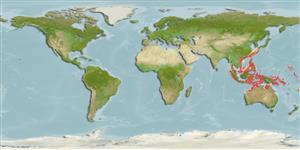
| Native range | All suitable habitat | Point map | Year 2050 |
|
| This map was computer-generated and has not yet been reviewed. |
| Epinephelus amblycephalus AquaMaps Data sources: GBIF OBIS |
अपना अपलोड करें तस्वीरें और वीडियो
तस्वीरे | Google image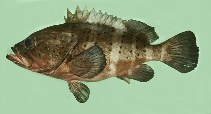 Epinephelus amblycephalus
चित्र स्रोत: AP Randall, J.E.
तस्वीरे | Google image
चित्र स्रोत: AP Randall, J.E.
वर्गीकरण / नाम आम नाम | उपशब्द | Catalog of Fishes(वर्ग, प्रजाति) | ITIS | CoL | WoRMS | Cloffa
> Perciformes/Serranoidei (Groupers) > Epinephelidae (Groupers)
Etymology: Epinephelus: Greek, epinephelos = cloudy (Ref. 45335).
More on author: Bleeker.
Etymology: Epinephelus: Greek, epinephelos = cloudy (Ref. 45335).
More on author: Bleeker.
पर्यावरण: पर्यावरण / जलवायु क्षेत्र / गहराई सीमा / वितरण सीमा पारिस्थितिकी
समुद्री प्रवाल-भित्ति संयुक्त; गहराई सीमा 40 - 130 m (Ref. 5222). Tropical; 34°N - 20°S, 92°E - 177°W
वितरण प्रदेशों | ऐफ ऐ ओ क्षेत्र | पारिस्थितिकी प्रणालियों | संयोग | बिन्दु नक्शा | भूमिका | Faunafri
Western Pacific: Andaman Sea to southern Japan, Taiwan, China, Philippines, Viet Nam, Malaysia, Thailand, Indonesia, New Guinea, the Arafura Sea (Ref. 9819), northwestern Australia, and Fiji.
आकार / वज़न / आयु
संक्षिप्त वर्णन पहचान कुंजी | आकृति विज्ञान | मौरफोमैटरिक्स
पृष्ठीय रीढ़ (सम्पूर्ण) : 11; पृष्ठीय सौफट रेज़ (सम्पूर्ण) : 15 - 16; गुदा कांटा: 3; ऐनल सौफट रेज़: 8. This species is distinguished by the following characters: body depth less than head length, 2.5-3.0 times in SL; large head length 2.1-2.4 times in SL; rounded preopercle with 3-6 enlarged serrae at the angle; upper edge of operculum slightly convex; midside of lower jaw with 2 rows of teeth; gill rakers of first gill arch 8 + 14-16 = 22-24; scaly maxilla, reaching about vertical at rear edge of eye; pectoral and pelvic fin length are equal, 1.7-2.3 times in head length; ctenoid lateral body scales, few auxiliary scales in adults. Colour of head, body and median fins are pale grey; 5 broad dark brown bars, first 2 extending into the spinous part of dorsal fin, 3rd and 4th bars extending into the soft dorsal and anal fins, 5th dark bar at the base of the caudal fin; edges of dorsal parts of body bars with small black spots; nape with dark brown saddle blotch, small black spots mainly along edge of the blotch; cheeks, snout, interorbital area, jaws and chest mostly dark brown, with 2-3 white bands radiating from the eye; irregular black bar on the middle of the caudal fin; yellow maxillary groove; small juveniles (6 cm SL) white, with black bars on body as described for adults, the fins pale yellow with small black spots (Ref. 39231, 89707).
Body shape (shape guide): fusiform / normal; Cross section: compressed.
Body shape (shape guide): fusiform / normal; Cross section: compressed.
This species is usually found on offshore coral and rocky reefs. A popular and commercially important species in Hong Kong, but not in Singapore. Caught with hand lines and sold fresh (Ref. 39231).
जीवन चक्र और संभोग व्यवहार परिपक्व अवधि | पुनरुत्पत्ति | मछलीऔ का अंडे देना | अंडे | उपजाऊपन | लार्वा
मुख्य संदर्भ
अपने संदर्भ अपलोड करें | संदर्भ | संयोजक | सहयोगीयो
Heemstra, P.C. and J.E. Randall, 1993. FAO Species Catalogue. Vol. 16. Groupers of the world (family Serranidae, subfamily Epinephelinae). An annotated and illustrated catalogue of the grouper, rockcod, hind, coral grouper and lyretail species known to date. Rome: FAO. FAO Fish. Synop. 125(16):382 p. (Ref. 5222)
आईयूसीएन रेड लिस्ट स्थिति (Ref. 130435: Version 2025-2)
Least Concern (LC) ; Date assessed: 18 November 2016
CITES
Not Evaluated
मनुष्यों के लिए ख़तरा
Harmless
मानव उपयोग
मात्स्यिकी: लघु वाणिज्य
FAO - Publication: search | FishSource |
अधिक जानकारी
ट्रॉफिक पारिस्थितिकी
खाद्य पदार्थ (शिकार)
संघटक आहार
आहार खपत
खाद्यान्न राशन
परभक्षी
खाद्य पदार्थ (शिकार)
संघटक आहार
आहार खपत
खाद्यान्न राशन
परभक्षी
जनसंख्या गतिशीलता
विकास मापदंड
अधिकतम आयु/आकार
लंबाई-वजन संबंध
लंबाई-लंबाई संबंध
लंबाई-आवृत्तियाँ
सामूहिक रूपांतरण
भर्ती
बहुतायत
विकास मापदंड
अधिकतम आयु/आकार
लंबाई-वजन संबंध
लंबाई-लंबाई संबंध
लंबाई-आवृत्तियाँ
सामूहिक रूपांतरण
भर्ती
बहुतायत
जीवन चक्र
पुनरुत्पत्ति
परिपक्व अवधि
परिपक्वता/गिल्स संबंध
उपजाऊपन
मछलीऔ का अंडे देना
स्पॉनिंग एकत्रीकरण
अंडे
अंडे का विकास
लार्वा
लारवल गतिकी
पुनरुत्पत्ति
परिपक्व अवधि
परिपक्वता/गिल्स संबंध
उपजाऊपन
मछलीऔ का अंडे देना
स्पॉनिंग एकत्रीकरण
अंडे
अंडे का विकास
लार्वा
लारवल गतिकी
शरीर रचना
गिल क्षेत्र
दिमाग
ओटोलिथ
गिल क्षेत्र
दिमाग
ओटोलिथ
फिजियोलॉजी
शारीरिक संरचना
पोषक तत्व
प्राणवायु की खपत
तैराकी का प्रकार
तैराकी की गति
दृश्य वर्णक
मछली की आवाज
रोग एवं परजीवी
विषाक्तता (LC50s)
शारीरिक संरचना
पोषक तत्व
प्राणवायु की खपत
तैराकी का प्रकार
तैराकी की गति
दृश्य वर्णक
मछली की आवाज
रोग एवं परजीवी
विषाक्तता (LC50s)
आनुवंशिकी
जीनोम
आनुवंशिकी
विषमयुग्मजी
हैरेटिबिलटी
आनुवंशिक विविधता
जीनोम
आनुवंशिकी
विषमयुग्मजी
हैरेटिबिलटी
आनुवंशिक विविधता
मानव संबंधी
जलकृषि प्रणालियाँ
जलीयकृषि रूपरेखाऐ
खींच
सिगुएटेरा के मामले
टिकट, सिक्के, विविध.
जलकृषि प्रणालियाँ
जलीयकृषि रूपरेखाऐ
खींच
सिगुएटेरा के मामले
टिकट, सिक्के, विविध.
साधन
ई-पुस्तक | कार्यक्षेत्र पथप्रदर्शक | पहचान कुंजी | लंबाई आवृति इंद्रजालिक | जीवन-इतिहास उपकरण | बिन्दु नक्शा |
कैच-एमएसवाई |
विशेष रिपोर्ट
एक्वेरियम के रखरखाव की जांच करें | प्रजातियों के तथ्य पत्रक की जाँच करें | जलीय कृषि तथ्य पत्रक की जाँच करें
XML डाउनलोड करें
सारांश पृष्ठ | बिंदु डेटा | आम नाम | तस्वीरें
इंटरनेट स्रोत
AFORO (otoliths) | Aquatic Commons | BHL | Cloffa | Websites from users | Check FishWatcher | CISTI | Catalog of Fishes: वर्ग, प्रजाति | DiscoverLife | ECOTOX | FAO - Publication: search | Faunafri | Fishipedia | Fishtrace | GloBI | Google Books | Google Scholar | Google | IGFA World Record | राष्ट्रीय आंकड़ासंचय | OneZoom | Open Tree of Life | Otolith Atlas of Taiwan Fishes | PubMed | Reef Life Survey | Socotra Atlas | TreeBase | Tree of Life | Wikipedia: Go, खोज | World Records Freshwater Fishing | प्राणीशास्त्रीय अभिलेख
मॉडल पर आधारित अनुमान
पसंदीदा तापमान (संदर्भ 123201): 20.2 - 27.6, mean 23.9 °C (based on 136 cells).
जातिवृति विविधता सूचकांक (संदर्भ 82804): PD50 = 0.5000 [Uniqueness, from 0.5 = low to 2.0 = high].
Bayesian length-weight: a=0.01175 (0.00568 - 0.02430), b=3.04 (2.88 - 3.20), in cm total length, based on LWR estimates for this Genus-body shape (Ref. 93245).
ट्रॉफिक स्तर (संदर्भ 69278): 3.8 ±0.6 se; based on size and trophs of closest relatives
लौटाव (संदर्भ 120179): माध्यम, न्यूनतम जनसंख्या दुगनी होने का समय 1.4 - 4.4 वर्ष। (Preliminary K or Fecundity.).
पोषक तत्व (Ref. 124155): Calcium = 27.2 [13.3, 56.6] mg/100g; Iron = 0.481 [0.260, 0.967] mg/100g; Protein = 18.5 [16.9, 19.8] %; Omega3 = 0.134 [0.086, 0.211] g/100g; Selenium = 40 [24, 68] μg/100g; VitaminA = 186 [54, 642] μg/100g; Zinc = 1.26 [0.89, 1.76] mg/100g (wet weight);