-

- Über diese Seite
- Sprachen
- Rückmeldungen der Nutzer
- Zitat
- Uploads
-
Verwandte Arten
- Arten in
Sander - Arten in
Percidae - - Klassifizierung -
- Luciopercinae
- Percidae
- Perciformes/Percoidei
- Teleostei
- Chordata
- Animalia
- Arten in
-



Sander lucioperca (Linnaeus, 1758)
Pike-perch
Hochladen Photos und videos
Bilder | videos | Laute | Briefmarken, Münzen, Verschiedenes. | Google Bild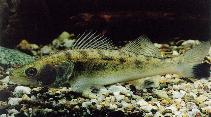 Sander lucioperca
Photo von Zienert, S.
Bilder | videos | Laute | Briefmarken, Münzen, Verschiedenes. | Google Bild
Photo von Zienert, S.
Klassifizierung / Names Namen | Synonyme | Catalog of Fishes(Gattung, Arten) | ITIS | CoL | WoRMS | Cloffa
Umwelt: Milieu / Klimazone / Tiefenbereich / Verbreitungsgebiet Ökologie
; süßwasser; brackwasser pelagisch; potamodrom (Ref. 51243); tiefenbereich 2 - 30 m (Ref. 30578), usually 2 - 3 m (Ref. 27368). Temperate; 6°C - 22°C (Ref. 2059); 67°N - 36°N, 1°W - 75°E
Verbreitung Territorien | FAO Gebiete | Ökosysteme | Vorkommen | Punkt Karte | Einführungen | Faunafri
Europe and Asia: Caspian, Baltic, Black and Aral Sea basins; Elbe (North Sea basin) and Maritza (Aegean basin) drainages. North to about 65° N in Finland. Introduced widely (Ref. 59043). Several countries report adverse ecological impact after introduction (Ref. 1739).
Länge bei der ersten Reifung / Größe / Gewicht / Alter
Geschlechtsreife: Lm 37.2, range 28 - 46 cm
Max length : 100.0 cm SL Männchen/unbestimmt; (Ref. 59043); common length : 50.0 cm TL Männchen/unbestimmt; (Ref. 556); max. veröff. Gewicht: 20.0 kg (Ref. 40476); max. veröff. Alter: 17 Jahre (Ref. 59043)
Max length : 100.0 cm SL Männchen/unbestimmt; (Ref. 59043); common length : 50.0 cm TL Männchen/unbestimmt; (Ref. 556); max. veröff. Gewicht: 20.0 kg (Ref. 40476); max. veröff. Alter: 17 Jahre (Ref. 59043)
Kurzbeschreibung Bestimmungsschlüssel | Morphologie | Morphometrie
Rückenflossenstacheln (insgesamt) : 13 - 20; Rückenflossenweichstrahlen (insgesamt) : 18 - 24; Afterflossenstacheln: 2 - 3; Afterflossenweichstrahlen: 10 - 14; Wirbelzahl: 45 - 47. Distinguished from congeners in Europe by the following combination of characters: 1-2 enlarged canine teeth in anterior part of each jaw; second dorsal fin with 18-22½ branched rays; and 80-97 scales on lateral line (Ref. 59043).
Body shape (shape guide): fusiform / normal.
Body shape (shape guide): fusiform / normal.
Adults inhabit large, turbid rivers and eutrophic lakes, brackish coastal lakes and estuaries. Feed mainly on gregarious, pelagic fishes. They attain first sexual maturity at 3-10 years of age, usually at 4. Undertake short spawning migrations. Individuals foraging in brackish water move to freshwater habitats. Migrations up to 250 km have been recorded. Homing is well developed, even nearby populations may be relatively isolated. Spawn in pairs at dawn or night. Spawning occurs in April-May, exceptional from late February until July, depending on latitude and altitude when temperatures reach 10-14° C on spawning grounds (Ref. 59043). Popularly fished by sport fishers. Its flesh is succulent (Ref. 30578). Utilized fresh or frozen and eaten steamed, broiled and microwaved (Ref. 9988). An individual weighing 19 kg was reportedly caught in 1959 in Starnberger, Bavaria, Germany (Peter Admicka, pers. Comm. E-mail: peter.adamicka@oeaw.ac.at).
Lebenszyklus und Paarungsverhalten Geschlechtsreife | Fortpflanzung | Ablaichen | Eier | Fruchtbarkeit | Larven
The spawning places are over gravel in moving water (Ref. 205). "Males are territorial and excavate shallow depressions about 50 cm in diameter and 5-10 cm deep in sand or gravel, or among exposed plant roots on which eggs are deposited, usually in turbid water and at 1-3 m depth. Spawn in pairs, at dawn or night. The female remains over the nest while the male circles rapidly around, at about 1 meter from the nest. Then male takes a vertical orientation and both swim around swiftly, and eggs and sperm are released, The female leaves the nest after all eggs are released. The male defends the nest and fans the eggs with his pectorals. Females spawn once a year, laying all the eggs at one time (Ref. 88075). Feeding larvae are positively phototactic and feed on pelagic organisms after they leave the nest for open water" (Ref. 59043).
Hauptreferenz
Laden Sie Ihre Referenzen hoch | Referenzen | Koordinator | Partner
Kottelat, M. and J. Freyhof, 2007. Handbook of European freshwater fishes. Publications Kottelat, Cornol and Freyhof, Berlin. 646 pp. (Ref. 59043)
IUCN Rote Liste Status (Ref. 130435: Version 2025-2)
nicht bedroht (LC) ; Date assessed: 27 May 2022
CITES
Not Evaluated
Bedrohung für Menschen
Potential pest (Ref. 57271)
Nutzung durch Menschen
Fischereien: kommerziell; Aquakultur: kommerziell; Sportfisch: ja; Aquarium: Öffentliche Aquarien
FAO - Aquakultur-Systeme: produktion, Artbeschreibung; Fischereien: landungen, Artbeschreibung; Publication: search | FishSource | Das Meer um uns herum
Mehr Information
Trophische Ökologie
Lebensmittel (Beutetiere)
Nahrungszusammensetzung
Nahrungsaufnahme
Lebensmittelrationen
Räuber
Lebensmittel (Beutetiere)
Nahrungszusammensetzung
Nahrungsaufnahme
Lebensmittelrationen
Räuber
Populationsdynamik
Wachstumsparameter
Max. Alter/Größen
Länge-Gewicht-Rel.
Länge-Länge-Verhältnis.
Längenhäufigkeiten
Massenkonvertierung
Rekrutierung
Dichte
Wachstumsparameter
Max. Alter/Größen
Länge-Gewicht-Rel.
Länge-Länge-Verhältnis.
Längenhäufigkeiten
Massenkonvertierung
Rekrutierung
Dichte
Lebenszyklus
Fortpflanzung
Geschlechtsreife
Reifung/Kiemen rel.
Fruchtbarkeit
Ablaichen
Laichaggregationen
Eier
Eientwicklung
Larven
Larven Pop.Dyn.
Fortpflanzung
Geschlechtsreife
Reifung/Kiemen rel.
Fruchtbarkeit
Ablaichen
Laichaggregationen
Eier
Eientwicklung
Larven
Larven Pop.Dyn.
Physiologie
Körperliche Zusammensetzung
Nährstoffe
Sauerstoffverbrauch
Schwimmart
Schwimmgeschwindigkeit
Visuelle Pigmente
Fischgeräusche
Krankheiten und Parasiten
Toxizität (LC50s)
Körperliche Zusammensetzung
Nährstoffe
Sauerstoffverbrauch
Schwimmart
Schwimmgeschwindigkeit
Visuelle Pigmente
Fischgeräusche
Krankheiten und Parasiten
Toxizität (LC50s)
Menschenbezogen
Aquakultur-Systeme
Aquakultur Profile
Zuchtlinien
Ciguatera-Fälle
Briefmarken, Münzen, Verschiedenes.
Aquakultur-Systeme
Aquakultur Profile
Zuchtlinien
Ciguatera-Fälle
Briefmarken, Münzen, Verschiedenes.
Tools
Bio-Quiz | E-Book | Feldführer | Bestimmungsschlüssel | Längenhäufigkeits Tool | Lebensdaten Tool | Punkt Karte |
Catch-MSY |
Zusatzinformationen
Download XML
Zusammenfassung | Punktdaten | Namen | Photos
Internet Quellen
AFORO (otoliths) | Alien/Invasive Species database | Aquatic Commons | BHL | Cloffa | Websites from users | FishWatcher Einträge suchen | CISTI | Catalog of Fishes: Gattung, Arten | DiscoverLife | DORIS | ECOTOX | FAO - Aquakultur-Systeme: produktion, Artbeschreibung; Fischereien: landungen, Artbeschreibung; Publication: search | Faunafri | Fishipedia | Fishtrace | GloBI | Google Books | Google Scholar | Google | IGFA World Record | Nationale Datenbanken | OneZoom | Open Tree of Life | Otolith Atlas of Taiwan Fishes | Öffentliche Aquarien | PubMed | Reef Life Survey | Socotra Atlas | TreeBase | Tree of Life | Wikipedia: Gehe zu, Suchen | World Records Freshwater Fishing | Zoologischer Rekord
Schätzungen auf der Grundlage von Modellen
Phylogenetischer Diversitätsindex (Ref. 82804): PD50 = 0.5312 [Uniqueness, from 0.5 = low to 2.0 = high].
Bayesian length-weight: a=0.00589 (0.00495 - 0.00700), b=3.12 (3.07 - 3.17), in cm total length, based on LWR estimates for this species (Ref. 93245).
Trophische Ebene (Ref. 69278): 4.0 ±0.78 se; based on food items.
Generation time: 8.2 (5.8 - 12.2) years. Estimated as median ln(3)/K based on 19 growth studies.
Widerstandsfähigkeit (Ref. 120179): niedrig, Verdopplung der Population dauert 4,5 - 14 Jahre. (K=0.10-0.24; tmax=16; Fecundity=10,000).
Nährstoffe (Ref. 124155): Calcium = 50.9 [29.3, 80.5] mg/100g; Iron = 0.262 [0.132, 0.524] mg/100g; Protein = 18.8 [17.9, 19.6] %; Omega3 = 0.496 [0.193, 0.969] g/100g; Selenium = 2.25 [0.74, 7.60] μg/100g; VitaminA = 17 [6, 52] μg/100g; Zinc = 0.729 [0.551, 0.986] mg/100g (wet weight); based on nutrient studies.