-

- Об этой странице
- Языки
- Отзывы пользователей
- Цитировать
- Загрузка
-
Близкие виды
- Sprattus sprattus
- Вид в
Clupea - Вид в
Clupeidae - - Классификация -
- Clupeidae
- Clupeiformes
- Teleostei
- Chordata
- Animalia
-



Добавить Ваши наблюдения в Fish Watcher
| Native range | All suitable habitat | Point map | Year 2050 |

|
| This map was computer-generated and has not yet been reviewed. |
| Clupea harengus AquaMaps Data sources: GBIF OBIS |
Загрузить свой Фото и Видео
изображения | Видео | звуки | Марки, монеты и прочее. | Изображение на Google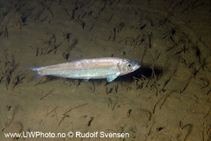 Clupea harengus
Изображение сделано Svensen, R.
изображения | Видео | звуки | Марки, монеты и прочее. | Изображение на Google
Изображение сделано Svensen, R.
Классификация / Имена народные названия | синонимы | Catalog of Fishes(род, виды) | ITIS | CoL | WoRMS | Cloffa
> Clupeiformes (Herrings) > Clupeidae (Herrings, shads, sardines, menhadens)
Etymology: Clupea: Latin, clupea = sardine, derived from Clupeus = shield; doubtless a reference to the scales covering the body of the fish + Greek, odous = teeth (Ref. 45335).
More on author: Linnaeus.
Etymology: Clupea: Latin, clupea = sardine, derived from Clupeus = shield; doubtless a reference to the scales covering the body of the fish + Greek, odous = teeth (Ref. 45335).
More on author: Linnaeus.
Issue
The subspecies were not characterized well enough, that unless there is more evidence presented, Clupea harengus should be considered as one species with several known populations (S.Kullander, pers.comm. 07/09).
Окружающая среда: среда / климатическая зона / пределы глубины / диапазон распространения экология
морской; солоноватоводный донно-пелагический; мигрирует в океане (Ref. 51243); пределы глубины 0 - 364 m (Ref. 58426), usually 0 - 200 m (Ref. 6683). Temperate; 0°C - 18°C (Ref. 188); 80°N - 33°N, 95°W - 70°E
распространение Территории | регионы FAO | Экосистемы | места находок | карта точек | интродукции | Faunafri
North Atlantic: in the west, it ranges from southwestern Greenland and Labrador southward to South Carolina, USA. In the east, it ranges from Iceland and southern Greenland southward to the northern Bay of Biscay and eastward to Spitsbergen and Novaya Zemlya in Russia, including the Baltic Sea (Ref. 188).
Длина при первой зрелости / Размер / Вес / Возраст
половая зрелость: Lm 16.7 range ? - ? cm
Max length : 45.0 cm SL самец/пол неопределен; (Ref. 37032); common length : 30.0 cm SL самец/пол неопределен; (Ref. 37032); наибольший вес (опубликованные данные): 1.1 kg (Ref. 6114); наибольший возраст (опубликованны данные): 25 годы (Ref. 89560)
Max length : 45.0 cm SL самец/пол неопределен; (Ref. 37032); common length : 30.0 cm SL самец/пол неопределен; (Ref. 37032); наибольший вес (опубликованные данные): 1.1 kg (Ref. 6114); наибольший возраст (опубликованны данные): 25 годы (Ref. 89560)
Краткое описание определительные ключи | морфология | морфометрия
колючие лучи спинного плавника (общее число) : 0; членистые (мягкие) лучи спинного плавника (общее число) : 13 - 21; колючие лучи анального плавника: 0; членистые (мягкие) лучи анального плавника: 12 - 23; позвонки: 51 - 60. Slender fish with a round belly. Scutes without prominent keel; 12 to 16 post-pelvic scutes (Ref. 188). No median notch in upper jaw; operculum without radiating bony striae; the posterior border of its gill opening is evenly rounded. It is blue to greenish-blue dorsally, becoming silvery ventrally. No distinctive dark spots on the body or fins (Ref. 188).
Body shape (shape guide): fusiform / normal; Cross section: compressed.
Body shape (shape guide): fusiform / normal; Cross section: compressed.
Herring schools move between spawning and wintering grounds in coastal areas and feeding grounds in open water by following migration patterns learned from earlier year classes (Ref. 88171). Juveniles (up to 2 years) shoal close inshore, while adults are found more offshore (Ref. 6683). Adults spend the day in deeper water, but rise to shallower water at night (Ref. 89562). Light is an important factor in controlling their vertical distribution. A facultative zooplanktivorous filter-feeder, i.e., it can switch to filter-feeding if the food density and particle size are appropriate (Ref. 28664). Feed mainly on copepods finding food by visual sense. Herring schools often attract predators such as fish, birds, and marine mammals (Ref. 89563). Schooling, silvery sides, excellent hearing (capable of detecting frequencies between 30-4,000 Hz , Refs. 89391, 89564, 89566), and very fast escape response act as anti-predator devices (Ref. 28664). The most important races in the East Atlantic are the winter-spawning Norwegian and Icelandic herring, the autumn spawning Icelandic and North Sea herring and the Baltic Sea herring. Utilized fresh, dried or salted, smoked, canned and frozen; can be fried, broiled, microwaved and baked (Ref. 9988).
Жизненный цикл и брачное поведение половая зрелость | размножение | нерест | икра | Плодовитость | личинки
The herring matures between 2-9 years (Refs. 35388, 82767, 89571). Herring populations are known to use traditional spawning grounds, many of which are along shallow coastal areas (15-40 m depth) or on offshore banks down to 200 m (Refs. 6684, 89572). Spawning usually occurs on gravel or rock bottoms, with the exception of Baltic populations which show a preference for shallow (less than 10 m depth) seaweed beds (Refs. 89520, 89572). Each population spawns only once a year over a relatively short time period (Ref. 89573). At least one population is spawning in any one month of the year, each having a different spawning time and place. The herring is a demersal spawner that releases a ribbon of sticky eggs that sink to the sea bed (Ref. 89574) and adhere to the substrate. The eggs released by a spawning population may be several layers thick which may deprive eggs in the bottom layers of oxygen, causing egg mortality (Ref. 89563). Although higher fecundities were reported earlier (e.g. Ref. 74523), fecundity now ranges from 10,000-60,000 eggs (Ref. 89571). Hatching may take up to 3 weeks, depending on temperature (Ref. 89571). Larvae are pelagic and drift with the current. Note: it is impossible to summarize briefly the wide range of spawning strategies of Atlantic herring; the best reviews are those of Svetovidov (Refs. 4608, 4609) for the Eastern Atlantic Ocean and Hildebrand (Ref. 4607) for the Western Atlantic Ocean.
Основная ссылка
Загрузите свои рекомендации | ссылки | координатор | соавторы
Whitehead, P.J.P., 1985. FAO Species Catalogue. Vol. 7. Clupeoid fishes of the world (suborder Clupeoidei). An annotated and illustrated catalogue of the herrings, sardines, pilchards, sprats, shads, anchovies and wolf-herrings. FAO Fish. Synop. 125(7/1):1-303. Rome: FAO. (Ref. 188)
Статус Красного Списка МСОП (Ref. 130435: Version 2025-2)
Не вызывающий беспокойства (LC) ; Date assessed: 04 February 2009
CITES
Not Evaluated
Угроза для людей
Harmless
Использование человеком
рыболовство: важный объект промысла; объект спортивного рыболовства: да
FAO - рыболовство: посадки, Видовой профиль; Publication: search | FIRMS - Stock assessments | FishSource | Море вокруг нас
дополнительная информация
Трофическая экология
Пищевые предметы (добыча)
состав пищи
потребление пищи
Продовольственные пайки
хищники
Пищевые предметы (добыча)
состав пищи
потребление пищи
Продовольственные пайки
хищники
Динамика численности населения
Параметры роста
Макс. возраст / размер
Отношение длины к весу.
Отношение длины к длине.
Размерный состав
Преобразование массы
пополнение
численность
Параметры роста
Макс. возраст / размер
Отношение длины к весу.
Отношение длины к длине.
Размерный состав
Преобразование массы
пополнение
численность
Жизненный цикл
размножение
половая зрелость
Зрелость/Жиры относительно.
Плодовитость
нерест
Нерестовые скопления
икра
Развитие икры
личинки
динамика численности личинок
размножение
половая зрелость
Зрелость/Жиры относительно.
Плодовитость
нерест
Нерестовые скопления
икра
Развитие икры
личинки
динамика численности личинок
Физиология
Состав тела
Питательные вещества
Потребление кислорода
Тип плавания
Скорость плавания
Зрительные пигменты
Звук рыбы
Болезни и паразиты
Токсичность (LC50s)
Состав тела
Питательные вещества
Потребление кислорода
Тип плавания
Скорость плавания
Зрительные пигменты
Звук рыбы
Болезни и паразиты
Токсичность (LC50s)
Связанные с человеком
Системы аквакультуры
особенности рыбоводства
степень растяжения
Случаи заболевания сигуатерой
Марки, монеты и прочее.
Системы аквакультуры
особенности рыбоводства
степень растяжения
Случаи заболевания сигуатерой
Марки, монеты и прочее.
инструменты
Органическая викторина | Электронная книга | полевой определитель | определительные ключи | Длина-Частота | онтогенез | карта точек |
Catch-MSY |
Специальные отчеты
Проверить содержание в аквариумах | Проверить опубликованные видовые данные | Проверить опубликованные данные по аквакультуре
Скачать в формате XML
ресурсы в Интернет
AFORO (otoliths) | Aquatic Commons | BHL | Cloffa | Websites from users | Проверить FishWatcher | CISTI | Catalog of Fishes: род, виды | DiscoverLife | ECOTOX | FAO - рыболовство: посадки, Видовой профиль; Publication: search | Faunafri | Fishipedia | Fishtrace | GloBI | Google Books | Google Scholar | Google | IGFA World Record | национальные базы данных | OceanAdapt | OneZoom | Open Tree of Life | Otolith Atlas of Taiwan Fishes | общественные аквариумы | PubMed | Reef Life Survey | Socotra Atlas | TreeBase | Tree of Life | Wikipedia: Вперёд, поиск | World Records Freshwater Fishing | Zoobank | Зоологическая летопись
Оценки, основанные на моделях
Предпочтительная температура (ссылка 123201): 0.5 - 11.2, mean 6.6 °C (based on 912 cells).
Индекс филогенетического разнообразия (ссылка 82804): PD50 = 0.6250 [Uniqueness, from 0.5 = low to 2.0 = high].
Bayesian length-weight: a=0.00550 (0.00484 - 0.00624), b=3.10 (3.06 - 3.14), in cm total length, based on LWR estimates for this species (Ref. 93245).
Трофический уровень (ссылка 69278): 3.4 ±0.1 se; based on diet studies.
Generation time: 3.3 (3.1 - 3.5) years. Estimated as median ln(3)/K based on 85 growth studies.
устойчивость к внешним воздействиям (ссылка 120179): средний (среднего размера), минимальное время удвоения популяции 1.4-4.4 года (rm=0.1-0.5; K=0.2-0.6; tm=2-5; tmax=25; Fec=17,300-301,000).
Prior r = 0.44, 95% CL = 0.29 - 0.65, Based on 53 full stock assessments.
Питательные вещества (Ref. 124155): Calcium = 75.4 [22.6, 182.8] mg/100g; Iron = 0.372 [0.199, 0.704] mg/100g; Protein = 17.5 [15.5, 19.5] %; Omega3 = 0.915 [0.561, 1.451] g/100g; Selenium = 16.5 [5.4, 49.4] μg/100g; VitaminA = 29.1 [6.6, 129.0] μg/100g; Zinc = 1.03 [0.58, 1.64] mg/100g (wet weight); based on nutrient studies.