-

- Об этой странице
- Языки
- Отзывы пользователей
- Цитировать
- Загрузка
-
Близкие виды
- Вид в
Limnothrissa - Вид в
Dorosomatidae - - Классификация -
- Dorosomatidae
- Clupeiformes
- Teleostei
- Chordata
- Animalia
- Вид в
-



Limnothrissa miodon (Boulenger, 1906)
Lake Tanganyika sardine
Загрузить свой Фото и Видео
изображения | Изображение на Google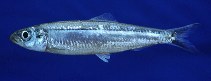 Limnothrissa miodon
Изображение сделано Mohamed, A.D.
изображения | Изображение на Google
Изображение сделано Mohamed, A.D.
Классификация / Имена народные названия | синонимы | Catalog of Fishes(род, виды) | ITIS | CoL | WoRMS | Cloffa
> Clupeiformes (Herrings) > Dorosomatidae (Gizzard shads and sardinellas)
Etymology: Limnothrissa: Greek, limne = swamp + Greek, thrissa, es = shad (Ref. 45335).
More on author: Boulenger.
Etymology: Limnothrissa: Greek, limne = swamp + Greek, thrissa, es = shad (Ref. 45335).
More on author: Boulenger.
Окружающая среда: среда / климатическая зона / пределы глубины / диапазон распространения экология
; пресноводный пелагический; немигрирующий; пределы глубины 10 - 60 m (Ref. 27631). Tropical; 21°C - 29°C (Ref. 5392); 3°S - 18°S
распространение Территории | регионы FAO | Экосистемы | места находок | карта точек | интродукции | Faunafri
Africa: endemic to Lake Tanganyika (Ref. 188, 28136, 107916), but introduced into several other lakes, like Lake Kivu, Lake Kariba and Cahora Bassa reservoir (Ref. 188, 7248, 28136, 52193, 107916). Also reported as Microthrissa stappersii from Lake Mweru (Ref. 246, 52958), but this is based on an erroneous type locality of the species (Ref. 26733).
Длина при первой зрелости / Размер / Вес / Возраст
половая зрелость: Lm 6.8 range ? - ? cm
Max length : 17.0 cm SL самец/пол неопределен; (Ref. 36901); common length : 10.0 cm SL самец/пол неопределен; (Ref. 4967); наибольший вес (опубликованные данные): 40.00 g (Ref. 36901)
Max length : 17.0 cm SL самец/пол неопределен; (Ref. 36901); common length : 10.0 cm SL самец/пол неопределен; (Ref. 4967); наибольший вес (опубликованные данные): 40.00 g (Ref. 36901)
Краткое описание определительные ключи | морфология | морфометрия
колючие лучи спинного плавника (общее число) : 0; членистые (мягкие) лучи спинного плавника (общее число) : 13 - 18; колючие лучи анального плавника: 0; членистые (мягкие) лучи анального плавника: 15 - 19; позвонки: 41 - 44. Diagnosis: Body fairly slender, depth about 22-24% of standard length; pre-pelvic scutes not strongly keeled, beginning behind base of last pectoral fin ray; maxilla blade over 4 times as long as its shaft, its lower toothed edge continued forward to meet hind tip of pre-maxilla; second supra-maxilla asymmetrical, lower half larger; lower gillrakers long and slender, 35-40; a distinct silver stripe along flank (Ref. 188, 1878). Its synonym Limnothrissa stappersii is characterised by fewer lower gill rakers, 22-25, fewer anal fin rays, 15-17, and the absence of scutes, and represents possibly a juvenile form of L. miodon (Ref. 188, 26733). It resembles Stolothrissa tanganicae of Lake Tanganyika, which is more slender, has a small eye and a shorter maxilla blade not reaching forward to hind tip of premaxilla (Ref. 188).
Body shape (shape guide): fusiform / normal; Cross section: oval.
Body shape (shape guide): fusiform / normal; Cross section: oval.
Inhabits offshore areas of lake Tanganyika; also occurs at rivermouths, where the water is not too muddy and not very different physico-chemically from the Lake (Ref. 5393); lacustrine, forming large schools (Ref. 188, 7248), preferring open water (Ref. 13337). It has been successfully introduced to Lake Kivu, Lake Kariba and Cahora Bassa reservoir (Ref. 4967); found throughout Lake Kariba in both inshore habitats and open water to a depth of 20-35 m depending on the thermocline (Ref. 7248, 52193). Feeds on plankton, especially atyid shrimps, also copepods and prawns, but larger individuals apparently take larval Stolothrissa (Ref. 188). Cannibalism does occur (Ref. 13337). Breeds close to the shore throughout the rainy seasons, but with peaks in May/June and December/January (Ref. 188). Fire is used to attract the fish and caught by means of scoop nets (Ref. 36900). Used widely as bait by anglers, especially for tigerfish (Ref. 7248, 52193).
Жизненный цикл и брачное поведение половая зрелость | размножение | нерест | икра | Плодовитость | личинки
Breeds close to the shore during the rainy seasons, but with peaks in May/June and December/January (Ref. 188).
Основная ссылка
Загрузите свои рекомендации | ссылки | координатор | соавторы
Whitehead, P.J.P., 1985. FAO Species Catalogue. Vol. 7. Clupeoid fishes of the world (suborder Clupeoidei). An annotated and illustrated catalogue of the herrings, sardines, pilchards, sprats, shads, anchovies and wolf-herrings. FAO Fish. Synop. 125(7/1):1-303. Rome: FAO. (Ref. 188)
Статус Красного Списка МСОП (Ref. 130435: Version 2025-2)
Не вызывающий беспокойства (LC) ; Date assessed: 04 March 2025
CITES
Not Evaluated
Угроза для людей
Potential pest (Ref. 13055)
Использование человеком
рыболовство: коммерческий; наживка: usually
FAO - Publication: search | FishSource |
дополнительная информация
Трофическая экология
Пищевые предметы (добыча)
состав пищи
потребление пищи
Продовольственные пайки
хищники
Пищевые предметы (добыча)
состав пищи
потребление пищи
Продовольственные пайки
хищники
Динамика численности населения
Параметры роста
Макс. возраст / размер
Отношение длины к весу.
Отношение длины к длине.
Размерный состав
Преобразование массы
пополнение
численность
Параметры роста
Макс. возраст / размер
Отношение длины к весу.
Отношение длины к длине.
Размерный состав
Преобразование массы
пополнение
численность
Жизненный цикл
размножение
половая зрелость
Зрелость/Жиры относительно.
Плодовитость
нерест
Нерестовые скопления
икра
Развитие икры
личинки
динамика численности личинок
размножение
половая зрелость
Зрелость/Жиры относительно.
Плодовитость
нерест
Нерестовые скопления
икра
Развитие икры
личинки
динамика численности личинок
Анатомия
жаберная область
Мозг
Отолит
жаберная область
Мозг
Отолит
Физиология
Состав тела
Питательные вещества
Потребление кислорода
Тип плавания
Скорость плавания
Зрительные пигменты
Звук рыбы
Болезни и паразиты
Токсичность (LC50s)
Состав тела
Питательные вещества
Потребление кислорода
Тип плавания
Скорость плавания
Зрительные пигменты
Звук рыбы
Болезни и паразиты
Токсичность (LC50s)
Связанные с человеком
Системы аквакультуры
особенности рыбоводства
степень растяжения
Случаи заболевания сигуатерой
Марки, монеты и прочее.
Системы аквакультуры
особенности рыбоводства
степень растяжения
Случаи заболевания сигуатерой
Марки, монеты и прочее.
инструменты
Специальные отчеты
Проверить содержание в аквариумах | Проверить опубликованные видовые данные | Проверить опубликованные данные по аквакультуре
Скачать в формате XML
ресурсы в Интернет
AFORO (otoliths) | Alien/Invasive Species database | Aquatic Commons | BHL | Cloffa | Websites from users | Проверить FishWatcher | CISTI | Catalog of Fishes: род, виды | DiscoverLife | ECOTOX | FAO - Publication: search | Faunafri | Fishipedia | Fishtrace | GloBI | Google Books | Google Scholar | Google | IGFA World Record | OneZoom | Open Tree of Life | Otolith Atlas of Taiwan Fishes | PubMed | Reef Life Survey | Socotra Atlas | TreeBase | Tree of Life | Wikipedia: Вперёд, поиск | World Records Freshwater Fishing | Зоологическая летопись
Оценки, основанные на моделях
Индекс филогенетического разнообразия (ссылка 82804): PD50 = 1.0000 [Uniqueness, from 0.5 = low to 2.0 = high].
Bayesian length-weight: a=0.00724 (0.00401 - 0.01308), b=3.00 (2.84 - 3.16), in cm total length, based on LWR estimates for this species & (Sub)family-body (Ref. 93245).
Трофический уровень (ссылка 69278): 1.6 ±0.0 se; based on diet studies.
устойчивость к внешним воздействиям (ссылка 120179): высокий, минимальное время удвоения популяции до 15 месяцев (K=0.86-1.2).
Питательные вещества (Ref. 124155): Calcium = 367 [118, 1,086] mg/100g; Iron = 4.89 [2.26, 10.19] mg/100g; Protein = 18.5 [17.0, 19.9] %; Omega3 = 0.641 [0.187, 2.294] g/100g; Selenium = 117 [37, 355] μg/100g; VitaminA = 17.4 [4.2, 76.6] μg/100g; Zinc = 3.88 [2.16, 7.09] mg/100g (wet weight);