-

- เกี่ยวกับหน้านี้
- ภาษา
- ความคิดเห็นจากผู้ใช้
- การอ้างอิง
- อัพโหลด
- สายพันธุ์ที่เกี่ยวข้อง
-



อัพโหลดของคุณ ภาพถ่าย และ วิดีโอ
รูปภาพหลายรูป | Google image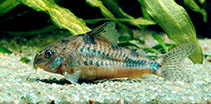 Corydoras paleatus
ภาพโดย Muséum-Aquarium de Nancy/D. Terver
รูปภาพหลายรูป | Google image
ภาพโดย Muséum-Aquarium de Nancy/D. Terver
การจำแนกประเภท / ชื่อ ชื่อสามัญ | ชื่อพ้อง | Catalog of Fishes(สกุล, ชนิด) | ITIS | CoL | WoRMS | Cloffa
> Siluriformes (Catfishes) > Callichthyidae (Callichthyid armored catfishes) > Corydoradinae
Etymology: Corydoras: Greek, kory = helmet + greek, doras = skin (Ref. 45335).
More on author: Jenyns.
Etymology: Corydoras: Greek, kory = helmet + greek, doras = skin (Ref. 45335).
More on author: Jenyns.
สิ่งแวดล้อม : สิ่งแวดล้อม / เขตภูมิอากาศ / ระดับความลึก / ระยะการกระจายสินค้า นิเวศวิทยา
; น้ำจืด สัตว์น้ำหน้าดิน; pH range: 6.0 - 8.0; dH range: 5 - 19. Subtropical; 18°C - 23°C (Ref. 30491)
การแพร่กระจาย อาณาเขต | พื้นที่จำแนกตาม FAO | ระบบนิเวศหลายระบบ | การปรากฏขึ้น,การเกิดขึ้น,พบ | ตำแหน่งบนแผนที่ | การแนะนำ | Faunafri
South America: Argentina, Brazil, and Uruguay.
ขนาด / น้ำหนัก / อายุ
วัยเจริญพันธุ์: Lm ? range ? - ? cm
Max length : 6.6 cm SL เพศผู้/กระเทย; (Ref. 111771); 7.1 cm SL (female); น้ำหนักสูงสุดที่มีการรายงาน: 11.20 g (Ref. 111771); น้ำหนักสูงสุดที่มีการรายงาน: 11.20 g
Max length : 6.6 cm SL เพศผู้/กระเทย; (Ref. 111771); 7.1 cm SL (female); น้ำหนักสูงสุดที่มีการรายงาน: 11.20 g (Ref. 111771); น้ำหนักสูงสุดที่มีการรายงาน: 11.20 g
คำอธิบายสั้นๆ เครื่องมือที่ใช้ในการแยกชนิดสัตว์,สิ่งมีชีวิตออกจากกัน | สัณฐานวิทยา | ความยาวต่างๆ
เงี่ยงครีบหลัง (รวม) : 2; ก้านครีบอ่อนที่หาง (รวม) : 8 - 9; ก้านครีบอ่อนที่ก้น: 6 - 7; สัตว์มีกระดูกสันหลัง: 21 - 22. This species is distinguished from its congeners, except C. armatus and C. microcephalus, by having perpendicularly directed serrations along the entire posterior margin of the pectoral spines (vs. serrations pointing towards pectoral spine origin, or directed towards pectoral-spine tip, or perpendicularly directed serrations, if present, bifid or restricted to proximal region of pectoral spine); differs from C. armatus by the absence of contact between infraorbital 2 and compound pterotic (vs. presence); differs from C. microcephalus by the presence of a longitudinal series of three large black blotches along midline of flank (vs. four or five midline blotches in C. microcephalus); differs from C. cohui, C. diphyes, C. flaveolus, C. froehlichi, C. gryphus, C. habrosus, C. lacrimostigmata, C. longipinnis, C. lymnades by having the anterior region of the dorsal fin black (vs. with black spots or bars); differs from C. carlae, C. garbei, C. difluviatilis by having hyaline or black pectoral fin (vs. with black spots or bars); differs from C. reynoldsi, C. tukano, C. weitzmani by the absence of a conspicuous coloration pattern in the region of the eye (vs. presence of a transversal black stripe across the eye); differs from C. gladysae, C. micracanthus, C. petracinii by having a dorsal spine that is relatively long, with adpressed distal tip slightly surpassing the base of the last branched dorsal-ray (vs. conspicuously short, with adpressed distal tip not reaching the base of the last branched dorsal-ray); differs from C. ehrhardti by having transversal black bars on caudal-fin lobes (vs. caudal-fin lobes hyaline or brownish); differs from C. steindachneri by having a fold in the middle portion of the lower lip (vs. absence) (Ref. 129023).
Cross section: compressed.
Cross section: compressed.
Facultative air-breathing (Ref. 126274); Found in ponds (Ref. 11229). Feeds on worms, crustaceans, insects and plant matter (Ref. 7020). Aquarium keeping: in groups of 5 or more individuals; minimum aquarium size 60 cm (Ref. 51539).
วงจรชีวิตและพฤติกรรมการผสมพันธุ์ วัยเจริญพันธุ์ | การสืบพันธุ์ | การวางไข่ | เซลสืบพันธ์ของเพศเมีย(ไข่) | ความดกของไข่ | ตัวอ่อน
The female holds 2-4 eggs between her pelvic fins, where the male fertilizes them for about 30 seconds. Only then the female swims to a suitable spot, where she attaches the very sticky eggs. The pair repeats this process until about 100 eggs have been fertilized and attached (Ref. 1672).
อ้างอิงหลัก
อัพโหลดข้อมูลอ้างอิงของคุณ | อ้างอิง | ผู้ประสานงาน : Reis, Roberto E. | ผู้ร่วมมือ
Tencatt, L.F.C., M.R. de Britto and C.S. Pavanelli, 2016. Revisionary study of the armored catfish Corydoras paleatus (Jenyns, 1842) (Siluriformes: Callichthyidae) over 180 years after its discovery by Darwin, with description of a new species. Neotropical Ichthyology 14(1):75-94. (Ref. 129023)
สถานะบัญชีแดงของ IUCN (Ref. 130435: Version 2025-2)
Least Concern (LC) ; Date assessed: 15 October 2020
CITES
Not Evaluated
ภัยคุกคามต่อมนุษย์
Harmless
การใช้ของมนุษย์
การประมง: ไม่มีผลประโยชน์; สถานที่แสดงสัตว์และพืชน้ำ: เน้นการพาณิชย์
FAO - Publication: search | FishSource |
ข้อมูลเพิ่มเติม
พลวัตของประชากร
พารามิเตอร์การเจริญเติบโต
อายุสูงสุด / ขนาด
ความยาว-น้ำหนักสัมพันธ์
ความยาว-ความยาวสัมพันธ์
ความยาว-ความถี่
การแปลงมวล
การทดแทนที่
อุดมสมบรูณ์
พารามิเตอร์การเจริญเติบโต
อายุสูงสุด / ขนาด
ความยาว-น้ำหนักสัมพันธ์
ความยาว-ความยาวสัมพันธ์
ความยาว-ความถี่
การแปลงมวล
การทดแทนที่
อุดมสมบรูณ์
วงจรชีวิต
การสืบพันธุ์
วัยเจริญพันธุ์
ความสมบูรณ์พันธุ์/เหงือกที่เกี่ยวข้อง
ความดกของไข่
การวางไข่
การรวมตัวของสปอน
เซลสืบพันธ์ของเพศเมีย(ไข่)
การพัฒนาไข่
ตัวอ่อน
พลวัตของสัตว์น้ำวัยอ่อน
การสืบพันธุ์
วัยเจริญพันธุ์
ความสมบูรณ์พันธุ์/เหงือกที่เกี่ยวข้อง
ความดกของไข่
การวางไข่
การรวมตัวของสปอน
เซลสืบพันธ์ของเพศเมีย(ไข่)
การพัฒนาไข่
ตัวอ่อน
พลวัตของสัตว์น้ำวัยอ่อน
การแพร่กระจาย
อาณาเขต
พื้นที่จำแนกตาม FAO
ระบบนิเวศหลายระบบ
การปรากฏขึ้น,การเกิดขึ้น,พบ
การแนะนำ
BRUVS - วิดีโอ
อาณาเขต
พื้นที่จำแนกตาม FAO
ระบบนิเวศหลายระบบ
การปรากฏขึ้น,การเกิดขึ้น,พบ
การแนะนำ
BRUVS - วิดีโอ
กายวิภาคศาสตร์
พื้นที่เหงือก
สมอง
หินโสต
พื้นที่เหงือก
สมอง
หินโสต
สรีรวิทยา
องค์ประกอบของร่างกาย
สารอาหาร
การใช้ออกซิเจน
ประเภทการว่ายน้ำ
ระดับความเร็วในการว่ายน้ำ
เม็ดสีที่มองเห็นได้
เสียงปลา
โรคและปรสิต
ความเป็นพิษ (LC50s)
องค์ประกอบของร่างกาย
สารอาหาร
การใช้ออกซิเจน
ประเภทการว่ายน้ำ
ระดับความเร็วในการว่ายน้ำ
เม็ดสีที่มองเห็นได้
เสียงปลา
โรคและปรสิต
ความเป็นพิษ (LC50s)
เกี่ยวข้องกับมนุษย์
ระบบการเพาะเลี้ยงสัตว์น้ำ
ประวัติการเพาะเลี้ยงสัตว์น้ำ
สายพันธุ์
กรณีซิเกวเทอรา
แสตมป์ เหรียญ อื่นๆ
ระบบการเพาะเลี้ยงสัตว์น้ำ
ประวัติการเพาะเลี้ยงสัตว์น้ำ
สายพันธุ์
กรณีซิเกวเทอรา
แสตมป์ เหรียญ อื่นๆ
เครื่องมือ
แบบทดสอบชีววิทยา | หนังสืออิเล็กทรอนิกส์ | คู่มือภาคสนาม | ผู้มีความชำนาญในเรื่องความถี่ของความยาว | เครื่องมือในการศึกษาชีวประวัติ | ตำแหน่งบนแผนที่ |
จับ-MSY |
รายงานพิเศษ
ตรวจสอบการบำรุงรักษาตู้ปลา | ตรวจสอบเอกสารข้อเท็จจริงเกี่ยวกับสายพันธุ์ | ตรวจสอบเอกสารข้อเท็จจริงเกี่ยวกับการเพาะเลี้ยงสัตว์น้ำ
ดาวน์โหลด XML
หน้าสรุป | ข้อมูลสำคัญ | ชื่อสามัญ | ภาพถ่าย
แหล่งที่มาจากอินเตอร์เน็ต
AFORO (otoliths) | Alien/Invasive Species database | Aquatic Commons | BHL | Cloffa | Websites from users | Check FishWatcher | CISTI | Catalog of Fishes: สกุล, ชนิด | DiscoverLife | ECOTOX | FAO - Publication: search | Faunafri | Fishipedia | Fishtrace | GloBI | Google Books | Google Scholar | Google | IGFA World Record | ฐานข้อมูลแห่งชาติ | OneZoom | Open Tree of Life | Otolith Atlas of Taiwan Fishes | สถานแสดงสัตว์น้ำของรัฐ | PubMed | Reef Life Survey | Socotra Atlas | TreeBase | แผนภูมิชีวิตแบบต้นไม้ | Wikipedia: Go, ค้นหา | World Records Freshwater Fishing | บันทึกทางด้านสัตววิทยา
การประมาณค่าตามแบบจำลอง
ดัชนีความหลากหลายทางวิวัฒนาการ (อ้างอิง 82804): PD50 = 0.5000 [Uniqueness, from 0.5 = low to 2.0 = high].
Bayesian length-weight: a=0.02344 (0.01606 - 0.03422), b=2.97 (2.89 - 3.05), in cm total length, based on LWR estimates for this species (Ref. 93245).
ระดับชั้นอาหาร (อ้างอิง 69278): 2.9 ±0.34 se; based on food items.
ความสามารถในการกลับคืนสู่ปกติ (อ้างอิง 120179): ขนาดกลาง, เวลาต่ำสุดที่จะทำให้ประชากรเพิ่มขึ้นเป็น 2 เท่าใช้เวลา 1.4 - 4.4 ปี (Fec is at least about 100 eggs (Ref. 1672)).