-

- À propos de cette page
- Langues
- Commentaires des utilisateurs
- Citation
- Téléchargements
-
Espèces associées
- Espèces pour
Strongylura - Espèces pour
Belonidae - - Classification -
- Belonidae
- Beloniformes
- Teleostei
- Chordata
- Animalia
- Espèces pour
-



Strongylura timucu (Walbaum, 1792)
Timucu
Ajouter votre observation dans Fish Watcher
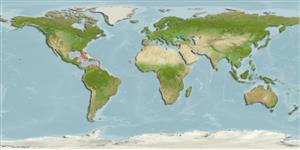
| Native range | All suitable habitat | Point map | Year 2050 |
|
| This map was computer-generated and has not yet been reviewed. |
| Strongylura timucu AquaMaps Data sources: GBIF OBIS |
Envoyez vos Photos et vidéos
Images | Images Google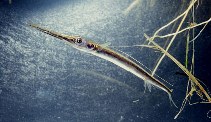 Strongylura timucu
Photo de Sazima, I.
Images | Images Google
Photo de Sazima, I.
Classification / Noms Noms communs | Synonymes | Catalog of Fishes(Genre, Espèce) | ITIS | CoL | WoRMS | Cloffa
> Beloniformes (Needle fishes) > Belonidae (Needlefishes)
Etymology: Strongylura: Greek, strongylos = round + Greek, oura = tail (Ref. 45335).
More on author: Walbaum.
Etymology: Strongylura: Greek, strongylos = round + Greek, oura = tail (Ref. 45335).
More on author: Walbaum.
Environnement : milieu / zone climatique / profondeur / gamme de distribution Écologie
marin; eau douce; saumâtre récifal; profondeur 1 - 3 m (Ref. 58047). Subtropical
Distribution Territoires | Zones FAO | Écosystèmes | Occurrences | Carte par point | Introductions | Faunafri
Western Atlantic: southeastern Florida (USA), Bahamas, and northeastern Gulf of Mexico to Brazil.
Taille / Poids / Âge
Maturité: Lm ? range ? - ? cm
Max length : 61.0 cm TL mâle / non sexé; (Ref. 7251); common length : 35.0 cm TL mâle / non sexé; (Ref. 5217)
Max length : 61.0 cm TL mâle / non sexé; (Ref. 7251); common length : 35.0 cm TL mâle / non sexé; (Ref. 5217)
Description synthétique Clés d'identification | Morphologie | Morphométrie
Rayons mous dorsaux (Total) : 15 - 17; Rayons mous anaux: 16 - 20. Caudal peduncle without a lateral keel, the least depth about equal to the width; maxilla exposed posteriorly; opercles scaled.
Body shape (shape guide): elongated.
Body shape (shape guide): elongated.
Adults found on reef flats, in lagoons, or in freshwater (Ref. 9710). Juveniles found among floating algae (Ref. 9710). Feeds mainly on small fishes (Ref. 3129). Oviparous (Ref. 205). Eggs may be found attached to objects in the water by tendrils on the egg's surface (Ref. 205). During the day preys on small fishes and shrimps close to water surface, approaching potential prey stealthily within lunging range, but when disturbed, may leap and skitter at the surface. At night, young individuals rest close to the surface, aligned with semi-submersed leaves of marsh grass in mangroves, and when disturbed, usually sinks slowly and hides within vegetation. The resemblance to grass blades and its night-time behavior are believed to be defensive adaptations against nocturnal visually oriented predators like night herons (Ref. 40403).
Cycle de vie et comportement reproducteur Maturité | Reproduction | Frai | Œufs | Fécondité | Larves
Référence principale
Téléchargez vos références | Références | Coordinateur : Collette, Bruce B. | Collaborateurs
Robins, C.R. and G.C. Ray, 1986. A field guide to Atlantic coast fishes of North America. Houghton Mifflin Company, Boston, U.S.A. 354 p. (Ref. 7251)
Statut dans la liste rouge de l'IUCN (Ref. 130435: Version 2025-2)
Préoccupation mineure (LC) ; Date assessed: 25 August 2018
CITES
Not Evaluated
Menace pour l'homme
Harmless
Utilisations par l'homme
Pêcheries: pêcheries vivrières
FAO - Publication: search | FishSource |
Plus d'informations
Écologie trophique
Aliments (proies)
Composition du régime alimentaire
Consommation alimentaire
Rations alimentaires
Prédateurs
Aliments (proies)
Composition du régime alimentaire
Consommation alimentaire
Rations alimentaires
Prédateurs
Dynamique des populations
Paramètres de croissance
Âges / tailles maximales
Longueur-poids rel.
Rel. longueur-longueur.
Fréquences de longueurs
Conversion de masse
Recrutement
Abondance
Paramètres de croissance
Âges / tailles maximales
Longueur-poids rel.
Rel. longueur-longueur.
Fréquences de longueurs
Conversion de masse
Recrutement
Abondance
Cycle de vie
Reproduction
Maturité
Maturité/épines rel.
Fécondité
Frai
Agrégats de frai
Œufs
Développement de l'œuf
Larves
Dynamique des populations larvaires
Reproduction
Maturité
Maturité/épines rel.
Fécondité
Frai
Agrégats de frai
Œufs
Développement de l'œuf
Larves
Dynamique des populations larvaires
Anatomie
Surface branchiale
Cerveau
Otolithe
Surface branchiale
Cerveau
Otolithe
Physiologie
Composition corporelle
Nutriments
Consommation d'oxygène
Type de natation
Vitesse de nage
Pigments visuels
Son de poisson
Maladies et parasites
Toxicité (CL50)
Composition corporelle
Nutriments
Consommation d'oxygène
Type de natation
Vitesse de nage
Pigments visuels
Son de poisson
Maladies et parasites
Toxicité (CL50)
Génétique
génôme
Génétique
Hétérozygotie
Héritabilité
Diversité génétique
génôme
Génétique
Hétérozygotie
Héritabilité
Diversité génétique
Liées à l'homme
Systèmes d'aquaculture
Profils d'aquaculture
Souches
Cas de ciguatera
Timbres, pièces de monnaie, divers
Systèmes d'aquaculture
Profils d'aquaculture
Souches
Cas de ciguatera
Timbres, pièces de monnaie, divers
Outils
Quiz bio | E-book | Guide de terrain | Clés d'identification | Générateur de fréquences de longueur | Outil de dynamique de population | Carte par point |
Capture-MSY |
Articles particuliers
Télécharger en XML
Sources Internet
AFORO (otoliths) | Aquatic Commons | BHL | Cloffa | Websites from users | FishWatcher | CISTI | Catalog of Fishes: Genre, Espèce | DiscoverLife | ECOTOX | FAO - Publication: search | Faunafri | Fishipedia | Fishtrace | GloBI | Google Books | Google Scholar | Google | IGFA World Record | Bases de données nationales | OneZoom | Open Tree of Life | Otolith Atlas of Taiwan Fishes | PubMed | Reef Life Survey | Socotra Atlas | TreeBase | Arbre de Vie | Wikipedia: aller à, chercher | World Records Freshwater Fishing | Zoological Record
Estimations basées sur des modèles
Température préférée (Réf. 123201): 24 - 28.1, mean 27.4 °C (based on 778 cells).
Indice de diversité phylogénétique (Réf. 82804): PD50 = 0.5000 [Uniqueness, from 0.5 = low to 2.0 = high].
Bayesian length-weight: a=0.00162 (0.00103 - 0.00255), b=3.10 (2.97 - 3.23), in cm total length, based on LWR estimates for this species & Genus-body shape (Ref. 93245).
Niveau trophique (Réf. 69278): 4.5 ±0.8 se; based on diet studies.
Résilience (Réf. 120179): Haut, temps minimum de doublement de population inférieur à 15 mois (Preliminary K or Fecundity.).
Nutriments (Ref. 124155): Calcium = 49.4 [13.5, 197.1] mg/100g; Iron = 0.524 [0.222, 1.285] mg/100g; Protein = 18.3 [16.3, 20.4] %; Omega3 = 0.18 [0.07, 0.52] g/100g; Selenium = 9.41 [3.63, 24.67] μg/100g; VitaminA = 95.1 [23.1, 447.0] μg/100g; Zinc = 0.693 [0.394, 1.211] mg/100g (wet weight);