-

- Về trang này
- Ngôn ngữ
- Phản hồi của người dùng
- Trích dẫn
- Tải lên
- Các loài liên quan
-



Thêm quan sát của bạn vào Fish Watcher
| Native range | All suitable habitat | Point map | Year 2050 |

|
| This map was computer-generated and has not yet been reviewed. |
| Eusphyra blochii AquaMaps Data sources: GBIF OBIS |
Tải lên của bạn hình ảnh Và Video
Các tranh (Ảnh) | Video | Google image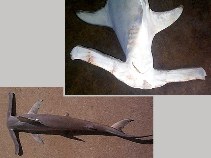 Eusphyra blochii
Female Hình ảnh của Harris, M.
Các tranh (Ảnh) | Video | Google image
Female Hình ảnh của Harris, M.
Phân loại / Tên Tên thường gặp | Các synonym ( Các tên trùng) | Catalog of Fishes(Giống, Các loài) | ITIS | CoL | WoRMS | Cloffa
Lớp phụ Cá sụn (cá mập và cá đuối) (sharks and rays) > Carcharhiniformes (Ground sharks) > Sphyrnidae (Hammerhead, bonnethead, or scoophead sharks)
Etymology: Eusphyra: eu- (Gr.), good, well or very; sphyra (Gr.), hammer, referring to immense hammer-shaped head (See ETYFish); blochii: In honor of physician-naturalist Marcus Elieser Bloch (1723-1799), who described and illustrated this shark in 1785, which he identified as Squalus zygaena (See ETYFish).
Eponymy: Marcus Élieser Bloch (1723–1799) was a German physician and naturalist specialising in ichthyology. [...] (Ref. 128868), visit book page.
More on author: Cuvier.
Etymology: Eusphyra: eu- (Gr.), good, well or very; sphyra (Gr.), hammer, referring to immense hammer-shaped head (See ETYFish); blochii: In honor of physician-naturalist Marcus Elieser Bloch (1723-1799), who described and illustrated this shark in 1785, which he identified as Squalus zygaena (See ETYFish).
Eponymy: Marcus Élieser Bloch (1723–1799) was a German physician and naturalist specialising in ichthyology. [...] (Ref. 128868), visit book page.
More on author: Cuvier.
Issue
Eusphyra laticeps (Cantor, 1837) is a valid species after Fernando et al 2019 (Ref. 120444).
Môi trường: môi trường / vùng khí hậu / Mức độ sâu / phạm vi phân phối Sinh thái học
biển; thuộc về nước lợ sống nổi và đáy; sống cả ở nước ngọt và nuớc mặn (Ref. 87829). Tropical; 31°N - 20°S, 47°E - 154°E
Sự phân bố Lãnh thổ | Các khu vực của FAO | Các hệ sinh thái | Những lần xuất hiện | Bản đồ điểm | Những chỉ dẫn | Faunafri
Indo-West Pacific: Persian Gulf to the Philippines, north to China, south to Australia.
Chiều dài lúc trưởng thành đầu tiên / Bộ gần gũi / Khối lượng (Trọng lượng) / Tuổi
Chín muồi sinh dục: Lm ?, range 120 - ? cm
Max length : 186 cm TL con đực/không giới tính; (Ref. 6871)
Max length : 186 cm TL con đực/không giới tính; (Ref. 6871)
Mô tả ngắn gọn Khóa để định loại | Hình thái học | Sinh trắc học
Các tia vây lưng cứng (tổng cộng) : 0; Tia cứng vây hậu môn: 0. Grey or grey-brown above, paler below. Expanded lateral blades of head very narrow and wing-like, with a series of small bumps along edges in front of nostrils; width across head 40 or 50% of total length. Nostrils enormously expanded, each nearly 2 times the mouth head (Ref 13562).
Body shape (shape guide): elongated.
Body shape (shape guide): elongated.
Found in shallow water on continental and insular shelves (Ref. 244). Enters estuaries (Ref. 4832). Feeds mainly on small teleost fishes but also takes crustaceans and cephalopods (Ref. 13562). Viviparous (Ref. 50449), with 6 to 25 pups in a litter (Ref. 6871). Has a remarkable wing-shaped head which is nearly or quite half of its body length, the function of which is uncertain, maybe for maneuvering or for increasing the surface area of some of the sense organs (Ref. 244). Probably harmless to people (Ref. 13562). Caught commonly, but in low numbers, by inshore gillnet fisheries. Particularly common in catches off Kalimantan (Ref.58048). Probably a common fisheries species where it occurs (Ref. 13562). Meat utilized for human consumption; liver is a source of vitamin oil (Ref. 244). Offal probably utilized for fishmeal (Ref. 13562). Reported to reach 300 cm TL (Ref. 58784).
Vòng đời và hành vi giao phối Chín muồi sinh dục | Sự tái sinh sản | Đẻ trứng | Các trứng | Sự sinh sản | Ấu trùng
Viviparous, placental (Ref. 50449), with 6 to 25 in a litter after a gestation period of 8 (Ref.58048) -11 months (Ref. 6871). Size at birth between 32 and 45 cm TL (Ref. 13562).
Tài liệu tham khảo chính
Tải lên tài liệu tham khảo của bạn | Các tài liệu tham khảo | Người điều phối : Compagno, Leonard J.V. | Người cộng tác
Compagno, L.J.V., 1984. FAO Species Catalogue. Vol. 4. Sharks of the world. An annotated and illustrated catalogue of shark species known to date. Part 2 - Carcharhiniformes. FAO Fish. Synop. 125(4/2):251-655. Rome: FAO. (Ref. 244)
Tình trạng Sách đỏ IUCN (Ref. 130435: Version 2025-2)
Critically Endangered (CR) (A2cd); Date assessed: 30 July 2024
Mối đe dọa đối với con người
Harmless (Ref. 13562)
Sử dụng của con người
Các nghề cá: tính thương mại
FAO - Publication: search | FishSource |
Thêm thông tin
Sinh thái dinh dưỡng
Thức ăn (con mồi)
Thành phần thức ăn
Thành phần thức ăn
Khẩu phần ăn
Các động vật ăn mồi
Thức ăn (con mồi)
Thành phần thức ăn
Thành phần thức ăn
Khẩu phần ăn
Các động vật ăn mồi
Biến động dân số
Các thông số tăng trưởng
Độ tuổi / kích thước tối đa
Chiều dài-trọng lượng tương đối
Chiều dài-chiều dài tương đối.
Chiều dài-tần số
Chuyển đổi khối lượng
Bổ xung
Sự phong phú
Các thông số tăng trưởng
Độ tuổi / kích thước tối đa
Chiều dài-trọng lượng tương đối
Chiều dài-chiều dài tương đối.
Chiều dài-tần số
Chuyển đổi khối lượng
Bổ xung
Sự phong phú
Vòng đời
Sự tái sinh sản
Chín muồi sinh dục
Độ trưởng thành/Mang liên quan
Sự sinh sản
Đẻ trứng
Tập hợp sinh sản
Các trứng
Sự phát triển của trứng
Ấu trùng
Sự biến động ấu trùng
Sự tái sinh sản
Chín muồi sinh dục
Độ trưởng thành/Mang liên quan
Sự sinh sản
Đẻ trứng
Tập hợp sinh sản
Các trứng
Sự phát triển của trứng
Ấu trùng
Sự biến động ấu trùng
Sự phân bố
Lãnh thổ
Các khu vực của FAO
Các hệ sinh thái
Những lần xuất hiện
Những chỉ dẫn
BRUVS - Video
Lãnh thổ
Các khu vực của FAO
Các hệ sinh thái
Những lần xuất hiện
Những chỉ dẫn
BRUVS - Video
Giải phẫu
Vùng mang
Não
sỏi tai
Vùng mang
Não
sỏi tai
Sinh lý học
Thành phần cơ thể
Chất dinh dưỡng
Thành phần ô-xy
Kiểu bơi
Tốc độ bơi
Sắc tố thị giác
Tiếng cá
Bệnh tật & Ký sinh trùng
Độc tính (LC50)
Thành phần cơ thể
Chất dinh dưỡng
Thành phần ô-xy
Kiểu bơi
Tốc độ bơi
Sắc tố thị giác
Tiếng cá
Bệnh tật & Ký sinh trùng
Độc tính (LC50)
Liên quan đến con người
Hệ thống nuôi trồng thủy sản
Các tổng quan nuôi trồng thủy sản
Các giống
Các trường hợp ngộ độc Ciguatera
Tem, tiền xu, v.v.
Hệ thống nuôi trồng thủy sản
Các tổng quan nuôi trồng thủy sản
Các giống
Các trường hợp ngộ độc Ciguatera
Tem, tiền xu, v.v.
Các công cụ
Sách điện tử | Hướng dẫn hiện trường | Khóa để định loại | Tần suất chiều dài Wizard | Công cụ của vòng đời | Bản đồ điểm |
Bắt-MSY |
Báo cáo đặc biệt
Kiểm tra bảo trì bể cá | Kiểm tra các tờ thông tin về loài | Kiểm tra các tờ thông tin về nuôi trồng thủy sản
Tải xuống XML
Các nguồn internet
AFORO (otoliths) | Aquatic Commons | BHL | Cloffa | Websites from users | Check FishWatcher | CISTI | Catalog of Fishes: Giống, Các loài | DiscoverLife | ECOTOX | FAO - Publication: search | Faunafri | Fishipedia | Fishtrace | GloBI | Google Books | Google Scholar | Google | IGFA World Record | Các cơ sở dữ liệu quốc gia | OneZoom | Open Tree of Life | Otolith Atlas of Taiwan Fishes | PubMed | Reef Life Survey | Socotra Atlas | TreeBase | Cây Đời sống | Wikipedia: Go, tìm | World Records Freshwater Fishing | Tạp chí Zoological Record
Ước tính dựa trên mô hình
Nhiệt độ ưa thích (Tài liệu tham khảo 123201): 25.2 - 29.1, mean 28.3 °C (based on 970 cells).
Chỉ số đa dạng phát sinh loài (Tài liệu tham khảo 82804): PD50 = 0.7501 [Uniqueness, from 0.5 = low to 2.0 = high].
Bayesian length-weight: a=0.00513 (0.00274 - 0.00960), b=3.24 (3.07 - 3.41), in cm total length, based on LWR estimates for this species & (Sub)family-body (Ref. 93245).
Mức dinh dưỡng (Tài liệu tham khảo 69278): 4.2 ±0.6 se; based on diet studies.
Thích nghi nhanh (Tài liệu tham khảo 120179): Rất thấp, thời gian nhân đôi của chủng quần tối thiểu là hơn 14 năm (Fec=6).
Chất dinh dưỡng (Ref. 124155): Calcium = 16.6 [2.7, 88.0] mg/100g; Iron = 0.526 [0.132, 1.586] mg/100g; Protein = 18.9 [16.9, 21.1] %; Omega3 = 0.129 [0.056, 0.295] g/100g; Selenium = 76.7 [22.3, 229.5] μg/100g; VitaminA = 19 [8, 48] μg/100g; Zinc = 0.721 [0.349, 1.352] mg/100g (wet weight);