This website uses cookies to enhance your browsing experience and ensure the functionality of our site. For more detailed information about the types of cookies we use and how we protect your privacy, please visit our Privacy Information page.
×
Cookie Settings
This website uses different types of cookies to enhance your experience. Please select your preferences below:
ກຸ່ມປາກະດູກອ່ອນ (ເຊັ່ນ: ປາສະຫລາມ, ປາຜາໄລ) (sharks and rays) > Lamniformes (Mackerel sharks) > Lamnidae (Mackerel sharks or white shark)
Etymology: Lamna:From the Greek lamia, a large and voracious shark, originally from Lamia in Greek mythology, daughter of King Belos, who revenged the murder of her children by killing the children of others, and who behaved so cruelly that her face turned into a nightmarish mask (See ETYFish); nasus:Latin for nose, referring to moderately long conical snout (See ETYFish). Eponymy: The genus name comes from the Greek lamia, a large and voracious shark. [...] (Ref. 128868), visit book page. More on author: Bonnaterre.
Circumglobal, amphitemperature with centers of distribution in the North Atlantic and temperate water of the southern hemisphere; not in equatorial seas. Also in the Mediterranean (Ref. 137895).
ການຈະເລີນເຕັມໄວ: Lm186.5, range 170 - 219 cm Max length : 350 cm TL ຕົວຜູ້/ບໍ່ມີເພດ; (Ref. 4645); common length : 244 cm TL ຕົວຜູ້/ບໍ່ມີເພດ; (Ref. 5951); ນ້ຳໜັກສູງສຸດທີ່ເຄຍຈັດພີມມາ: 230.0 kg (Ref. 40637); ອາຍຸສູງສຸດທີ່ເຄຍລາຍງານມາ: 65 ປີ (Ref. 119696)
ຄີ (ໜາມ)ແຂງຢູ່ຫຼັງປາ (ທັງໝົດ) : 0; ຄີ(ໜາມ) ແຂງຢູ່ຄີກົ້ນປາ
ກຸ່ມປາກະດູກແຂງ
ຄວາມຖີ່ຂອງກຸ່ມຖ່າຍທອດພັນ
ປາທີ່ມີການເຄື່ອນຍ້າຍຈາກທະເລໄປຫານ້ຳຈືດ ແລະນ້ຳຈືດຫາທະເລ
ປາທີ່ມີການເຄື່ອນຍ້າຍຈາກທະເລແລະໄປໄຂ່ຢູ່ນ້ຳຈືດ
ຄີກົ້ນຂອງປາ
ສັດທີ່ມີກະດູກສັນຫັຼງ
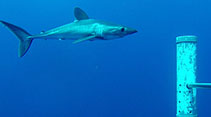
ການຖ່າຍທອດທາງກຳມະພັນຈາກພໍ່ແມ່ຫາລູກ: 0. A stout, spindle-shaped shark with large black eyes, a sharp, conical snout, long gill slits, and small, smooth-edged, narrow teeth with side cusps (Ref. 5578, 88171). Strong keels on the caudal peduncle, short secondary keels on the caudal base, and a crescentic caudal fin; the insertion of the small second dorsal fin is above the insertion of the anal fin (Ref. 88171). Dark grey dorsally, white ventrally, without blotches (Ref. 6581, 43278); rear tip of 1st dorsal abruptly white (Ref. 5578). Body shape (shape guide): fusiform / normal.
Occurs inshore to offshore fishing banks and occasionally to open ocean areas. It is migratory, moves generally along the continental shelves (inshore to surface during simmer) and winters offshore in deeper water (Ref. 58085). Most abundant on continental offshore fishing banks but also found far from land in ocean basins and occasionally close inshore (Ref. 247). Extreme depth reported to 1,360 meters. Age attained in North Atlantic at least 26 years and in the Southern Hemisphere probably 65 years (Ref. 119696). Specimens tagged off southern England were recaptured in northern Norway (having travelled 2,370 km), Denmark and Spain (Ref. 88752, 88753). The northwest Atlantic stock migrates from Newfoundland, Canada in the winter to Massachusetts in the summer (Ref. 43278, 88754). Trans-Atlantic migrations have also been recorded. One of the most cold-tolerant sharks; in the northwest Atlantic mostly found from 5-10°C (Ref. 88755); with extremes of -1°C and 23°C (Ref. 119696). Known to temporarily tolerate salinities as low as 10 to follow its prey (Ref. 88740). Found singly and in schools and feeding aggregations (Ref. 247). Feeds on small and medium-sized pelagic schooling species, other sharks, squid (Ref. 5578) and demersal fishes (cod, white hake, red hake, haddock and cusk (Ref. 5951, 43278)). Ovoviviparous species (Ref. 43278, 50449). Females grow larger than males (Ref. 88756). Parasites include Phyllobothrium dagnallium (found in stomach, intestine and spiral valve) and Dinobothrium sp. (Ref. 5951). Regarded as potentially dangerous to people because of its size and activity but has never or very seldom been indicted in an attack on people or boats (Ref. 247). Considered by some as a sport fish (Ref. 84357). The flesh of the porbeagle is of good quality and texture and is said to taste like swordfish (Ref. 84357). Utilized fresh, dried or salted and frozen for human consumption; for oil and fishmeal; fins for shark-fin soup (Ref. 247). May be pan-fried and broiled (Ref. 9988). Catch records and studies in the northeast Atlantic show segregation by sex and size (Ref. 56108, 88756, 88757).
Distinct pairing with embrace (Ref. 205). Ovoviviparous (aplacental viviparity), with uterine cannibalism (embryos feeding on other ova produced by the mother (oophagy) after the yolk sac is absorbed) (Ref. 43278, 50449). With 1-5 (usually 4) pups in a litter (Ref. 6871, 43278). Reproduction probably yearly (Ref. 45602). In the northeast Atlantic, breeding grounds are off the coast of Europe and the British Isles. Embryos found in mature females throughout the year except from July to September. Mating occurs in late summer, pups are born in the spring of the following year (Ref. 43278). Gestation may last 8-9 months. Size at birth 60-80 cm TL (Ref. 6871, 43278).
Compagno, L.J.V., 1984. FAO Species Catalogue. Vol. 4. Sharks of the world. An annotated and illustrated catalogue of shark species known to date. Part 1 - Hexanchiformes to Lamniformes. FAO Fish. Synop. 125(4/1):1-249. Rome, FAO. (Ref. 247)
ສະຖານະພາບບັນຊີແດງຂອງ IUCN (Ref. 130435: Version 2025-2)
ອຸນຫະພູມທີ່ຕ້ອງການ (ເອກະສານອ້າງອີງ 123201): 3.1 - 16.3, mean 7.8 °C (based on 1486 cells).
ດັດຊະນີຄວາມຫຼາກຫຼາຍທາງຊີວະພາບ (ເອກະສານອ້າງອີງ 82804): PD50 = 0.7813 [Uniqueness, from 0.5 = low to 2.0 = high].
Bayesian length-weight: a=0.01047 (0.00604 - 0.01816), b=3.03 (2.87 - 3.19), in cm total length, based on LWR estimates for this species & (Sub)family-body (Ref. 93245).
ຊັ້ນເຂດຮ້ອນ (ເອກະສານອ້າງອີງ 69278): 4.6 ±0.0 se; based on diet studies.
Generation time: 9.5 ( na - na) years. Estimated as median ln(3)/K based on 1 growth studies.