-

- เกี่ยวกับหน้านี้
- ภาษา
- ความคิดเห็นจากผู้ใช้
- การอ้างอิง
- อัพโหลด
-
สายพันธุ์ที่เกี่ยวข้อง
- สายพันธุ์ใน
Syncomistes - สายพันธุ์ใน
Terapontidae - - การจำแนกประเภท -
- Terapontidae
- Centrarchiformes
- Teleostei
- Chordata
- Animalia
- สายพันธุ์ใน
-



Syncomistes bonapartensis Shelley, Delaval & Le Feuvre, 2017
อัพโหลดของคุณ ภาพถ่าย และ วิดีโอ
Google image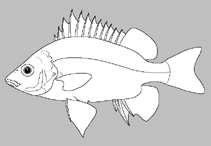 No image available for this species;
drawing shows typical species in Terapontidae.
Google image
drawing shows typical species in Terapontidae.
การจำแนกประเภท / ชื่อ ชื่อสามัญ | ชื่อพ้อง | Catalog of Fishes(สกุล, ชนิด) | ITIS | CoL | WoRMS | Cloffa
> Centrarchiformes (Basses) > Terapontidae (Grunters or tigerperches)
Etymology: Syncomistes: Greek, syn, symphysis = grown together + Greek, komistes, -ou = leader, driver (Ref. 45335); bonapartensis: The specific epithet bonapartensis is used in reference to the distribution of the species that is confined to drainages that once flowed into the paleolake, Lake Bonaparte.
Etymology: Syncomistes: Greek, syn, symphysis = grown together + Greek, komistes, -ou = leader, driver (Ref. 45335); bonapartensis: The specific epithet bonapartensis is used in reference to the distribution of the species that is confined to drainages that once flowed into the paleolake, Lake Bonaparte.
สิ่งแวดล้อม : สิ่งแวดล้อม / เขตภูมิอากาศ / ระดับความลึก / ระยะการกระจายสินค้า นิเวศวิทยา
; น้ำจืด กลุ่มสัตว์หน้าดิน,กลุ่มสัตว์พื้นท้องน้ำ. Tropical; ? - 36°C (Ref. 119336)
การแพร่กระจาย อาณาเขต | พื้นที่จำแนกตาม FAO | ระบบนิเวศหลายระบบ | การปรากฏขึ้น,การเกิดขึ้น,พบ | ตำแหน่งบนแผนที่ | การแนะนำ | Faunafri
Oceania: Drysdale River in Western Australia to the Finnis River in Northern Territory, Australia.
ขนาด / น้ำหนัก / อายุ
วัยเจริญพันธุ์: Lm ? range ? - ? cm
Max length : 28.0 cm SL เพศผู้/กระเทย; (Ref. 119336); common length : 17.5 cm SL เพศผู้/กระเทย; (Ref. 119336)
Max length : 28.0 cm SL เพศผู้/กระเทย; (Ref. 119336); common length : 17.5 cm SL เพศผู้/กระเทย; (Ref. 119336)
คำอธิบายสั้นๆ เครื่องมือที่ใช้ในการแยกชนิดสัตว์,สิ่งมีชีวิตออกจากกัน | สัณฐานวิทยา | ความยาวต่างๆ
เงี่ยงครีบหลัง (รวม) : 11 - 13; ก้านครีบอ่อนที่หาง (รวม) : 12 - 13; เงี่ยงครีบก้น: 3; ก้านครีบอ่อนที่ก้น: 8 - 10; สัตว์มีกระดูกสันหลัง: 25. Syncomistes bonapartensis is distinguished from all congeners within the Syncomistes complex by a combination of the following characters: both adults and juveniles with lower jaw rounded anteriorly making a ‘U-shape’ when viewed from below; mouth slightly oblique; teeth broad and large relative to Syncomistes, flat, asymmetric, margins convex posteriorly and straight to slightly concave anteriorly, widest point closest to midpoint of tooth, apical region tapered to slight point; usually with 7-8 slightly wavy brown stripes running horizontally along body sides; usually with < 11 gill rakers on the upper arch and < 30 in total; and usually with ? 6.0 teeth per mm of jaw (Ref. 119336).
Body shape (shape guide): fusiform / normal.
Body shape (shape guide): fusiform / normal.
Prefers deeper portions of slow-flowing creeks and rivers, as well as billabongs. Inhabits clear and turbid waters, over muddy to rocky substrates, often where algae is abundant. Adults occur in shoals around snags. Juveniles are mostly found in riffle habitat. Sympatric with Syncomistes holsworthi, S. kimberleyensis, S. rastellus and S. trigonicus. Feeds mainly on filamentous algae along with some detritus and invertebrates. Attains sexual maturity at 120-140 mm and spawns in wet season. Eggs are large about 3 mm and non-adhesive (Ref. 119336).
วงจรชีวิตและพฤติกรรมการผสมพันธุ์ วัยเจริญพันธุ์ | การสืบพันธุ์ | การวางไข่ | เซลสืบพันธ์ของเพศเมีย(ไข่) | ความดกของไข่ | ตัวอ่อน
อ้างอิงหลัก
อัพโหลดข้อมูลอ้างอิงของคุณ | อ้างอิง | ผู้ประสานงาน | ผู้ร่วมมือ
Shelley, J.J, A. Delaval and M.C. Le Feuvre, 2017. A revision of the grunter genus Syncomistes (Teleostei, Terapontidae, Syncomistes) with descriptions of seven new species from the Kimberley region, northwestern Australia. Zootaxa 4367(1):1-103. (Ref. 119336)
สถานะบัญชีแดงของ IUCN (Ref. 130435: Version 2025-2)
Least Concern (LC) ; Date assessed: 13 February 2019
CITES
Not Evaluated
ภัยคุกคามต่อมนุษย์
Harmless
การใช้ของมนุษย์
FAO - Publication: search | FishSource |
ข้อมูลเพิ่มเติม
นิเวศวิทยาเขตร้อน
รายการอาหาร (เหยื่อ)
องค์ประอบของอาหาร
การบริโภคอาหาร
การจัดสรรอาหาร
ผู้ล่า
รายการอาหาร (เหยื่อ)
องค์ประอบของอาหาร
การบริโภคอาหาร
การจัดสรรอาหาร
ผู้ล่า
พลวัตของประชากร
พารามิเตอร์การเจริญเติบโต
อายุสูงสุด / ขนาด
ความยาว-น้ำหนักสัมพันธ์
ความยาว-ความยาวสัมพันธ์
ความยาว-ความถี่
การแปลงมวล
การทดแทนที่
อุดมสมบรูณ์
พารามิเตอร์การเจริญเติบโต
อายุสูงสุด / ขนาด
ความยาว-น้ำหนักสัมพันธ์
ความยาว-ความยาวสัมพันธ์
ความยาว-ความถี่
การแปลงมวล
การทดแทนที่
อุดมสมบรูณ์
วงจรชีวิต
การสืบพันธุ์
วัยเจริญพันธุ์
ความสมบูรณ์พันธุ์/เหงือกที่เกี่ยวข้อง
ความดกของไข่
การวางไข่
การรวมตัวของสปอน
เซลสืบพันธ์ของเพศเมีย(ไข่)
การพัฒนาไข่
ตัวอ่อน
พลวัตของสัตว์น้ำวัยอ่อน
การสืบพันธุ์
วัยเจริญพันธุ์
ความสมบูรณ์พันธุ์/เหงือกที่เกี่ยวข้อง
ความดกของไข่
การวางไข่
การรวมตัวของสปอน
เซลสืบพันธ์ของเพศเมีย(ไข่)
การพัฒนาไข่
ตัวอ่อน
พลวัตของสัตว์น้ำวัยอ่อน
การแพร่กระจาย
อาณาเขต
พื้นที่จำแนกตาม FAO
ระบบนิเวศหลายระบบ
การปรากฏขึ้น,การเกิดขึ้น,พบ
การแนะนำ
BRUVS - วิดีโอ
อาณาเขต
พื้นที่จำแนกตาม FAO
ระบบนิเวศหลายระบบ
การปรากฏขึ้น,การเกิดขึ้น,พบ
การแนะนำ
BRUVS - วิดีโอ
กายวิภาคศาสตร์
พื้นที่เหงือก
สมอง
หินโสต
พื้นที่เหงือก
สมอง
หินโสต
สรีรวิทยา
องค์ประกอบของร่างกาย
สารอาหาร
การใช้ออกซิเจน
ประเภทการว่ายน้ำ
ระดับความเร็วในการว่ายน้ำ
เม็ดสีที่มองเห็นได้
เสียงปลา
โรคและปรสิต
ความเป็นพิษ (LC50s)
องค์ประกอบของร่างกาย
สารอาหาร
การใช้ออกซิเจน
ประเภทการว่ายน้ำ
ระดับความเร็วในการว่ายน้ำ
เม็ดสีที่มองเห็นได้
เสียงปลา
โรคและปรสิต
ความเป็นพิษ (LC50s)
พันธุศาสตร์
จีโนม
พันธุศาสตร์
ความไม่สมดุลทางเชื้อชาติ
อัตราพันธุกรรม
ความหลากหลายทางพันธุกรรม
จีโนม
พันธุศาสตร์
ความไม่สมดุลทางเชื้อชาติ
อัตราพันธุกรรม
ความหลากหลายทางพันธุกรรม
เกี่ยวข้องกับมนุษย์
ระบบการเพาะเลี้ยงสัตว์น้ำ
ประวัติการเพาะเลี้ยงสัตว์น้ำ
สายพันธุ์
กรณีซิเกวเทอรา
แสตมป์ เหรียญ อื่นๆ
ระบบการเพาะเลี้ยงสัตว์น้ำ
ประวัติการเพาะเลี้ยงสัตว์น้ำ
สายพันธุ์
กรณีซิเกวเทอรา
แสตมป์ เหรียญ อื่นๆ
เครื่องมือ
หนังสืออิเล็กทรอนิกส์ | คู่มือภาคสนาม | ผู้มีความชำนาญในเรื่องความถี่ของความยาว | เครื่องมือในการศึกษาชีวประวัติ | ตำแหน่งบนแผนที่ |
จับ-MSY |
รายงานพิเศษ
ตรวจสอบการบำรุงรักษาตู้ปลา | ตรวจสอบเอกสารข้อเท็จจริงเกี่ยวกับสายพันธุ์ | ตรวจสอบเอกสารข้อเท็จจริงเกี่ยวกับการเพาะเลี้ยงสัตว์น้ำ
ดาวน์โหลด XML
หน้าสรุป | ข้อมูลสำคัญ | ชื่อสามัญ | ภาพถ่าย
แหล่งที่มาจากอินเตอร์เน็ต
AFORO (otoliths) | Aquatic Commons | BHL | Cloffa | Websites from users | Check FishWatcher | CISTI | Catalog of Fishes: สกุล, ชนิด | DiscoverLife | ECOTOX | FAO - Publication: search | Faunafri | Fishipedia | Fishtrace | GloBI | Google Books | Google Scholar | Google | IGFA World Record | OneZoom | Open Tree of Life | Otolith Atlas of Taiwan Fishes | PubMed | Reef Life Survey | Socotra Atlas | TreeBase | แผนภูมิชีวิตแบบต้นไม้ | Wikipedia: Go, ค้นหา | World Records Freshwater Fishing | Zoobank | บันทึกทางด้านสัตววิทยา
การประมาณค่าตามแบบจำลอง
ดัชนีความหลากหลายทางวิวัฒนาการ (อ้างอิง 82804): PD50 = 0.5005 [Uniqueness, from 0.5 = low to 2.0 = high].
Bayesian length-weight: a=0.01288 (0.00590 - 0.02812), b=3.04 (2.86 - 3.22), in cm total length, based on LWR estimates for this (Sub)family-body shape (Ref. 93245).
ความสามารถในการกลับคืนสู่ปกติ (อ้างอิง 120179): ขนาดกลาง, เวลาต่ำสุดที่จะทำให้ประชากรเพิ่มขึ้นเป็น 2 เท่าใช้เวลา 1.4 - 4.4 ปี (Preliminary K or Fecundity.).