-

- حول هذة الصفحة
- اللغات
- تعليقات المستخدمين
- اقتباس
- التحميلات
- انواع ذات صلة
-



Meiacanthus cyanopterus Smith-Vaniz & Allen, 2011
Bluefin fangblenny
ارفع صور و مقاطع فيديو
صور | صور قوقل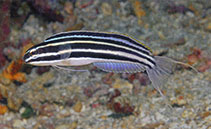 Meiacanthus cyanopterus
Male صورة بواسطة Allen, G.R.
صور | صور قوقل
Male صورة بواسطة Allen, G.R.
التصنيف / الأسماء الأسماء الشائعة | مرادفات | Catalog of Fishes(جنس, الانواع) | ITIS | CoL | WoRMS | Cloffa
> Blenniiformes (Blennies) > Blenniidae (Combtooth blennies) > Blenniinae
Etymology: Meiacanthus: Greek, meion = less = lessen + Greek, akantha = thorn (Ref. 45335); cyanopterus: The name is a combination of the Greek Kyanos (blue) and pterus (fin) in reference to the blue dorsal-fin stripe.
Etymology: Meiacanthus: Greek, meion = less = lessen + Greek, akantha = thorn (Ref. 45335); cyanopterus: The name is a combination of the Greek Kyanos (blue) and pterus (fin) in reference to the blue dorsal-fin stripe.
البيئة: الوسط / المنطقة المناخية / نطاق العمق / نطاق التوزيع البيئة
بحري مرتبطة بالشعاب; نطاق العمق 40 - 65 m (Ref. 90102). Tropical; 8°S - 9°S
التوزيع الأقاليم | مناطق الفاو | النظام البيئي | الظهور | نقطة علي الخريطة | مقدمة | Faunafri
Indian Ocean: Bali. Known only from deep reef habitats. In addition to the Alor Strait localities, this species was observed by Mark Erdmann at Tulamben, off the north coast of Bali, 8°17.603'S, 115°36.599'E in 65 m.
الحجم / وزن / العمر
وصف مختصر مفاتيح التعريف | الوصف الخارجي | قياسات المظهر الخارجي
A species of Meiacanthus (subgenus Meiacanthus) with major portion of dentary gland dorsally positioned and held in place laterally by dorsolateral flange of dentary; dorsal fin IV, 25 or 26; color pattern characterized by a pair of dark mid-lateral stripes that extend onto the caudal-fin base, and another dark stripe along the dorsal body contour and dorsal-fin base that encroaches onto the fin posteriorly; dorsal fin with black submarginal stripe bordered below by pale stripe, which is blue-violet in life and best developed in males. Description. (values for the holotype are given first followed by the range of the paratypes). Dorsal fin IV, 25 (IV, 25–26). Anal fin II, 14 (II, 14–16). Pectoral fin 14-14 (13-13 to 15-15). Caudal fin: procurrent rays 4+4 (4–5+5–6); segmented rays 11, inner rays not elongated or deeply incised. Vertebrae: precaudal 12 + caudal 21 (12–13+21–22). A pair of canines posteriorly in each jaw, those in lower jaw very large with a deep frontal groove; incisor teeth in lower jaw 17 (16–17); in upper jaw 14 (15–16). Lateral line present, terminating below 5th (3–5) dorsal-fin ray; mandibular and posttemporal pores 3; single median supratemporal pore (Ref. 87904).
Body shape (shape guide): fusiform / normal.
Body shape (shape guide): fusiform / normal.
Adults are found at depths of 40-65 m inhabiting outer reef slopes (Ref. 90102). Oviparous. Eggs are demersal and adhesive (Ref. 205), and are attached to the substrate via a filamentous, adhesive pad or pedestal (Ref. 94114). Larvae are planktonic, often found in shallow, coastal waters (Ref. 94114).
دورة الحياة وسلوك التزاوج النضج | التكاثر | وضع البيض | بيض | الخصوبة | اليرقات
Oviparous, distinct pairing (Ref. 205).
المرجع الرئيسي
قم بتحميل مراجعك | مراجع | المنظم : Williams, Jeffrey T. | المتعاونين
Smith-Vaniz, W.F. and G.R. Allen, 2011. Three new species of the fangblenny genus Meiacanthus from Indonesia, with color photographs and comments on other species (Teleostei: Blenniidae: Nemophini). Zootaxa 3046:39-58. (Ref. 87904)
حالة القائمة الحمراء للاتحاد الدولي لحفظ الطبيعة والموارد الطبيعية (Ref. 130435: Version 2025-2)
Least Concern (LC) ; Date assessed: 28 March 2012
CITES
Not Evaluated
خطر للأنسان
Harmless
استخدامات بشرية
FAO - Publication: search | FishSource |
مزيد من المعلومات
علم البيئة الغذائية
المواد الغذائية (الفرائس)
التركيبة الغذائية
استهلاك الأغذية
الحصص الغذائية
مفتريسات
المواد الغذائية (الفرائس)
التركيبة الغذائية
استهلاك الأغذية
الحصص الغذائية
مفتريسات
البيئة
البيئة
البيئة
الديناميكيات السكانية
معاملات النمو
الحد الأقصى للأعمار/الأحجام
علاقة الطول بالوزن.
علاقة الطول بالطول.
الطول- الترددات
التحويل الجماعي
توظيف
الوفرة
معاملات النمو
الحد الأقصى للأعمار/الأحجام
علاقة الطول بالوزن.
علاقة الطول بالطول.
الطول- الترددات
التحويل الجماعي
توظيف
الوفرة
التشريح
منطقة الخياشيم
الدماغ
الأوتوليث
منطقة الخياشيم
الدماغ
الأوتوليث
علم وظائف الأعضاء
تكوين الجسم
المغذيات
استهلاك الأوكسجين
نوع السباحة
سرعة السباحة
الأصباغ البصرية
صوت السمك
الأمراض والطفيليات
السمية (LC50s)
تكوين الجسم
المغذيات
استهلاك الأوكسجين
نوع السباحة
سرعة السباحة
الأصباغ البصرية
صوت السمك
الأمراض والطفيليات
السمية (LC50s)
جيني
الوراثة
جيني
التغاير
التوريث
التنوع الوراثي
الوراثة
جيني
التغاير
التوريث
التنوع الوراثي
ذات الصلة بالبشر
أنظمة الاستزراع المائي
ملامح تربية الأحياء المائية
سلالات
حالات سيغواتيرا
طوابع بريدية وعملات معدنية ومتنوعة
أنظمة الاستزراع المائي
ملامح تربية الأحياء المائية
سلالات
حالات سيغواتيرا
طوابع بريدية وعملات معدنية ومتنوعة
أدوات
كتاب إلكتروني | دليل الميدان | معالج تردد الطول-التردد | أداة تاريخ الحياة | نقطة علي الخريطة |
Catch-MSY |
تقارير خاصة
البحث عن صيانت الأحواض المائيه | التحقق من وجود صفحات حقائق الأنواع | البحث عنا حقائق حول الأحواض المائيه
تنزيل XML
مصادر علي الأنترنت
AFORO (otoliths) | Aquatic Commons | BHL | Cloffa | Websites from users | البحث في مراقبي الأسماك | CISTI | Catalog of Fishes: جنس, الانواع | DiscoverLife | ECOTOX | FAO - Publication: search | Faunafri | Fishipedia | Fishtrace | GloBI | Google Books | Google Scholar | Google | IGFA World Record | OneZoom | Open Tree of Life | Otolith Atlas of Taiwan Fishes | PubMed | Reef Life Survey | Socotra Atlas | TreeBase | شجرة الحياة | Wikipedia: ذهب, بحث | World Records Freshwater Fishing | Zoobank | سجلات علم الحيوانات
تقديرات تستند إلى النماذج
مؤشر التنوع الشُعبي الوراثي (مرجع 82804): PD50 = 0.5000 [Uniqueness, from 0.5 = low to 2.0 = high].
Bayesian length-weight: a=0.01047 (0.00434 - 0.02525), b=3.07 (2.86 - 3.28), in cm total length, based on LWR estimates for this (Sub)family-body shape (Ref. 93245).
مستوى غذائي (مرجع 69278): 3.3 ±0.4 se; based on size and trophs of closest relatives