This website uses cookies to enhance your browsing experience and ensure the functionality of our site. For more detailed information about the types of cookies we use and how we protect your privacy, please visit our Privacy Information page.
×
Cookie Settings
This website uses different types of cookies to enhance your experience. Please select your preferences below:
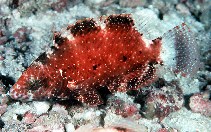
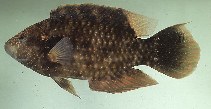
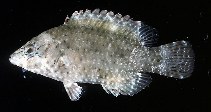
Épines dorsales (Total) : 10; Rayons mous dorsaux (Total) : 8 - 9; Épines anales: 3; Rayons mous anaux: 8. The only Cheilinus that has 10 dorsal spines. Exhibits a coloration very similar to C. trilobatus, but has black and white specks on its pelvic, anal and caudal fins, while C. trilobatus has vertical red, white and black streaks on its body scales. Large adults of both species have numerous red spots and streaks on the head and trilobed caudal fins. Body shape (shape guide): fusiform / normal; Cross section: compressed.
Adults inhabit lagoon and coastal reefs, in areas with mixed sand, rubble, and coral (Ref. 9710). Occasionally in grassy areas. Feed mainly on benthic invertebrates such as mollusks and crustaceans. Oviparous, distinct pairing during breeding (Ref. 205).
Cycle de vie et comportement reproducteur Maturité | Reproduction | Frai | Œufs | Fécondité | Larves
Oviparous, distinct pairing during breeding (Ref. 205).
Westneat, M.W., 2001. Labridae. Wrasses, hogfishes, razorfishes, corises, tuskfishes. p. 3381-3467. In K.E. Carpenter and V. Niem (eds.) FAO species identification guide for fishery purposes. The living marine resources of the Western Central Pacific. Vol. 6. Bony fishes part 4 (Labridae to Latimeriidae), estuarine crocodiles. FAO, Rome. (Ref. 9823)
Statut dans la liste rouge de l'IUCN (Ref. 130435: Version 2025-2)
Cycle de vie Reproduction Maturité Maturité/épines rel. Fécondité Frai Agrégats de frai Œufs Développement de l'œuf Larves Dynamique des populations larvaires
Physiologie Composition corporelle Nutriments Consommation d'oxygène Type de natation Vitesse de nage Pigments visuels Son de poisson Maladies et parasites Toxicité (CL50)
Température préférée (Réf. 123201): 25 - 29.3, mean 28.5 °C (based on 3199 cells).
Indice de diversité phylogénétique (Réf. 82804): PD50 = 0.5156 [Uniqueness, from 0.5 = low to 2.0 = high].
Bayesian length-weight: a=0.01778 (0.01133 - 0.02790), b=2.94 (2.81 - 3.07), in cm total length, based on LWR estimates for this species & (Sub)family-body (Ref. 93245).
Niveau trophique (Réf. 69278): 3.5 ±0.52 se; based on food items.
Résilience (Réf. 120179): Milieu, temps minimum de doublement de population : 1,4 à 4,4 années (Preliminary K or Fecundity.).
Vulnérabilité de la pêche (Ref. 59153): Low to moderate vulnerability (35 of 100). 🛈