-

- Over deze pagina
- Talen
- Feedback van gebruikers
- Citatie
- Uploads
-
Verwante soorten
- Soort(en) in
Clarotes - Soort(en) in
Claroteidae - - Classificatie -
- Claroteidae
- Siluriformes
- Teleostei
- Chordata
- Animalia
- Soort(en) in
-



Uploaden van uw Foto's en video's
Afbeeldingen | Google afbeelding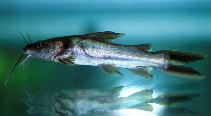 Clarotes laticeps
Afbeelding van JJPhoto
Afbeeldingen | Google afbeelding
Afbeelding van JJPhoto
Classificatie / Namen Lokale namen | Synoniemen | Catalog of Fishes(Genus, Soort(en)) | ITIS | CoL | WoRMS | Cloffa
> Siluriformes (Catfishes) > Claroteidae (Claroteid catfishes)
Etymology: Clarotes: Greek, klarotes, a term for slaves, people with bent necks; in reference to the morphology of the head.
More on author: Rüppell.
Etymology: Clarotes: Greek, klarotes, a term for slaves, people with bent necks; in reference to the morphology of the head.
More on author: Rüppell.
Issue
The taxonomic status of the Kenyan populations is uncertain and needs detailed study (Ref. 52331).
Milieu: milieu / Klimaatzone / Diepte / verspreidingsgebied Ecologie
Verspreiding Gebieden | FAO regio's | Ecosystemen | Voorkomen | Verspreidingskaart | Introducties | Faunafri
Africa: present in all Nilo-Sudanese basins, including Chad, Benue, Niger, Senegal, and Volta (Ref. 57126). Also in East Africa and Nile basin (Ref. 3236, 28714).
Lengte bij maturiteit / Grootte / Gewicht / Leeftijd
Maturiteit: Lm ?, range 28 - ? cm
Max length : 80.0 cm SL mannelijk / geslacht onbekend; (Ref. 4967); max. gepubliceerd gewicht: 10.0 kg (Ref. 3799)
Max length : 80.0 cm SL mannelijk / geslacht onbekend; (Ref. 4967); max. gepubliceerd gewicht: 10.0 kg (Ref. 3799)
Korte beschrijving Determinatiesleutels | Morfologie | Morfometrie
Dorsale stekels (totaal) : 2; Dorsale zachte stralen (totaal) : 5 - 7; Anale stekels: 0. Diagnosis: adipose fin rayed in adults, 1st ray forming a spine (not visible in juveniles); adipose-fin rays becoming visible at sizes of 90-100 mm SL, and the spine at 200 mm; dentition very well developed: premaxillary tooth plate broad (38-45% of head length), palatine dentition consisting of an elongate vomerine plate and of a dermo-palatine plate in young individuals (60-70 mm SL); palatine tooth plates narrow and long with much weaker dentition; nasal barbel long, reaching at least to anterior part of orbit; maxillary barbel very long, exceeding at least the anterior part of dorsal fin and often reaching to adipose fin; caudal-fin lobes marked by a dark band; cranial bones well developed; length of occipital process usually less than 1.4 times its width (Ref. 57126).
Body shape (shape guide): elongated; Cross section: circular.
Body shape (shape guide): elongated; Cross section: circular.
Inhabits rivers (Ref 4967). Feeds on crustaceans, insects, mollusks and fish (Ref. 28714).
Levenscyclus en paargedrag Maturiteit | Voortplanting | Paaien | Eieren | Fecunditeit | Larven
Hoofdreferentie
Upload uw referenties | Referenties | Coördinator | Medewerkers
Risch, L.M., 2003. Claroteidae. p. 60-96 In C. Lévêque, D. Paugy and G.G. Teugels (eds.) Faune des poissons d'eaux douce et saumâtres de l'Afrique de l'Ouest, Tome 2. Coll. Faune et Flore tropicales 40. Musée Royal de l'Afrique Centrale, Tervuren, Belgique, Museum National d'Histoire Naturalle, Paris, France and Institut de Recherche pour le Développement, Paris, France. 815 p. (Ref. 57126)
Status op de Rode Lijst van het IUCN (Ref. 130435: Version 2025-2)
Niet bedreigd (LC) ; Date assessed: 19 October 2019
CITES
Not Evaluated
Gevaar voor de mens
Harmless
Gebruik door de mens
Visserij: commercieel
FAO - Publication: search | FishSource |
Meer informatie
Trofische ecologie
Voedsel (prooien)
Dieetsamenstelling
Voedselconsumptie
Voedselrantsoenen
Predatoren
Voedsel (prooien)
Dieetsamenstelling
Voedselconsumptie
Voedselrantsoenen
Predatoren
Populatiedynamica
Groeiparameters
Max. leeftijden / maten
Lengte-gewicht rel.
Lengte-lengte rel.
Lengtefrequenties
Massaconversie
Rekrutering
Abundantie
Groeiparameters
Max. leeftijden / maten
Lengte-gewicht rel.
Lengte-lengte rel.
Lengtefrequenties
Massaconversie
Rekrutering
Abundantie
Levenscyclus
Voortplanting
Maturiteit
Rijpheid/kieuwen rel.
Fecunditeit
Paaien
Paaibestanden
Eieren
Ontwikkeling van de eieren
Larven
Larvale populatiedynamiek
Voortplanting
Maturiteit
Rijpheid/kieuwen rel.
Fecunditeit
Paaien
Paaibestanden
Eieren
Ontwikkeling van de eieren
Larven
Larvale populatiedynamiek
Anatomie
Kieuwoppervlak
Hersenen
Otoliet
Kieuwoppervlak
Hersenen
Otoliet
Fysiologie
Lichaamssamenstelling
Voedingsstoffen
Zuurstofverbruik
Type zwemmen
Zwemsnelheid
Visuele pigmenten
Vis geluid
Ziekten en parasieten
Toxiciteit (LC50)
Lichaamssamenstelling
Voedingsstoffen
Zuurstofverbruik
Type zwemmen
Zwemsnelheid
Visuele pigmenten
Vis geluid
Ziekten en parasieten
Toxiciteit (LC50)
Genetica
genoom
Genetica
Heterozygositeit
Erfelijkheid
Genetische diversiteit
genoom
Genetica
Heterozygositeit
Erfelijkheid
Genetische diversiteit
Menselijk gerelateerd
Aquacultuursystemen
Aquacultuurprofielen
Kweeklijnen
Ciguatera gevallen
Postzegels, munten, diversen.
Aquacultuursystemen
Aquacultuurprofielen
Kweeklijnen
Ciguatera gevallen
Postzegels, munten, diversen.
Tools
Biologische quiz | E-boek | Veldgids | Lengtefrequentie Tool | Levenscyclus tool | Verspreidingskaart |
Vangst-MSY |
Speciale rapporten
Bekijk gegevens voor het houden in een aquarium | Bekijk Fact Sheets voor de soort | Bekijk Aquacultuur Fact Sheets
Download XML
Internetbronnen
AFORO (otoliths) | Aquatic Commons | BHL | Cloffa | Websites from users | Bekijk FishWatcher | CISTI | Catalog of Fishes: Genus, Soort(en) | DiscoverLife | ECOTOX | FAO - Publication: search | Faunafri | Fishipedia | Fishtrace | GloBI | Google Books | Google Scholar | Google | IGFA World Record | OneZoom | Open Tree of Life | Otolith Atlas of Taiwan Fishes | Publieke aquaria | PubMed | Reef Life Survey | Socotra Atlas | TreeBase | Tree of Life | Wikipedia: ga naar, zoek | World Records Freshwater Fishing | Zoological Record
Schattingen op basis van modellen
Fylogenetische diversiteitsindex (Ref. 82804): PD50 = 0.7500 [Uniqueness, from 0.5 = low to 2.0 = high].
Bayesian length-weight: a=0.01380 (0.00727 - 0.02620), b=3.02 (2.85 - 3.19), in cm total length, based on LWR estimates for this species & (Sub)family-body (Ref. 93245).
Trofisch niveau (Ref. 69278): 3.1 ±0.43 se; based on food items.
Weerstandsvermogen (Ref. 120179): Gemiddeld, minimale populatieverdubbelingstijd 1,4-4,4 jaar (Preliminary K or Fecundity.).