-

- Over deze pagina
- Talen
- Feedback van gebruikers
- Citatie
- Uploads
- Verwante soorten
-



Ageneiosus inermis (Linnaeus, 1766)
Manduba
Uploaden van uw Foto's en video's
Afbeeldingen | Google afbeelding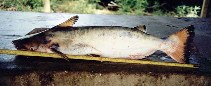 Ageneiosus inermis
Afbeelding van Magalhães, K.
Afbeeldingen | Google afbeelding
Afbeelding van Magalhães, K.
Classificatie / Namen Lokale namen | Synoniemen | Catalog of Fishes(Genus, Soort(en)) | ITIS | CoL | WoRMS | Cloffa
> Siluriformes (Catfishes) > Auchenipteridae (Driftwood catfishes) > Auchenipterinae
Etymology: Ageneiosus: Greek, a = without + greek, geneias, -ados = bear, chin (Ref. 45335).
More on author: Linnaeus.
Etymology: Ageneiosus: Greek, a = without + greek, geneias, -ados = bear, chin (Ref. 45335).
More on author: Linnaeus.
Issue
Redescribed in Walsh (pers comm., and 1990) as Ageneiosus brevifilis Valenciennes.
Milieu: milieu / Klimaatzone / Diepte / verspreidingsgebied Ecologie
; zoet water pelagisch; pH range: 6.5 - 7.8; dH range: ? - 20. Tropical; 22°C - 24°C (Ref. 2060)
Verspreiding Gebieden | FAO regio's | Ecosystemen | Voorkomen | Verspreidingskaart | Introducties | Faunafri
South America: Argentina, Bolivia, Brazil, Colombia, Ecuador, French Guiana, Guyana, Paraguay, Suriname, and Venezuela (Ref. 37098). Reported from Uruguay (Ref. 54736).
Grootte / Gewicht / Leeftijd
Maturiteit: Lm ? range ? - ? cm
Max length : 64.8 cm TL mannelijk / geslacht onbekend; (Ref. 111518); max. gepubliceerd gewicht: 3.1 kg (Ref. 111518)
Max length : 64.8 cm TL mannelijk / geslacht onbekend; (Ref. 111518); max. gepubliceerd gewicht: 3.1 kg (Ref. 111518)
Korte beschrijving Determinatiesleutels | Morfologie | Morfometrie
Anale zachte stralen: 34 - 40; Wervels: 46 - 51. Body naked and elongated. Head is pointed and depressed at the top. Mouth is big and wide. The lateral eyes are situated along the level of the mouth, ensuring a vision above and below. Exhibits sexual dimorphism, like A. dentatus. The first ray of the dorsal fin is very long and has pointed spines (Ref. 35381).
Body shape (shape guide): elongated.
Body shape (shape guide): elongated.
Prefers rivers in overgrown backwaters where the current is not too strong. Reported to be nocturnal. Feeds on fish and crustaceans. The flesh is esteemed for its very fine flavor. Frequently captured with nets, with males difficult to release from the nets because of its strong dorsal spine that is bordered with denticles (Ref. 27188). During reproduction, the mandibular barbels and dorsal spine of the male change, and a copulatory organ appears at the anterior level of the anal fin. Fertilization is internal, the female being capable of keeping the spermatozoids inserted in the epithelium of her genital tract (Ref. 35381).
Levenscyclus en paargedrag Maturiteit | Voortplanting | Paaien | Eieren | Fecunditeit | Larven
Female lays eggs on plants a few days after fertilization (Ref. 2060). The females can preserve keep fertile spermatozoids by coating these with secretions of maternal origin and inserting these in the epithelium of its genital tract (Ref. 27188).
Hoofdreferentie
Upload uw referenties | Referenties | Coördinator : Ferraris, Jr., Carl J. | Medewerkers
Ferraris, C.J. Jr., 2003. Auchenipteridae (Driftwood catfishes). p. 470-482. In R.E. Reis, S.O. Kullander and C.J. Ferraris, Jr. (eds.) Checklist of the Freshwater Fishes of South and Central America. Porto Alegre: EDIPUCRS, Brasil. (Ref. 37098)
Status op de Rode Lijst van het IUCN (Ref. 130435: Version 2025-2)
Niet bedreigd (LC) ; Date assessed: 07 August 2020
CITES
Not Evaluated
Gevaar voor de mens
Harmless
Gebruik door de mens
Visserij: commercieel; sportvis: ja; Aquarium: Publieke aquaria
FAO - Publication: search | FishSource |
Meer informatie
Trofische ecologie
Voedsel (prooien)
Dieetsamenstelling
Voedselconsumptie
Voedselrantsoenen
Predatoren
Voedsel (prooien)
Dieetsamenstelling
Voedselconsumptie
Voedselrantsoenen
Predatoren
Populatiedynamica
Groeiparameters
Max. leeftijden / maten
Lengte-gewicht rel.
Lengte-lengte rel.
Lengtefrequenties
Massaconversie
Rekrutering
Abundantie
Groeiparameters
Max. leeftijden / maten
Lengte-gewicht rel.
Lengte-lengte rel.
Lengtefrequenties
Massaconversie
Rekrutering
Abundantie
Levenscyclus
Voortplanting
Maturiteit
Rijpheid/kieuwen rel.
Fecunditeit
Paaien
Paaibestanden
Eieren
Ontwikkeling van de eieren
Larven
Larvale populatiedynamiek
Voortplanting
Maturiteit
Rijpheid/kieuwen rel.
Fecunditeit
Paaien
Paaibestanden
Eieren
Ontwikkeling van de eieren
Larven
Larvale populatiedynamiek
Anatomie
Kieuwoppervlak
Hersenen
Otoliet
Kieuwoppervlak
Hersenen
Otoliet
Fysiologie
Lichaamssamenstelling
Voedingsstoffen
Zuurstofverbruik
Type zwemmen
Zwemsnelheid
Visuele pigmenten
Vis geluid
Ziekten en parasieten
Toxiciteit (LC50)
Lichaamssamenstelling
Voedingsstoffen
Zuurstofverbruik
Type zwemmen
Zwemsnelheid
Visuele pigmenten
Vis geluid
Ziekten en parasieten
Toxiciteit (LC50)
Menselijk gerelateerd
Aquacultuursystemen
Aquacultuurprofielen
Kweeklijnen
Ciguatera gevallen
Postzegels, munten, diversen.
Aquacultuursystemen
Aquacultuurprofielen
Kweeklijnen
Ciguatera gevallen
Postzegels, munten, diversen.
Tools
Speciale rapporten
Bekijk gegevens voor het houden in een aquarium | Bekijk Fact Sheets voor de soort | Bekijk Aquacultuur Fact Sheets
Download XML
Internetbronnen
AFORO (otoliths) | Aquatic Commons | BHL | Cloffa | Websites from users | Bekijk FishWatcher | CISTI | Catalog of Fishes: Genus, Soort(en) | DiscoverLife | ECOTOX | FAO - Publication: search | Faunafri | Fishipedia | Fishtrace | GloBI | Google Books | Google Scholar | Google | IGFA World Record | Nationale databanken | OneZoom | Open Tree of Life | Otolith Atlas of Taiwan Fishes | PubMed | Reef Life Survey | Socotra Atlas | TreeBase | Tree of Life | Wikipedia: ga naar, zoek | World Records Freshwater Fishing | Zoological Record
Schattingen op basis van modellen
Fylogenetische diversiteitsindex (Ref. 82804): PD50 = 0.5001 [Uniqueness, from 0.5 = low to 2.0 = high].
Bayesian length-weight: a=0.00955 (0.00735 - 0.01241), b=3.03 (2.97 - 3.09), in cm total length, based on LWR estimates for this species (Ref. 93245).
Trofisch niveau (Ref. 69278): 4.0 ±0.66 se; based on food items.
Weerstandsvermogen (Ref. 120179): Gemiddeld, minimale populatieverdubbelingstijd 1,4-4,4 jaar (Assuming tm=2-4, Fec>1000).
Voedingsstoffen (Ref. 124155): Calcium = 109 [55, 259] mg/100g; Iron = 1.47 [0.80, 2.90] mg/100g; Protein = 17.7 [15.4, 19.8] %; Omega3 = 0.247 [0.100, 0.606] g/100g; Selenium = 36.8 [13.5, 100.3] μg/100g; VitaminA = 31.7 [10.5, 99.2] μg/100g; Zinc = 1.42 [0.91, 2.14] mg/100g (wet weight); based on nutrient studies.