-

- Over deze pagina
- Talen
- Feedback van gebruikers
- Citatie
- Uploads
- Verwante soorten
-



Barbus ciscaucasicus Kessler, 1877
Terek barbel
Uploaden van uw Foto's en video's
Afbeeldingen | Google afbeelding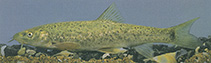 Barbus ciscaucasicus
Afbeelding van Naseka, A.M.
Afbeeldingen | Google afbeelding
Afbeelding van Naseka, A.M.
Classificatie / Namen Lokale namen | Synoniemen | Catalog of Fishes(Genus, Soort(en)) | ITIS | CoL | WoRMS | Cloffa
> Cypriniformes (Carps) > Cyprinidae (Minnows or carps) > Barbinae
Etymology: Barbus: Latin, barbus = barbel (Ref. 45335).
Eponymy: Sir Charles Alfred Payton (1843–1926) was a British adventurer, writer, fisherman and diplomat who was British Consul to Morocco, where this barb is found. [...] (Ref. 128868), visit book page.
Etymology: Barbus: Latin, barbus = barbel (Ref. 45335).
Eponymy: Sir Charles Alfred Payton (1843–1926) was a British adventurer, writer, fisherman and diplomat who was British Consul to Morocco, where this barb is found. [...] (Ref. 128868), visit book page.
Milieu: milieu / Klimaatzone / Diepte / verspreidingsgebied Ecologie
; zoet water benthopelagisch. Temperate; 10°C - 22°C (Ref. 13614)
Verspreiding Gebieden | FAO regio's | Ecosystemen | Voorkomen | Verspreidingskaart | Introducties | Faunafri
Europe and Asia: Western Caspian Sea, from Terek to Samur drainages in northern Caucasus, Daghestan and Azerbaijan. After construction of Kuma-Manych canal, invaded Chograiskoie Reservoir (Don drainage).
Grootte / Gewicht / Leeftijd
Maturiteit: Lm ? range ? - ? cm
Max length : 50.0 cm SL mannelijk / geslacht onbekend; (Ref. 59043); max. gerapporteerde leeftijd: 7 Jaren (Ref. 59043)
Max length : 50.0 cm SL mannelijk / geslacht onbekend; (Ref. 59043); max. gerapporteerde leeftijd: 7 Jaren (Ref. 59043)
Korte beschrijving Determinatiesleutels | Morfologie | Morfometrie
Diagnosed from other species of Barbus and Luciobarbus in Black and Caspian Sea basins by having the following characters: 7-9 gill rakers; dorsal fin with 8½ rays; posterior ¼ of predorsal area laterally compressed, not forming a keel; predorsal length longer than postdorsal length; lower lip with median pad, lacking posterior groove; lateral line with 60-70 scales; adults with dorsal height 10-15% of SL, tip rounded, when depressed not reaching anus; last simple dorsal ray spinous, with 30-60 short serrae posteriorly; flexible part of last simple dorsal ray about 30% of ray length; anal not reaching caudal base (Ref. 59043).
Body shape (shape guide): elongated.
Body shape (shape guide): elongated.
Inhabits piedmont and montane stretches of rivers and streams with stone or gravel bottom. Occurs from upstreams to uppermost reaches in mountains. Feeds on invertebrates, terrestrial insects and diatoms. In still habitats, this species takes terrestrial insects and zooplankton as food. Undertakes upriver migration and spawns in shallow tributaries. Larvae and yearlings stay in spawning streams while adults migrate downriver. Abundant in the upper reaches of rivers and invasive in Don drainage (Ref. 59043).
Levenscyclus en paargedrag Maturiteit | Voortplanting | Paaien | Eieren | Fecunditeit | Larven
Hoofdreferentie
Upload uw referenties | Referenties | Coördinator | Medewerkers
Reshetnikov, Y.S., N.G. Bogutskaya, E.D. Vasil'eva, E.A. Dorofeeva, A.M. Naseka, O.A. Popova, K.A. Savvaitova, V.G. Sideleva and L.I. Sokolov, 1997. An annotated check-list of the freshwater fishes of Russia. J. Ichthyol. 37(9):687-736. (Ref. 26334)
Status op de Rode Lijst van het IUCN (Ref. 130435: Version 2025-2)
Niet bedreigd (LC) ; Date assessed: 01 January 2008
CITES
Not Evaluated
Gevaar voor de mens
Harmless
Gebruik door de mens
FAO - Publication: search | FishSource |
Meer informatie
Trofische ecologie
Voedsel (prooien)
Dieetsamenstelling
Voedselconsumptie
Voedselrantsoenen
Predatoren
Voedsel (prooien)
Dieetsamenstelling
Voedselconsumptie
Voedselrantsoenen
Predatoren
Ecologie
Ecologie
Ecologie
Populatiedynamica
Groeiparameters
Max. leeftijden / maten
Lengte-gewicht rel.
Lengte-lengte rel.
Lengtefrequenties
Massaconversie
Rekrutering
Abundantie
Groeiparameters
Max. leeftijden / maten
Lengte-gewicht rel.
Lengte-lengte rel.
Lengtefrequenties
Massaconversie
Rekrutering
Abundantie
Levenscyclus
Voortplanting
Maturiteit
Rijpheid/kieuwen rel.
Fecunditeit
Paaien
Paaibestanden
Eieren
Ontwikkeling van de eieren
Larven
Larvale populatiedynamiek
Voortplanting
Maturiteit
Rijpheid/kieuwen rel.
Fecunditeit
Paaien
Paaibestanden
Eieren
Ontwikkeling van de eieren
Larven
Larvale populatiedynamiek
Anatomie
Kieuwoppervlak
Hersenen
Otoliet
Kieuwoppervlak
Hersenen
Otoliet
Fysiologie
Lichaamssamenstelling
Voedingsstoffen
Zuurstofverbruik
Type zwemmen
Zwemsnelheid
Visuele pigmenten
Vis geluid
Ziekten en parasieten
Toxiciteit (LC50)
Lichaamssamenstelling
Voedingsstoffen
Zuurstofverbruik
Type zwemmen
Zwemsnelheid
Visuele pigmenten
Vis geluid
Ziekten en parasieten
Toxiciteit (LC50)
Genetica
genoom
Genetica
Heterozygositeit
Erfelijkheid
Genetische diversiteit
genoom
Genetica
Heterozygositeit
Erfelijkheid
Genetische diversiteit
Menselijk gerelateerd
Aquacultuursystemen
Aquacultuurprofielen
Kweeklijnen
Ciguatera gevallen
Postzegels, munten, diversen.
Aquacultuursystemen
Aquacultuurprofielen
Kweeklijnen
Ciguatera gevallen
Postzegels, munten, diversen.
Tools
Speciale rapporten
Bekijk gegevens voor het houden in een aquarium | Bekijk Fact Sheets voor de soort | Bekijk Aquacultuur Fact Sheets
Download XML
Internetbronnen
AFORO (otoliths) | Aquatic Commons | BHL | Cloffa | Websites from users | Bekijk FishWatcher | CISTI | Catalog of Fishes: Genus, Soort(en) | DiscoverLife | ECOTOX | FAO - Publication: search | Faunafri | Fishipedia | Fishtrace | GloBI | Google Books | Google Scholar | Google | IGFA World Record | OneZoom | Open Tree of Life | Otolith Atlas of Taiwan Fishes | PubMed | Reef Life Survey | Socotra Atlas | TreeBase | Tree of Life | Wikipedia: ga naar, zoek | World Records Freshwater Fishing | Zoobank | Zoological Record
Schattingen op basis van modellen
Fylogenetische diversiteitsindex (Ref. 82804): PD50 = 0.5000 [Uniqueness, from 0.5 = low to 2.0 = high].
Bayesian length-weight: a=0.00631 (0.00304 - 0.01311), b=3.08 (2.90 - 3.26), in cm total length, based on LWR estimates for this (Sub)family-body shape (Ref. 93245).
Trofisch niveau (Ref. 69278): 3.1 ±0.4 se; based on size and trophs of closest relatives
Weerstandsvermogen (Ref. 120179): laag, minimale populatieverdubbelingstijd 4,5-14 jaar (Preliminary K or Fecundity.).