-

- เกี่ยวกับหน้านี้
- ภาษา
- ความคิดเห็นจากผู้ใช้
- การอ้างอิง
- อัพโหลด
-
สายพันธุ์ที่เกี่ยวข้อง
- สายพันธุ์ใน
Salmo - สายพันธุ์ใน
Salmonidae - - การจำแนกประเภท -
- Salmoninae
- Salmonidae
- Salmoniformes
- Teleostei
- Chordata
- Animalia
- สายพันธุ์ใน
-



อัพโหลดของคุณ ภาพถ่าย และ วิดีโอ
รูปภาพหลายรูป | Google image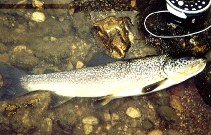 Salmo marmoratus
ภาพโดย Dresler, B.
รูปภาพหลายรูป | Google image
ภาพโดย Dresler, B.
การจำแนกประเภท / ชื่อ ชื่อสามัญ | ชื่อพ้อง | Catalog of Fishes(สกุล, ชนิด) | ITIS | CoL | WoRMS | Cloffa
> Salmoniformes (Salmons) > Salmonidae (Salmonids) > Salmoninae
Etymology: Salmo: Latin, salmo, Plinius = salmon (Ref. 45335).
More on author: Cuvier.
Etymology: Salmo: Latin, salmo, Plinius = salmon (Ref. 45335).
More on author: Cuvier.
สิ่งแวดล้อม : สิ่งแวดล้อม / เขตภูมิอากาศ / ระดับความลึก / ระยะการกระจายสินค้า นิเวศวิทยา
; น้ำจืด สัตว์น้ำหน้าดิน; ปลาที่อพยพจากแหล่งน้ำเค็มไปวางไข่ในแหล่งน้ำจืด (Ref. 51243). Subtropical; 2°C - 15°C (Ref. 11241); 47°N - 43°N, 7°E - 20°E
การแพร่กระจาย อาณาเขต | พื้นที่จำแนกตาม FAO | ระบบนิเวศหลายระบบ | การปรากฏขึ้น,การเกิดขึ้น,พบ | ตำแหน่งบนแผนที่ | การแนะนำ | Faunafri
Europe: Adriatic basin from Po (only northern tributaries) to Soca and Rizana drainages (Italy, Slovenia). Introduced in Tevere drainage in Italy. Molecular data suggest that populations identified as Salmo marmoratus from Neretva drainage (Bosnia-Herzegovina, Croatia) and most likely those from Lake Skadar basin and Drin to Shkumbin drainages (Montenegro, Albania, Kosovoa, Macedonia) represent another species, as yet unidentified. Records from Croatia, Montenegro, Bosnia and Albania may be other subspecies of Adriatic trout and not of this marble trout (Lucijan Rejec, lrejec@ribiska-druzina-tolmin.si, pers.comm. 07/09).
ขนาด / น้ำหนัก / อายุ
วัยเจริญพันธุ์: Lm ? range ? - ? cm
Max length : 120 cm SL เพศผู้/กระเทย; (Ref. 59043); น้ำหนักสูงสุดที่มีการรายงาน: 50.0 kg (Ref. 59043); อายุสูงสุดที่ได้รายงาน: 10 ปี (Ref. 59043)
Max length : 120 cm SL เพศผู้/กระเทย; (Ref. 59043); น้ำหนักสูงสุดที่มีการรายงาน: 50.0 kg (Ref. 59043); อายุสูงสุดที่ได้รายงาน: 10 ปี (Ref. 59043)
คำอธิบายสั้นๆ เครื่องมือที่ใช้ในการแยกชนิดสัตว์,สิ่งมีชีวิตออกจากกัน | สัณฐานวิทยา | ความยาวต่างๆ
Distinguished from all congeners in Adriatic basin by having the following unique characters: body silvery to olive-green with irregular brown lines forming a marbled pattern; and no parr marks in individuals larger than 6 cm SL. Differs further by the combination of the following characters: red spots confined to lateral line, absent in some individuals and populations; opercle with brownish blotches or lines; head length 22-25% SL; eye diameter 1.7-2.2 times in interorbital distance, 3.1-4.3 times in postorbital length (at 25-35 cm SL) (Ref. 59043).
Body shape (shape guide): fusiform / normal.
Body shape (shape guide): fusiform / normal.
Inhabits cold streams and rivers in montane and piedmont landscapes with temperature usually not rising above 15° C during summer (Ref. 59043). Occurs over sandy and gravelly bottoms of running or standing clean and cold waters in the upper courses of Alpine rivers and glacial lakes (Ref. 12291). Feeds on a wide variety of aquatic and terrestrial invertebrates, shifting to fish diet when adult. Spawns in gravel of rivers and streams with swift water (0.4-0.5 m/s) at moderate depth (0.6-0.8 m). Lives up to at least 10 years. Threatened due to hybridization with introduced Salmo trutta and Salmo cenerinus, pollution, overfishing and river regulation. Only a few pure populations remain and stocking of pure strains has improved the situation. Conservation status is under least concern category, but might return to a threatened category if conservation measures end (Ref. 59043).
วงจรชีวิตและพฤติกรรมการผสมพันธุ์ วัยเจริญพันธุ์ | การสืบพันธุ์ | การวางไข่ | เซลสืบพันธ์ของเพศเมีย(ไข่) | ความดกของไข่ | ตัวอ่อน
Does not undertake spawning migrations or undertake migrations only at very short distances. Individuals foraging in lakes move to lake tributaries to spawn. Males begin occupying spawning grounds about one week before females. Eggs hatch in about 45 days. Alevins commence feeding 59-63 days after spawning at 10° C (Ref. 59043).
อ้างอิงหลัก
อัพโหลดข้อมูลอ้างอิงของคุณ | อ้างอิง | ผู้ประสานงาน | ผู้ร่วมมือ
Kottelat, M. and J. Freyhof, 2007. Handbook of European freshwater fishes. Publications Kottelat, Cornol and Freyhof, Berlin. 646 pp. (Ref. 59043)
สถานะบัญชีแดงของ IUCN (Ref. 130435: Version 2025-2)
เปราะบาง (VU) (A2ace); Date assessed: 19 March 2024
CITES
Not Evaluated
ภัยคุกคามต่อมนุษย์
Harmless
การใช้ของมนุษย์
การประมง: การค้า; การเพาะเลี้ยงสัตว์น้ำ: การค้า; การตกปลาเป็นกีฬา: ใช่
FAO - Publication: search | FishSource |
ข้อมูลเพิ่มเติม
พลวัตของประชากร
พารามิเตอร์การเจริญเติบโต
อายุสูงสุด / ขนาด
ความยาว-น้ำหนักสัมพันธ์
ความยาว-ความยาวสัมพันธ์
ความยาว-ความถี่
การแปลงมวล
การทดแทนที่
อุดมสมบรูณ์
พารามิเตอร์การเจริญเติบโต
อายุสูงสุด / ขนาด
ความยาว-น้ำหนักสัมพันธ์
ความยาว-ความยาวสัมพันธ์
ความยาว-ความถี่
การแปลงมวล
การทดแทนที่
อุดมสมบรูณ์
วงจรชีวิต
การสืบพันธุ์
วัยเจริญพันธุ์
ความสมบูรณ์พันธุ์/เหงือกที่เกี่ยวข้อง
ความดกของไข่
การวางไข่
การรวมตัวของสปอน
เซลสืบพันธ์ของเพศเมีย(ไข่)
การพัฒนาไข่
ตัวอ่อน
พลวัตของสัตว์น้ำวัยอ่อน
การสืบพันธุ์
วัยเจริญพันธุ์
ความสมบูรณ์พันธุ์/เหงือกที่เกี่ยวข้อง
ความดกของไข่
การวางไข่
การรวมตัวของสปอน
เซลสืบพันธ์ของเพศเมีย(ไข่)
การพัฒนาไข่
ตัวอ่อน
พลวัตของสัตว์น้ำวัยอ่อน
การแพร่กระจาย
อาณาเขต
พื้นที่จำแนกตาม FAO
ระบบนิเวศหลายระบบ
การปรากฏขึ้น,การเกิดขึ้น,พบ
การแนะนำ
BRUVS - วิดีโอ
อาณาเขต
พื้นที่จำแนกตาม FAO
ระบบนิเวศหลายระบบ
การปรากฏขึ้น,การเกิดขึ้น,พบ
การแนะนำ
BRUVS - วิดีโอ
กายวิภาคศาสตร์
พื้นที่เหงือก
สมอง
หินโสต
พื้นที่เหงือก
สมอง
หินโสต
สรีรวิทยา
องค์ประกอบของร่างกาย
สารอาหาร
การใช้ออกซิเจน
ประเภทการว่ายน้ำ
ระดับความเร็วในการว่ายน้ำ
เม็ดสีที่มองเห็นได้
เสียงปลา
โรคและปรสิต
ความเป็นพิษ (LC50s)
องค์ประกอบของร่างกาย
สารอาหาร
การใช้ออกซิเจน
ประเภทการว่ายน้ำ
ระดับความเร็วในการว่ายน้ำ
เม็ดสีที่มองเห็นได้
เสียงปลา
โรคและปรสิต
ความเป็นพิษ (LC50s)
เกี่ยวข้องกับมนุษย์
ระบบการเพาะเลี้ยงสัตว์น้ำ
ประวัติการเพาะเลี้ยงสัตว์น้ำ
สายพันธุ์
กรณีซิเกวเทอรา
แสตมป์ เหรียญ อื่นๆ
ระบบการเพาะเลี้ยงสัตว์น้ำ
ประวัติการเพาะเลี้ยงสัตว์น้ำ
สายพันธุ์
กรณีซิเกวเทอรา
แสตมป์ เหรียญ อื่นๆ
เครื่องมือ
แบบทดสอบชีววิทยา | หนังสืออิเล็กทรอนิกส์ | คู่มือภาคสนาม | ผู้มีความชำนาญในเรื่องความถี่ของความยาว | เครื่องมือในการศึกษาชีวประวัติ | ตำแหน่งบนแผนที่ |
จับ-MSY |
รายงานพิเศษ
ตรวจสอบการบำรุงรักษาตู้ปลา | ตรวจสอบเอกสารข้อเท็จจริงเกี่ยวกับสายพันธุ์ | ตรวจสอบเอกสารข้อเท็จจริงเกี่ยวกับการเพาะเลี้ยงสัตว์น้ำ
ดาวน์โหลด XML
หน้าสรุป | ข้อมูลสำคัญ | ชื่อสามัญ | ภาพถ่าย
แหล่งที่มาจากอินเตอร์เน็ต
AFORO (otoliths) | Alien/Invasive Species database | Aquatic Commons | BHL | Cloffa | Websites from users | Check FishWatcher | CISTI | Catalog of Fishes: สกุล, ชนิด | DiscoverLife | ECOTOX | FAO - Publication: search | Faunafri | Fishipedia | Fishtrace | GloBI | Google Books | Google Scholar | Google | IGFA World Record | ฐานข้อมูลแห่งชาติ | OneZoom | Open Tree of Life | Otolith Atlas of Taiwan Fishes | PubMed | Reef Life Survey | Socotra Atlas | TreeBase | แผนภูมิชีวิตแบบต้นไม้ | Wikipedia: Go, ค้นหา | World Records Freshwater Fishing | Zoobank | บันทึกทางด้านสัตววิทยา
การประมาณค่าตามแบบจำลอง
ดัชนีความหลากหลายทางวิวัฒนาการ (อ้างอิง 82804): PD50 = 0.5000 [Uniqueness, from 0.5 = low to 2.0 = high].
Bayesian length-weight: a=0.01047 (0.00480 - 0.02286), b=3.03 (2.86 - 3.20), in cm total length, based on LWR estimates for this Genus-body shape (Ref. 93245).
ระดับชั้นอาหาร (อ้างอิง 69278): 4.0 ±0.63 se; based on food items.
Generation time: 3.7 ( na - na) years. Estimated as median ln(3)/K based on 2 growth studies.
ความสามารถในการกลับคืนสู่ปกติ (อ้างอิง 120179): ขนาดกลาง, เวลาต่ำสุดที่จะทำให้ประชากรเพิ่มขึ้นเป็น 2 เท่าใช้เวลา 1.4 - 4.4 ปี (Preliminary K or Fecundity.).