-

- À propos de cette page
- Langues
- Commentaires des utilisateurs
- Citation
- Téléchargements
-
Espèces associées
- Espèces pour
Wallago - Espèces pour
Siluridae - - Classification -
- Siluridae
- Siluriformes
- Teleostei
- Chordata
- Animalia
- Espèces pour
-



Envoyez vos Photos et vidéos
Images | Images Google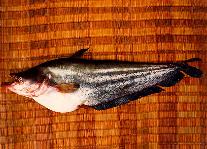 Wallago leerii
Photo de Baird, I.G.
Images | Images Google
Photo de Baird, I.G.
Classification / Noms Noms communs | Synonymes | Catalog of Fishes(Genre, Espèce) | ITIS | CoL | WoRMS | Cloffa
> Siluriformes (Catfishes) > Siluridae (Sheatfishes)
Etymology: Wallago: wallago;Bleeker, in 1851, took the Indian fish name, gave it generic range and used it connection with a new species. The name is "walaga" in Telugu / Tamil (Ref. 45335).
Eponymy: Lieutenant-Colonel J M van Leer was a Dutch army physician who was a colleague of Bleeker’s. He was for a time the Directing Surgeon at Samarang, East Sumatra. He provided the holotypes of these species. (Ref. 128868), visit book page.
More on author: Bleeker.
Etymology: Wallago: wallago;Bleeker, in 1851, took the Indian fish name, gave it generic range and used it connection with a new species. The name is "walaga" in Telugu / Tamil (Ref. 45335).
Eponymy: Lieutenant-Colonel J M van Leer was a Dutch army physician who was a colleague of Bleeker’s. He was for a time the Directing Surgeon at Samarang, East Sumatra. He provided the holotypes of these species. (Ref. 128868), visit book page.
More on author: Bleeker.
Environnement : milieu / zone climatique / profondeur / gamme de distribution Écologie
; eau douce démersal; potamodrome (Ref. 51243). Tropical; 10°N - 8°S
Distribution Territoires | Zones FAO | Écosystèmes | Occurrences | Carte par point | Introductions | Faunafri
Asia: Thailand to Indonesia. Reports of this species from the Mekong River basin are misidentifications of Wallgo micropogon (Ref. 51260).
Taille / Poids / Âge
Maturité: Lm ? range ? - ? cm
Max length : 150 cm TL mâle / non sexé; (Ref. 7050); poids max. publié: 86.0 kg (Ref. 2091)
Max length : 150 cm TL mâle / non sexé; (Ref. 7050); poids max. publié: 86.0 kg (Ref. 2091)
Description synthétique Clés d'identification | Morphologie | Morphométrie
Épines dorsales (Total) : 1; Rayons mous dorsaux (Total) : 4; Rayons mous anaux: 60 - 75. Differs from all other congeners by having a jet black pectoral-fin membranes. Branchiostegal rays 15-18 (Ref. 2091). Corner of mouth reaching only to anterior margin of eye (Ref. 7050).
Body shape (shape guide): elongated.
Body shape (shape guide): elongated.
Adults inhabit large streams and rivers (Ref. 12455). Fry occur at the mouth of small streams connected to larger rivers, where the bottom is muddy and with overhanging vegetation (Ref. 56749). Feeds on prawns (Ref. 56749). Oviparous, distinct pairing possibly like other members of the same family (Ref. 205). Fishermen along Kapuas in Indonesia observed that it used to form large migratory schools in Kapuas mainstream but such schools had become less noticeable, and this was attributed to intensive gill netting. Usually consumed fresh or processed as salted fish (Ref. 56749). Reaches more than 150 cm TL (Ref. 7050).
Cycle de vie et comportement reproducteur Maturité | Reproduction | Frai | Œufs | Fécondité | Larves
Référence principale
Téléchargez vos références | Références | Coordinateur | Collaborateurs
Roberts, T.R., 1989. The freshwater fishes of Western Borneo (Kalimantan Barat, Indonesia). Mem. Calif. Acad. Sci. 14:210 p. (Ref. 2091)
Statut dans la liste rouge de l'IUCN (Ref. 130435: Version 2025-2)
Préoccupation mineure (LC) ; Date assessed: 04 June 2019
CITES
Not Evaluated
Menace pour l'homme
Harmless
Utilisations par l'homme
Pêcheries: commercial
FAO - Publication: search | FishSource |
Plus d'informations
Écologie trophique
Aliments (proies)
Composition du régime alimentaire
Consommation alimentaire
Rations alimentaires
Prédateurs
Aliments (proies)
Composition du régime alimentaire
Consommation alimentaire
Rations alimentaires
Prédateurs
Dynamique des populations
Paramètres de croissance
Âges / tailles maximales
Longueur-poids rel.
Rel. longueur-longueur.
Fréquences de longueurs
Conversion de masse
Recrutement
Abondance
Paramètres de croissance
Âges / tailles maximales
Longueur-poids rel.
Rel. longueur-longueur.
Fréquences de longueurs
Conversion de masse
Recrutement
Abondance
Anatomie
Surface branchiale
Cerveau
Otolithe
Surface branchiale
Cerveau
Otolithe
Physiologie
Composition corporelle
Nutriments
Consommation d'oxygène
Type de natation
Vitesse de nage
Pigments visuels
Son de poisson
Maladies et parasites
Toxicité (CL50)
Composition corporelle
Nutriments
Consommation d'oxygène
Type de natation
Vitesse de nage
Pigments visuels
Son de poisson
Maladies et parasites
Toxicité (CL50)
Génétique
génôme
Génétique
Hétérozygotie
Héritabilité
Diversité génétique
génôme
Génétique
Hétérozygotie
Héritabilité
Diversité génétique
Liées à l'homme
Systèmes d'aquaculture
Profils d'aquaculture
Souches
Cas de ciguatera
Timbres, pièces de monnaie, divers
Systèmes d'aquaculture
Profils d'aquaculture
Souches
Cas de ciguatera
Timbres, pièces de monnaie, divers
Outils
E-book | Guide de terrain | Générateur de fréquences de longueur | Outil de dynamique de population | Carte par point |
Capture-MSY |
Articles particuliers
Télécharger en XML
Sources Internet
AFORO (otoliths) | Aquatic Commons | BHL | Cloffa | Websites from users | FishWatcher | CISTI | Catalog of Fishes: Genre, Espèce | DiscoverLife | ECOTOX | FAO - Publication: search | Faunafri | Fishipedia | Fishtrace | GloBI | Google Books | Google Scholar | Google | IGFA World Record | OneZoom | Open Tree of Life | Otolith Atlas of Taiwan Fishes | PubMed | Reef Life Survey | Socotra Atlas | TreeBase | Arbre de Vie | Wikipedia: aller à, chercher | World Records Freshwater Fishing | Zoobank | Zoological Record
Estimations basées sur des modèles
Indice de diversité phylogénétique (Réf. 82804): PD50 = 0.5312 [Uniqueness, from 0.5 = low to 2.0 = high].
Bayesian length-weight: a=0.00562 (0.00279 - 0.01132), b=3.00 (2.83 - 3.17), in cm total length, based on LWR estimates for this (Sub)family-body shape (Ref. 93245).
Niveau trophique (Réf. 69278): 4.5 ±0.80 se; based on food items.
Résilience (Réf. 120179): Haut, temps minimum de doublement de population inférieur à 15 mois (Assuming Fec > 10,000).