This website uses cookies to enhance your browsing experience and ensure the functionality of our site. For more detailed information about the types of cookies we use and how we protect your privacy, please visit our Privacy Information page.
×
Cookie Settings
This website uses different types of cookies to enhance your experience. Please select your preferences below:
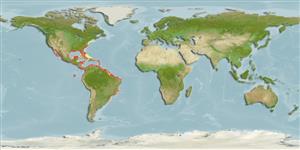
Western Atlantic: Maine, USA and northern Gulf of Mexico to Uruguay; throughout most of the West Indies (Ref. 3277). Absent from the Bahamas (Ref. 26938). Eastern Pacific: Baja California, Mexico to Ecuador (Ref. 9283). Two subspecies exists (Ref. 3277): Oligoplites saurus saurus (western Atlantic population) and Oligoplites saurus inornatus (eastern Pacific population).
الحجم / وزن / العمر
النضج: Lm? range ? - ? cm Max length : 35.0 cm TL ذكر/ مختلط الجنس; (Ref. 5217); common length : 27.0 cm TL ذكر/ مختلط الجنس; (Ref. 5217); أعلا وزن تم نشرة: 287.00 g (Ref. 3277)
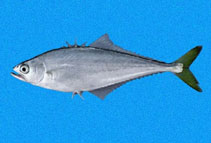
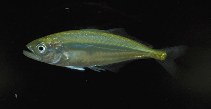
الأشواك الظهرية (المجموع) : 5 - 6; الأشعة الظهرية الناعمة (المجموع) : 19 - 21; شوكة شرجية: 2 - 3; أشعه شرجية لينه: 18 - 21. Body elongate and strongly compressed (depth from 3.5 to 4.4 times in standard length); posterior end of upper jaw reaching posterior rim of eye; upper jaw teeth small and villiform; lower branch of first gill arch with 14 to 18 gill rakers; scales small but visible, needle-shaped, embedded in the skin; back blue green; flanks and belly silvery to white, sometimes with yellow or golden highlights; pectoral and caudal fins yellowish (Ref. 55763); Dorsal fin has 5 nearly separate spines. Body shape (shape guide): fusiform / normal.
Adults are found inshore, usually along sandy beaches, in bays and inlets. They enter estuaries and fresh water, preferring turbid water. They occur in schools, usually large and fast moving, often leaping out of the water. Juveniles may float at the surface with tail bent and head down. Adults feed on fishes and crustaceans. The dorsal and anal spines are connected to venomous glands that can inflict painful wounds (Ref. 9283). Venom glands were not visible however, and cannot be confirmed in the specimen according to Smith and Wheeler, 2006 (Ref. 57406). Current information for this species as being dangerous need verification. Juveniles have incisor-like outer teeth and serve as cleaners for other fish; as fish grow, their teeth become conical and their diet changes (Ref. 26938). Marketed fresh and salted or dried but the flesh is not highly esteemed (Ref. 9283).
دورة الحياة وسلوك التزاوج النضج | التكاثر | وضع البيض | بيض | الخصوبة | اليرقات
Smith-Vaniz, W.F., 1995. Carangidae. Jureles, pámpanos, cojinúas, zapateros, cocineros, casabes, macarelas, chicharros, jorobados, medregales, pez pilota. p. 940-986. In W. Fischer, F. Krupp, W. Schneider, C. Sommer, K.E. Carpenter and V. Niem (eds.) Guia FAO para Identification de Especies para lo Fines de la Pesca. Pacifico Centro-Oriental. 3 Vols. FAO, Rome. (Ref. 9283)
حالة القائمة الحمراء للاتحاد الدولي لحفظ الطبيعة والموارد الطبيعية (Ref. 130435: Version 2025-2)