Teleostei (teleosts) >
Ophidiiformes (Cusk eels) >
Ophidiidae (Cusk-eels) > Neobythitinae
Etymology: Neobythites: Greek, neos = new + Greek, bythitis, -idos = it is at the bottom, sunken (Ref. 45335).
More on author: Nielsen.
Environment: milieu / climate zone / depth range / distribution range
Ecology
Marine; bathydemersal; depth range 275 - 950 m (Ref. 34024). Deep-water
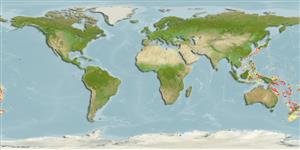
Western Pacific: Caroline Islands to New Caledonia and a few neighboring islands.
Size / Weight / Age
Maturity: Lm ? range ? - ? cm
Max length : 17.4 cm SL male/unsexed; (Ref. 31524)
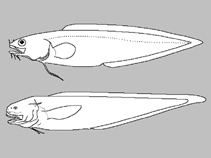
Dorsal soft rays (total): 100 - 105; Anal soft rays: 85 - 91; Vertebrae: 59 - 62. Two spines on hind margin of preoperculum, 11-13 long rakers on anterior gill arch, 3-4 pseudobranchial filaments, dorsal fin with 4-5 more or less distinct dark blotches continuing into dark, vertical bars on body, posterior part of dorsal and anal fin and caudal fin dark.
Body shape (shape guide): elongated.
Uncommon species (Ref. 34024). Feed on gastropods (Ref. 31524). Reproductive strategy possibly similar to other members of this family featuring oviparity, with oval pelagic eggs floating in a gelatinous mass (Ref. 205).
Life cycle and mating behavior
Maturity | Reproduction | Spawning | Eggs | Fecundity | Larvae
Nielsen, J.G., D.M. Cohen, D.F. Markle and C.R. Robins, 1999. Ophidiiform fishes of the world (Order Ophidiiformes). An annotated and illustrated catalogue of pearlfishes, cusk-eels, brotulas and other ophidiiform fishes known to date. FAO Fish. Synop. 125(18):178p. Rome: FAO. (Ref. 34024)
IUCN Red List Status (Ref. 130435: Version 2025-2)
Threat to humans
Harmless
Human uses
Tools
Special reports
Download XML
Internet sources