Teleostei (teleosts) >
Clupeiformes (Herrings) >
Pristigasteridae (Pristigasterids)
Etymology: Opisthopterus: Greek, opisthe = behind + Greek, pteron = wing. Fin (Ref. 45335).
Eponymy: Achille Valenciennes (1794–1865) was a French zoologist; primarily an ichthyologist and conchologist. [...] (Ref. 128868), visit book page.
More on author: Bleeker.
Environment: milieu / climate zone / depth range / distribution range
Ecology
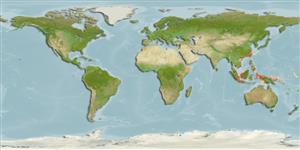
Marine; brackish; pelagic-neritic. Tropical; 29°N - 8°S, 100°W - 117°W (Ref. 188)
Indo-West Pacific: Java Sea, Singapore north to East China Sea at Foochow.
Size / Weight / Age
Maturity: Lm ? range ? - ? cm
Max length : 20.0 cm SL male/unsexed; (Ref. 188)
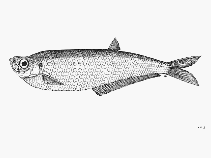
Dorsal spines (total): 0; Anal spines: 0; Anal soft rays: 54 - 65. Belly convex in front, with 30 to 33 scutes. Mouth pointing obliquely upward. Pectoral fin distinctly shorter than head; dorsal fin small, well behind midpoint of body; anal fin long, its origin well before dorsal fin origin.
Body shape (shape guide): fusiform / normal; Cross section: compressed.
Found along shores and in estuaries. Probably similar to O. tardoore, but more specimens and data needed.
Life cycle and mating behavior
Maturity | Reproduction | Spawning | Eggs | Fecundity | Larvae
Whitehead, P.J.P., 1985. FAO Species Catalogue. Vol. 7. Clupeoid fishes of the world (suborder Clupeoidei). An annotated and illustrated catalogue of the herrings, sardines, pilchards, sprats, shads, anchovies and wolf-herrings. FAO Fish. Synop. 125(7/1):1-303. Rome: FAO. (Ref. 188)
IUCN Red List Status (Ref. 130435: Version 2025-2)
Threat to humans
Harmless
Human uses
Fisheries: subsistence fisheries
Tools
Special reports
Download XML
Internet sources