This website uses cookies to enhance your browsing experience and ensure the functionality of our site. For more detailed information about the types of cookies we use and how we protect your privacy, please visit our Privacy Information page.
×
Cookie Settings
This website uses different types of cookies to enhance your experience. Please select your preferences below:
Common names:
Butter fish, Melon seed, Pacific rudderfish
Occurrence:
native
Salinity:
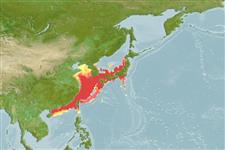
marine
Abundance:
|
Ref:
Importance:
commercial
|
Ref:
Aquaculture:
|
Ref:
Regulations:
|
Ref:
Uses:
no uses
Comments:
Reported from Mirs Bay, Tolo Channel, and Tolo Harbour (Ref. 126271). Also reported from Hoi Ha Wan and Tsim Chau, swimming closely with jellyfish (Ref. 128523). Dominant in catches from depths >180 m in January-March (Ref. 12082). Usually available in the market (Ref. 12075). Commonly consumed in Hong Kong (Ref. 125589). Also Ref. 12083, 125407.
National Checklist:
Territory Information:
https://www.cia.gov/library/publications/resources/the-world-factbook/geos/hk.html
National Fisheries Authority:
Occurrences:
OccurrencesPoint map
Main Ref:
Ni, I.-H. and K.-Y. Kwok, 1999
National Database:
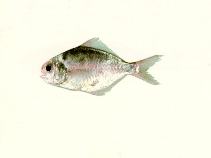
Dorsalspines (total): 6 - 7; Dorsalsoft rays (total): 27 - 33; Analspines: 3; Analsoft rays: 24 - 28. Body whitish ; in young it is pale brown or blackish brown. Spines of dorsal fin short, not separated from soft-rayed portion (Ref. 41299). Body shape (shape guide): short and / or deep; Cross section: compressed.
Juveniles are associated with jellyfish, and can occur in small groups. Adults become bottom-dwellers (Ref. 128523). Tasty food fish (Ref. 559).