Common names from other countries
>
Cypriniformes (Carps) >
Cyprinidae (Minnows or carps) > Cyprininae
Etymology: Cyprinus: Latin, cyprinus = carp (Ref. 45335); carpio: carpio is the latinized form of carp (Ref. 1998). Cyprinus is the old world name for the carp (Ref. 10294).
More on author: Linnaeus.
محیط زیست: محیط زیست / منطقه آب و هوایی / تغييرات عمق / محدوده توزیع
بوم شناسي
; آب شيرين; لب شور موجوداتی که در محدوده وسیعی از آبهای آزاد از نزدیک بستر و یا روی کف بستر، در قسمت های میان آبی تا سطح آب و در برخی گونه ها با قابلیت پرواز، زندگی و تغذیه می کنند.; pH range: 6.5 - 9.0; dH range: 10 - 15; رود رو (Ref. 51243); تغييرات عمق 0 - 29 m (Ref. 120823). Subtropical; 3°C - 35°C (Ref. 12741); 54°N - 34°N, 12°E - 74°E (Ref. 59043)
Europe to Asia: Black, Caspian and Aral Sea basins. Introduced throughout the world. Wild stocks are only present naturally in rivers draining to the Black, Caspian and Aral Sea (Ref. 59043). A reophilic wild population in the Danube is assumed to be the origin of the European species; this population is now under threat (Ref. 13696).
طول در اولین بلوغ / اندازه / وزن / سن
بلوغ: Lm 34.8, range 25 - 36 cm
Max length : 120 cm TL جنس نر / بدون خواص جنسي; (Ref. 27549); common length : 31.0 cm TL جنس نر / بدون خواص جنسي; (Ref. 3561); بيشينه وزن گزارش شده: 40.1 kg (Ref. 72380); بيشينه سن گزارش شده: 38 سال ها (Ref. 72479)
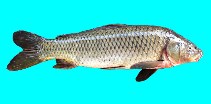
خارهاي باله پشتي (کل) : 3 - 4; شعاع نرم باله پشتي (کل) : 17 - 23; خارهاي باله مخرجي: 2 - 3; شعاع نرم باله مخرجي: 5 - 6; مهره ها: 36 - 37. Diagnosed from other cyprinid species in Europe by having the following characters: 2 pairs of barbels; dorsal fin with 15-20½ branched rays; caudal fin deeply emarginate (Ref. 59043). Pharyngeal teeth 1, 1, 3:3, 1,1, robust, molar-like with crown flattened or somewhat furrowed. Scales large and thick. `Wild carp ' is generally distinguished by its less stocky build with height of body 1:3.2-4.8 in standard length. Very variable in form, proportions, squamation, development of fins, and color. Caudal fin with 3 spines and 17-19 rays (Ref. 2196). Last simple anal ray bony and serrated posteriorly; 4 barbels; 17-20 branched dorsal rays; body grey to bronze (Ref. 43281). Also Ref. 3398, 3410.
Body shape (shape guide): fusiform / normal; Cross section: compressed.
Inhabits warm, deep, slow-flowing and still waters such as lowland rivers and large, well vegetated lakes (Ref. 59043). Hardy and tolerant of a wide variety of conditions but generally favor large water bodies with slow flowing or standing water and soft bottom sediments. Thrive in large turbid rivers (Ref. 1998). Most active at dusk and dawn. Both adults and juveniles feed on a variety of benthic organisms and plant material. Breeds along shores or in backwaters. Adults often undertake considerable spawning migration to suitable backwaters and flooded meadows. Larvae survive only in very warm water among shallow submerged vegetation (Ref. 59043). Occurs at depths of <30m (Ref. 120613) and found sucking in floating insects at the surface (Ref. 120823). River regulation and hybridization with domesticated stocks, East Asian congeners and their hybrids have caused continuous decline of wild populations (Ref. 59043). Utilized fresh and frozen (Ref. 9987). Aquarium keeping: in groups of 5 or more individuals; minimum aquarium size >200 cm; not recommended for home aquariums (Ref. 51539).
Spawn in marginal, shallow, weed-infested areas. A polytypic plastic species with a marked tendency to produce `varieties' and `races' in response to selective breeding and environmental influences. Carp is polygamous. A spawning female is usually followed by several males. Under tropical conditions carp breeds throughout the year. It is a seasonal spawner in temperate waters (Ref. 185). Females are known to lay more than a million eggs in a season; breeds at a temperature range of 15° C to 20°C; eggs hatch in 4 days (Ref. 6028). Obligatory plant spawners (Ref. 7471). "Adults often make considerable spawning migrations to suitable backwaters and flooded meadows. Individual females spawn with a few males in dense vegetation. The sticky eggs are attached to water plants or other submerged objects. Reproductive success is restricted to years when the water level starts rising in May and when high temperatures and flooding of terrestrial vegetation last for a long period during May and June" (Ref. 59043).
Kottelat, M. and J. Freyhof, 2007. Handbook of European freshwater fishes. Publications Kottelat, Cornol and Freyhof, Berlin. 646 pp. (Ref. 59043)
وضعيت در فهرست قرمز IUCN (Ref. 130435: Version 2025-2)
خطر برای انسان ها
Potential pest
استفاده انسانی
ماهي گيري – شيلات: با ارزش تجاري بالا; آبزي پروري: تجاري; ماهي ها ي سرگرم كننده: بله; آكواريوم: تجاري
ابزارها
گزارش های ويژه
بارگيری XML
منابع اينترنتي
تخمینها بر اساس مدلها
شاخص تنوع فیلوژنتیکی (مرجع
82804): PD
50 = 0.5000 [Uniqueness, from 0.5 = low to 2.0 = high].
Bayesian length-weight: a=0.01778 (0.01629 - 0.01941), b=2.95 (2.92 - 2.98), in cm total length, based on LWR estimates for this species (Ref.
93245).
سطح تروفیک (مرجع
69278): 3.1 ±0.0 se; based on diet studies.
Generation time: 5.5 (3.7 - 6.5) years. Estimated as median ln(3)/K based on 38
growth studies.
جهندگی (مرجع
120179): متوسط, كمينه زمان لازم براي دو برابر شدن جمعيت 4/1 – 4/4 سال (K=0.10-0.30; tm=1-3; tmax=20; Fec=36,000-2,000,000).
آسیبپذیری ماهیگیری (Ref.
59153): High vulnerability (60 of 100).
🛈
مواد مغذی (Ref.
124155): Calcium = 37.3 [22.1, 70.3] mg/100g; Iron = 0.673 [0.433, 1.027] mg/100g; Protein = 18 [17, 19] %; Omega3 = 0.368 [0.211, 0.664] g/100g; Selenium = 3.18 [1.11, 10.47] μg/100g; VitaminA = 11.3 [3.8, 30.8] μg/100g; Zinc = 0.869 [0.581, 1.344] mg/100g (wet weight); based on
nutrient studies.