Common names from other countries
>
Zeiformes (Dories) >
Zeidae (Dories)
Eponymy: Derived from zaeus, an ancient Greek name for this fish dating back to Pliny’s Natural History. [...] There are many alternative names for this fish and almost as many theories as to the origin of the name. [...] (Ref. 128868), visit book page.
More on author: Linnaeus.
محیط زیست: محیط زیست / منطقه آب و هوایی / تغييرات عمق / محدوده توزیع
بوم شناسي
دريايي; لب شور موجوداتی که در محدوده وسیعی از آبهای آزاد از نزدیک بستر و یا روی کف بستر، در قسمت های میان آبی تا سطح آب و در برخی گونه ها با قابلیت پرواز، زندگی و تغذیه می کنند.; اقیانوس رو (Ref. 35388); تغييرات عمق 5 - 400 m (Ref. 9563), usually 50 - 150 m (Ref. 4968). Temperate; 75°N - 49°S, 17°W - 177°E (Ref. 54935)
Worldwide in distribution. Eastern Atlantic: Norway to South Africa, also the Mediterranean and Black Sea. Western Pacific: Japan, Korea, Australia and New Zealand. Also known from the Indian Ocean.
طول در اولین بلوغ / اندازه / وزن / سن
بلوغ: Lm 35.1, range 29 - 35 cm
Max length : 90.0 cm TL جنس نر / بدون خواص جنسي; (Ref. 6953); common length : 40.0 cm TL جنس نر / بدون خواص جنسي; (Ref. 6953); بيشينه وزن گزارش شده: 8.0 kg (Ref. 35388); بيشينه سن گزارش شده: 12 سال ها (Ref. 5377)
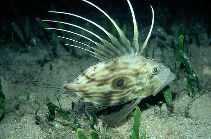
خارهاي باله پشتي (کل) : 9 - 11; شعاع نرم باله پشتي (کل) : 22 - 24; خارهاي باله مخرجي: 4; شعاع نرم باله مخرجي: 20 - 23. Gill rakers rudimentary. Minute scales present. Highly compressed body (Ref. 4253). Large dark spot, surrounded by a light ring on each side of the body (Ref. 35388).
Body shape (shape guide): short and / or deep.
Found in areas close to the sea bed (Ref. 6390). Generally solitary. Feeds mainly on schooling bony fishes, occasionally on cephalopods and crustaceans (Ref. 27121). Reproduction takes place at the end of winter and at the start of spring in the northeastern Atlantic, earlier in the Mediterranean. Eggs are pelagic, maturity reached at 4 years (Ref. 36731). Sold fresh (Ref. 9563) and frozen (Ref. 9988). Can be steamed, fried, broiled, boiled, microwaved and baked (Ref. 9988). The flesh is excellent but is utilized little in West Africa (Ref. 5377).
No studies of their reproductive development or early life history have been undertaken in Australia (Ref. 6390). Pelagic eggs (Ref. 35388).
Karrer, C. and A. Post, 1990. Zeidae. p. 631-633. In J.C. Quero, J.C. Hureau, C. Karrer, A. Post and L. Saldanha (eds.) Check-list of the fishes of the eastern tropical Atlantic (CLOFETA). JNICT, Lisbon; SEI, Paris; and UNESCO, Paris. Vol. 2. (Ref. 6953)
وضعيت در فهرست قرمز IUCN (Ref. 130435: Version 2025-2 (Global))
خطر برای انسان ها
Harmless
استفاده انسانی
ماهي گيري – شيلات: تجاري; ماهي ها ي سرگرم كننده: بله; آكواريوم: آکواریوم عمومی
ابزارها
گزارش های ويژه
بارگيری XML
منابع اينترنتي
تخمینها بر اساس مدلها
دمای ترجیحی (مرجع
123201): 6.7 - 23.7, mean 13.6 °C (based on 1223 cells).
شاخص تنوع فیلوژنتیکی (مرجع
82804): PD
50 = 0.7656 [Uniqueness, from 0.5 = low to 2.0 = high].
Bayesian length-weight: a=0.01585 (0.01311 - 0.01916), b=2.92 (2.86 - 2.98), in cm total length, based on LWR estimates for this species (Ref.
93245).
سطح تروفیک (مرجع
69278): 4.5 ±0.8 se; based on diet studies.
جهندگی (مرجع
120179): متوسط, كمينه زمان لازم براي دو برابر شدن جمعيت 4/1 – 4/4 سال (K=0.15; tm=3-4; tmax=12).
Prior r = 0.74, 95% CL = 0.49 - 1.10, Based on 1 full stock assessment.
آسیبپذیری ماهیگیری (Ref.
59153): Moderate vulnerability (39 of 100).
🛈
آسیبپذیری اقلیمی (Ref.
125649): Moderate vulnerability (38 of 100).
🛈
مواد مغذی (Ref.
124155): Calcium = 14.1 [8.1, 27.2] mg/100g; Iron = 0.246 [0.139, 0.432] mg/100g; Protein = 19.2 [16.0, 21.6] %; Omega3 = 0.65 [0.34, 1.23] g/100g; Selenium = 21 [10, 42] μg/100g; VitaminA = 16.8 [4.4, 66.5] μg/100g; Zinc = 0.368 [0.254, 0.546] mg/100g (wet weight); based on
nutrient studies.