
|
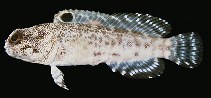
Opistognathus darwiniensis Macleay, 1878 Darwin jawfish |
|
|
photo by
Randall, J.E. |
| Family: | Opistognathidae (Jawfishes) | |||
| Max. size: | 50 cm TL (male/unsexed) | |||
| Environment: | reef-associated; marine; depth range 1 - 4 m | |||
| Distribution: | Indo-West Pacific: northern Australia. | |||
| Diagnosis: | Dorsal spines (total): 10-11; Dorsal soft rays (total): 17-18; Anal spines: 2-2; Anal soft rays: 14-15; Vertebrae: 30-32. This species is distinguished by the following characters: with a rigid upper jaw lacking flexible lamina posteriorly, in adults extending about 0.7-1.2 eye diameters behind posterior margin of orbit; infraorbitals are relatively slender and tubular, the third infraorbital with small sensory canal opening and slender suborbital shelf; D X-XI,17-18, rarely X,18; vertebrae typically 12 + 18 or 19; body with two separate lateral lines, with the ventral one irregularly developed along lower side in region of anal-fin origin, often with one or more branches on belly; head covered with close-set, tiny, brown spots; pelvic and caudal fins usually strongly barred; anterior naris palmate (Ref. 128653). | |||
| Biology: | Found in shallow reefs, in sand or rubble areas. Mouthbrooders (Ref. 240). | |||
| IUCN Red List Status: | Least Concern (LC); Date assessed: 29 November 2023 Ref. (130435) | |||
| Threat to humans: | harmless | |||