| Family: |
Carangidae (Jacks and pompanos), subfamily: Caranginae |
| Max. size: |
35 cm TL (male/unsexed); max.weight: 364.0 g |
| Environment: |
benthopelagic; brackish; marine |
| Distribution: |
Eastern Central Pacific: Baja California, Mexico to Peru (Ref. 5530). |
| Diagnosis: |
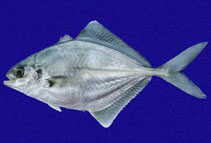
Body sub-oval and compressed; both jaws with a single row of small, comb-like teeth; pectoral fins falcate and relatively sort (from 3.5 to 4.5 times in total length); back silvery blue; belly and flanks white or silvery; pectoral fins darker (Ref. 55763). |
| Biology: |
Adults are found in coastal waters, also entering brackish waters (Ref. 9283). Marketed fresh and salted or dried (Ref.9283). |
| IUCN Red List Status: |
Least Concern (LC); Date assessed: 30 April 2008 Ref. (130435)
|
| Threat to humans: |
harmless |
Source and more info: www.fishbase.org. For personal, classroom, and other internal use only. Not for publication.