
|
Acestrocephalus nigrifasciatus Menezes, 2006 |
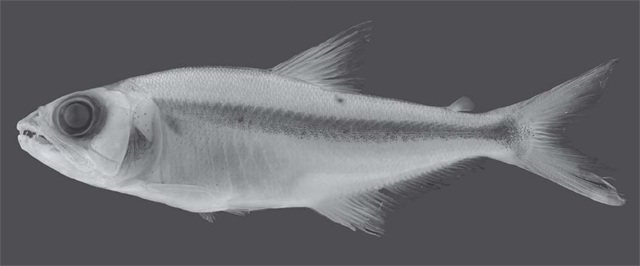
|
|
photo by
Menezes, N.A. |
| Family: | Characidae (Characins; tetras), subfamily: Characinae | |||
| Max. size: | 9.3 cm SL (male/unsexed) | |||
| Environment: | benthopelagic; freshwater | |||
| Distribution: | South America: Rio Arinos and Rio Juruena, and rio Tapajós basin in Brazil. | |||
| Diagnosis: | Dorsal soft rays (total): 11-11; Anal soft rays: 31-35; Vertebrae: 37-38. Both Acestrocephalus nigrifasciatus and Acestrocephalus sardina have the same color pattern and eye size, distinct from all their congeners. In addition, Acestrocephalus nigrifasciatus has more scale rows above (13-14 vs. 10-12) and below (12-13 vs. 10-12) lateral line. Differs from Acestrocephalus sardina by having longer and narrower muscular hiatus of the pseudotympanum than that of Acestrocephalus sardina; and the fibers of the obliquus inferioris muscle are not visible as in the latter species (Ref. 75890). Description: Dorsal fin ii,9; Anal fin iv,27-31; Pectoral fin i+14-15; Pelvic fin i+7 (Ref. 75890). | |||
| Biology: | ||||
| IUCN Red List Status: | Data deficient (DD); Date assessed: 07 November 2018 Ref. (130435) | |||
| Threat to humans: | harmless | |||