Elasmobranchii (sharks and rays) >
Squaliformes (Sleeper and dogfish sharks) >
Etmopteridae (Lantern sharks)
Etymology: Centroscyllium: Greek, kentron = sting + Greek, skylla = a kind of shark (Ref. 45335).
Environment: milieu / climate zone / depth range / distribution range
Ecology
Marine; bathydemersal; depth range 730 - 1200 m (Ref. 6871), usually 900 - 1200 m (Ref. 6871). Deep-water; 35°N - 42°S
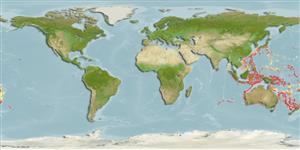
Western Pacific: Japan and Australia (including Western Australia).
Length at first maturity / Size / Weight / Age
Maturity: Lm 43.0, range 42 - 44 cm
Max length : 60.0 cm TL male/unsexed; (Ref. 6871)
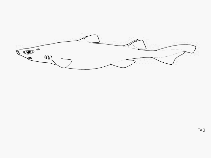
Found on the continental slope (Ref. 6871, 75154). Little is known of its biology; presumably ovoviviparous (Ref. 6871).
Life cycle and mating behavior
Maturity | Reproduction | Spawning | Eggs | Fecundity | Larvae
Distinct pairing with embrace (Ref. 205).
Compagno, L.J.V., 1984. FAO Species Catalogue. Vol. 4. Sharks of the world. An annotated and illustrated catalogue of shark species known to date. Part 1 - Hexanchiformes to Lamniformes. FAO Fish. Synop. 125(4/1):1-249. Rome, FAO. (Ref. 247)
IUCN Red List Status (Ref. 130435)
Threat to humans
Harmless
Human uses
Fisheries: of no interest
More information
ReferencesAquacultureAquaculture profileStrainsGeneticsElectrophoresesHeritabilityDiseasesProcessingNutrientsMass conversion
Tools
Special reports
Download XML
Internet sources
Estimates based on models
Preferred temperature (Ref.
123201): 3.6 - 6.6, mean 4.6 °C (based on 386 cells).
Phylogenetic diversity index (Ref.
82804): PD
50 = 0.5078 [Uniqueness, from 0.5 = low to 2.0 = high].
Bayesian length-weight: a=0.00372 (0.00188 - 0.00734), b=3.10 (2.92 - 3.28), in cm total length, based on LWR estimates for this (Sub)family-body shape (Ref.
93245).
Trophic level (Ref.
69278): 3.8 ±0.3 se; based on size and trophs of closest relatives
Resilience (Ref.
120179): Low, minimum population doubling time 4.5 - 14 years (Fec assumed to be <100).
Fishing Vulnerability (Ref.
59153): Moderate vulnerability (44 of 100).