>
Ophidiiformes (Cusk eels) >
Bythitidae (Livebearing brotulas)
Etymology: Nybelinella: Because of Nybelin, a Swedish botanist, expert in fishes and fungus.
Environment: milieu / climate zone / depth range / distribution range
البيئة
بحري قاعية المعيشة; نطاق العمق 4640 - 5440 m (Ref. 34024). Deep-water; 45°N - 27°S
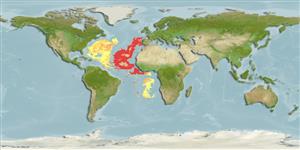
Eastern Atlantic: between 42°38.5'N, 13°31'W and 42°42'N, 13°28'W (Ref. 7408), holotype from 1°03'N, 18°40'W. Western Atlantic: off the Bahamas.
الحجم / وزن / العمر
Maturity: Lm ? range ? - ? cm
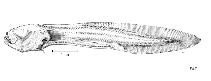
Max length : 8.0 cm TL ذكر/ مختلط الجنس; (Ref. 6527)
Rare species (Ref. 34024). Viviparous (Ref. 6527).
Life cycle and mating behavior
النضج | التكاثر | وضع البيض | بيض | الخصوبة | Larvae
Nielsen, J.G., D.M. Cohen, D.F. Markle and C.R. Robins, 1999. Ophidiiform fishes of the world (Order Ophidiiformes). An annotated and illustrated catalogue of pearlfishes, cusk-eels, brotulas and other ophidiiform fishes known to date. FAO Fish. Synop. 125(18):178p. Rome: FAO. (Ref. 34024)
IUCN Red List Status (Ref. 130435)
استخدامات بشرية
مصائد: غير ذات اهمية
مزيد من المعلومات
مراجعالأستزراع المائيملف الأستزراع المائيسلالاتجينيElectrophoresesالتوريثالأمراضمعالجةNutrientsMass conversion
المتعاونينصورStamps, Coins Misc.اصواتالتسمم باكل السمكسرعةنوع السباحةمنطقة الخياشيمعظمة الأذندماغرؤية
أدوات
تقارير خاصة
Download XML
مصادر علي الأنترنت
Estimates based on models
Preferred temperature (Ref.
123201): 2 - 2.5, mean 2.3 °C (based on 969 cells).
Phylogenetic diversity index (Ref.
82804): PD
50 = 0.7500 [Uniqueness, from 0.5 = low to 2.0 = high].
Bayesian length-weight: a=0.00102 (0.00046 - 0.00225), b=3.06 (2.88 - 3.24), in cm total length, based on all LWR estimates for this body shape (Ref.
93245).
مستوى غذائي (Ref.
69278): 3.3 ±0.5 se; based on size and trophs of closest relatives
المرونه (Ref.
120179): عالي, الحد الزمني الأدني لتضاعف عدد أفراد المجتمع أقل من 15 شهر (Preliminary K or Fecundity.).
Fishing Vulnerability (Ref.
59153): Low vulnerability (10 of 100).