Actinopterygii (ray-finned fishes) >
Perciformes (Perch-likes) >
Blenniidae (Combtooth blennies) > Salariinae
Etymology: Exallias: Greek, exallias = strange, marvellous (Ref. 45335).
Environment / Climate / Range
Ecology
Marine; reef-associated; depth range 3 - 20 m (Ref. 9710), usually 3 - 8 m (Ref. 58302). Tropical; 30°N - 30°S
Size / Weight / Age
Maturity: Lm ?  range ? - ? cm
Max length : 14.5 cm TL male/unsexed; (Ref. 9710)
Indo-Pacific: Red Sea south to Sodwana Bay, South Africa (Ref. 4404) and east to the Hawaiian, Marquesan, and Society islands, north to the Ryukyu and Bonin islands, south to New Caledonia and Rapa.
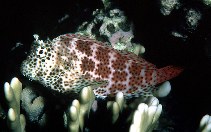
Occur on clear coastal reefs, often in bays and semi-exposed habitats (Ref. 48636). Found on the seaward edge of reefs, among corals like Acropora, Pocillopora, Seriatopora, Porites, and Millepora where they feed on coral tissues (Ref. 1602). Benthic (Ref. 58302). Males prepare nesting sites by overgrazing a patch of coral (Ref. 9710). Oviparous (Ref. 205). Eggs are demersal and adhesive (Ref. 205). Minimum depth reported taken from Ref. 30874.
Myers, R.F., 1991. Micronesian reef fishes. Second Ed. Coral Graphics, Barrigada, Guam. 298 p.
IUCN Red List Status (Ref. 90363)
Threat to humans
Harmless
Human uses
Aquarium: commercial
More information
ReferencesAquacultureAquaculture profileStrainsGeneticsAllele frequenciesHeritabilityDiseasesProcessingMass conversion
CollaboratorsPicturesStamps, CoinsSoundsCiguateraSpeedSwim. typeGill areaOtolithsBrainsVision
Tools
Special reports
Download XML
Internet sources
Estimates of some properties based on empirical models
Phylogenetic diversity index (Ref.
82805): PD
50 = 1.0000 [Uniqueness, from 0.5 = low to 2.0 = high].
Bayesian length-weight: a=0.01107 (-0.15957 - 0.18170), b=2.97 (2.88 - 3.07), based on LWR estimates for this family-BS (Ref.
93245).
Trophic Level (Ref.
69278): 3.0 ±0.5 se; Based on diet studies.
Resilience (Ref.
69278): High, minimum population doubling time less than 15 months (Preliminary K or Fecundity.).
Vulnerability (Ref.
59153): Low to moderate vulnerability (26 of 100) .