Teleostei (teleosts) >
Gobiiformes (Gobies) >
Gobiidae (Gobies) > Gobiinae
Etymology: Favonigobius: Latin, favonius = gentle, propicious and Latin, favonianus = the west wind; 1656 + Latin, gobius = gudgeon (Ref. 45335).
More on author: Bleeker.
Environment: milieu / climate zone / depth range / distribution range
Ecology
Marine; freshwater; brackish; demersal; amphidromous (Ref. 46888); depth range 0 - 5 m (Ref. 90102). Tropical
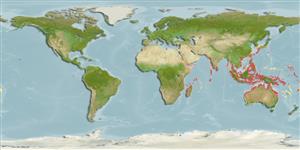
Indo-West Pacific: East Africa to the Philippines (Ref. 7050), north to Japan (Ref. 559), south to northern Australia (Ref. 33390).
Length at first maturity / Size / Weight / Age
Maturity: Lm 2.0 range ? - ? cm
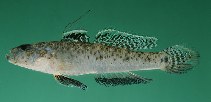
Max length : 8.3 cm TL male/unsexed; (Ref. 7050)
Facultative air-breathing in the genus (Ref. 126274); Usually in small groups (Ref. 90102). Found over sandy and muddy bottoms, often in weedy areas of intertidal zone; also in mangroves, estuaries, lagoons and rivers (Ref. 4343).
Life cycle and mating behavior
Maturity | Reproduction | Spawning | Eggs | Fecundity | Larvae
Kottelat, M., A.J. Whitten, S.N. Kartikasari and S. Wirjoatmodjo, 1993. Freshwater fishes of Western Indonesia and Sulawesi. Periplus Editions, Hong Kong. 221 p. (Ref. 7050)
IUCN Red List Status (Ref. 130435)
Threat to humans
Harmless
Human uses
Fisheries: of no interest
More information
ReferencesAquacultureAquaculture profileStrainsGeneticsElectrophoresesHeritabilityDiseasesProcessingNutrientsMass conversion
Tools
Special reports
Download XML
Internet sources
Estimates based on models
Preferred temperature (Ref.
123201): 24.8 - 29.3, mean 28.5 °C (based on 2768 cells).
Phylogenetic diversity index (Ref.
82804): PD
50 = 0.5020 [Uniqueness, from 0.5 = low to 2.0 = high].
Bayesian length-weight: a=0.00891 (0.00540 - 0.01471), b=3.19 (3.05 - 3.33), in cm total length, based on LWR estimates for this species & (Sub)family-body (Ref.
93245).
Trophic level (Ref.
69278): 3.5 ±0.4 se; based on size and trophs of closest relatives
Resilience (Ref.
120179): High, minimum population doubling time less than 15 months (Preliminary K or Fecundity.).
Fishing Vulnerability (Ref.
59153): Low vulnerability (10 of 100).