Environment: milieu / climate zone / depth range / distribution range
Ecology
Marine; freshwater; brackish; demersal; amphidromous (Ref. 51243). Tropical
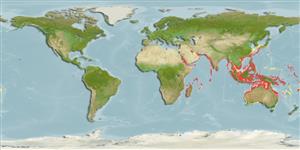
Indo-West Pacific: Red Sea and Mauritius to Indonesia. Also from Persian Gulf (Ref. 68964).
Length at first maturity / Size / Weight / Age
Maturity: Lm 19.0 range ? - ? cm
Max length : 25.5 cm WD male/unsexed; (Ref. 121648); 31.0 cm WD (female); max. published weight: 590.00 g (Ref. 121648); max. published weight: 590.00 g
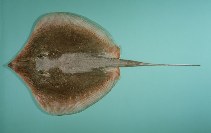
Disc width equal to disc length; tail shorter than body; ventral surface of disc entirely white (Ref. 12693).
Found in inshore coastal waters (Ref. 30573). Typically found in estuarine habitats, but also reported from the Great Lake. The single record from the Great Lake may in fact refer to Dasyatis laosensis. Young and adults feed on benthic invertebrates (Ref. 12693). Ovoviviparous (Ref. 124). Feeds on bottom-living invertebrates (Ref. 68964). May grow to a maximum of 140 cm disc length in the sea (Ref. 43081). Juveniles may be present in mangroves (Ref. 43081).
Exhibit ovoviparity (aplacental viviparity), with embryos feeding initially on yolk, then receiving additional nourishment from the mother by indirect absorption of uterine fluid enriched with mucus, fat or protein through specialised structures (Ref. 50449). Distinct pairing with embrace (Ref. 205).
Talwar, P.K. and A.G. Jhingran, 1991. Inland fishes of India and adjacent countries. vol 1. A.A. Balkema, Rotterdam. i-liv + 1-541, 1 map (Ref. 4832)
IUCN Red List Status (Ref. 130435)
Human uses
Fisheries: minor commercial
More information
ReferencesAquacultureAquaculture profileStrainsGeneticsElectrophoresesHeritabilityDiseasesProcessingNutrientsMass conversion
Tools
Special reports
Download XML
Internet sources
Estimates based on models
Preferred temperature (Ref.
123201): 26.4 - 29.2, mean 28.4 °C (based on 1288 cells).
Phylogenetic diversity index (Ref.
82804): PD
50 = 0.5625 [Uniqueness, from 0.5 = low to 2.0 = high].
Bayesian length-weight: a=0.01514 (0.00905 - 0.02532), b=3.15 (3.00 - 3.30), in cm total length, based on LWR estimates for this species & (Sub)family-body (Ref.
93245).
Trophic level (Ref.
69278): 3.5 ±0.37 se; based on food items.
Generation time: 1.9 ( na - na) years. Estimated as median ln(3)/K based on 2
growth studies.
Resilience (Ref.
120179): Very Low, minimum population doubling time more than 14 years (K=0.59; Fec=1).
Fishing Vulnerability (Ref.
59153): Moderate vulnerability (42 of 100).